Showing posts with label RiggingSafety. Show all posts

Saturday, September 19, 2026

LIFTING SIGNALS: ONE CLEAR DIRECTION

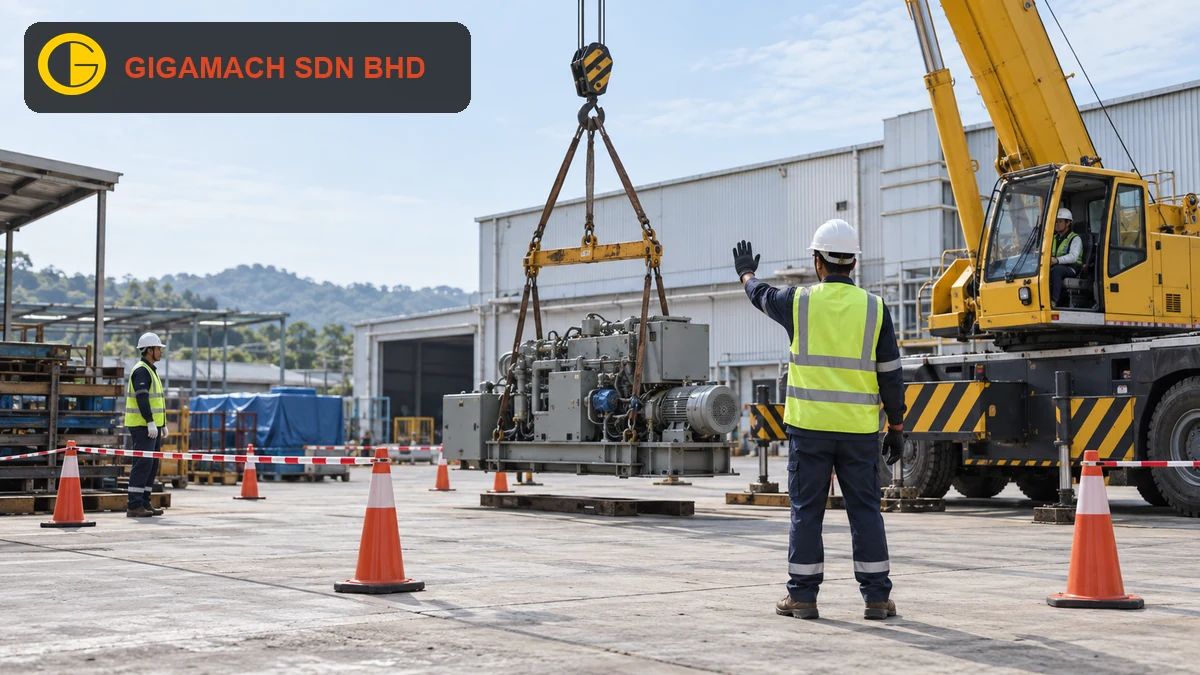
Mobile crane holding an industrial machine low inside a controlled exclusion zone while a PPE-equipped signalman gives a stop signal from a position visible to the operator.
AI-generated illustrative safety visual by GIGAMACH SDN BHD.

Planning for lifting team coordination requires more than the correct machine or lifting equipment. During a lifting operation, the operator must receive clear and consistent instructions. Conflicting signals, blocked visibility or lost radio contact can turn a controlled movement into an unexpected one.

For industrial teams working in Malaysia, early planning helps identify access, load, ground, personnel, and coordination risks before equipment is mobilised.

Why Signalman communication and controlled stopping during lifting operations matters

When the crane operator relies on a signal person, movement is safe only while the instruction remains clear, agreed, and understood. A visible designated signalman and a reliable backup method help the team stop before confusion becomes unintended load movement.

The work method should be based on verified site and load information. A checklist supports the planning discussion, but it does not replace a task-specific assessment by competent personnel.

Practical pre-work checklist

  • Check 1: Designate one signalman for routine movement.
  • Check 2: Agree on the hand signals, radio channel and backup method.
  • Check 3: Confirm that the signalman remains visible or in reliable contact with the operator.
  • Check 4: Brief the emergency stop signal to everyone involved.

Record the important findings during the site survey and brief the same controls to operators, riggers, signalmen, supervisors, and nearby work teams. Stop and reassess whenever the site condition or equipment configuration differs from the plan.

Common mistakes to avoid

  • Allowing several people to direct routine crane movement at the same time.
  • Starting without checking line of sight, radio clarity, and the agreed signal method.
  • Continuing or restarting after communication is interrupted before contact is re-established.

Related planning terms include signalman communication, crane hand signals, rigging team communication. These should be used naturally to describe the actual work scope, not treated as interchangeable services.

Final verification before work starts

Before movement, confirm the designated signalman, agreed hand or voice signals, radio channel, operator visibility, emergency-stop response, exclusion zone, and the point at which the team must stop and re-establish communication.

Agree the signal. Control the move.

Planning support for industrial work

GIGAMACH SDN BHD provides lifting operations and rigging coordination with a practical safety-first approach. Plan the scope early so the equipment, access, lifting method, transport, and final positioning can be coordinated before work begins.

Thursday, September 3, 2026

MACHINE UNLOADING: PREPARE THE LANDING ZONE FIRST

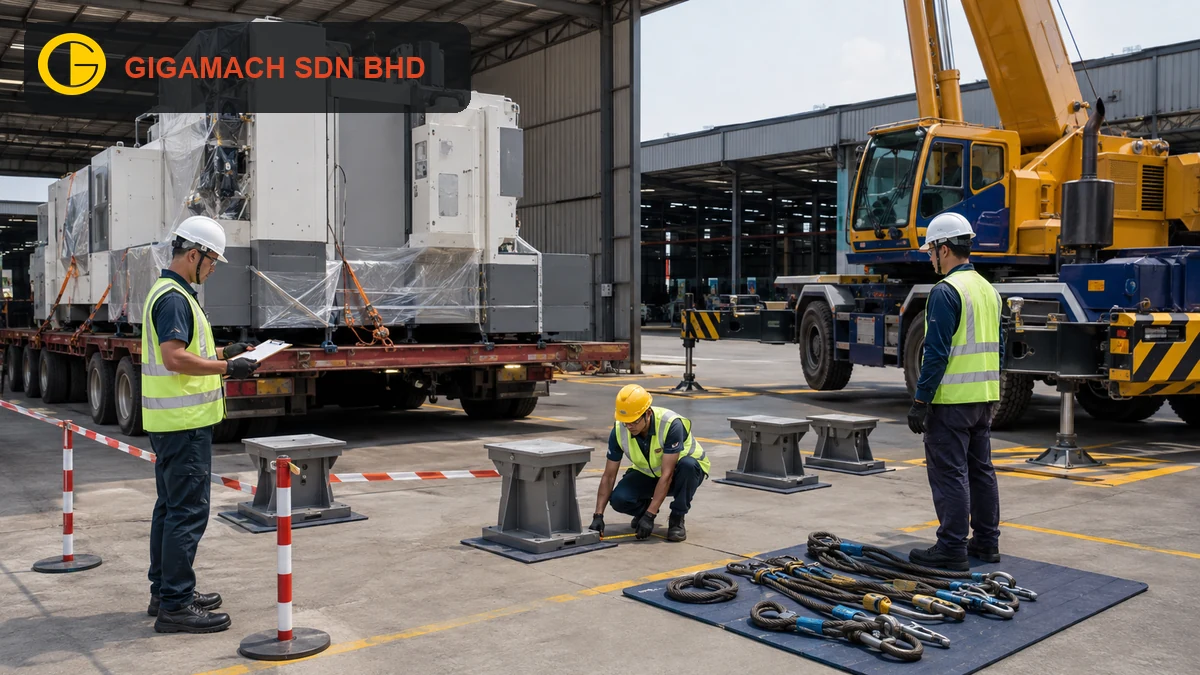
Large industrial machine secured on a stationary flatbed trailer, with PPE-equipped workers preparing engineered landing supports, a clear route, and a controlled exclusion zone for machine unloading safety education.
AI-generated illustrative safety visual by GIGAMACH SDN BHD.

Planning for industrial machinery transportation requires more than the correct machine or lifting equipment. A safe unloading plan does not end when the machine leaves the trailer. Before any heavy machinery handling begins, the team should know exactly where the load will land, how it will be supported and how the final position will be verified.

For industrial teams working in Peninsular Malaysia, early planning helps identify access, load, ground, personnel, and coordination risks before equipment is mobilised.

Why Machine unloading landing-zone preparation and controlled load release planning matters

Industrial transport starts before the vehicle arrives. The load dimensions, weight distribution, restraint points, lifting method, route, unloading space, and final handover must be coordinated as one operation.

The work method should be based on verified site and load information. A checklist supports the planning discussion, but it does not replace a task-specific assessment by competent personnel.

Practical pre-work checklist

  • Check 1: Clear and inspect the unloading route and landing area.
  • Check 2: Confirm the floor can support the planned operation and final load.
  • Check 3: Prepare suitable supports at the verified landing points.
  • Check 4: Mark the final position and maintain a controlled exclusion zone.
  • Check 5: Lower with control, confirm stability and release the rigging only when safe.

Record the important findings during the site survey and brief the same controls to operators, riggers, signalmen, supervisors, and nearby work teams. Stop and reassess whenever the site condition or equipment configuration differs from the plan.

Common mistakes to avoid

  • Choosing transport equipment before confirming dimensions and weight.
  • Using unsuitable restraint or packing around sensitive machine parts.
  • Reaching the destination without a verified unloading and access plan.

Related planning terms include machinery loading and unloading, packing and crating services, container stuffing and unstuffing. These should be used naturally to describe the actual work scope, not treated as interchangeable services.

Final verification before work starts

Confirm the packing condition, lifting points, restraint plan, vehicle capacity, route constraints, unloading equipment, and receiving-area access before dispatch.

Prepare first. Unload with control.

Planning support for industrial work

GIGAMACH SDN BHD provides industrial transportation, loading, and packing with a practical safety-first approach. Plan the scope early so the equipment, access, lifting method, transport, and final positioning can be coordinated before work begins.
Thursday, August 27, 2026

CRATED MACHINERY: MARK THE TRUE CENTRE OF GRAVITY

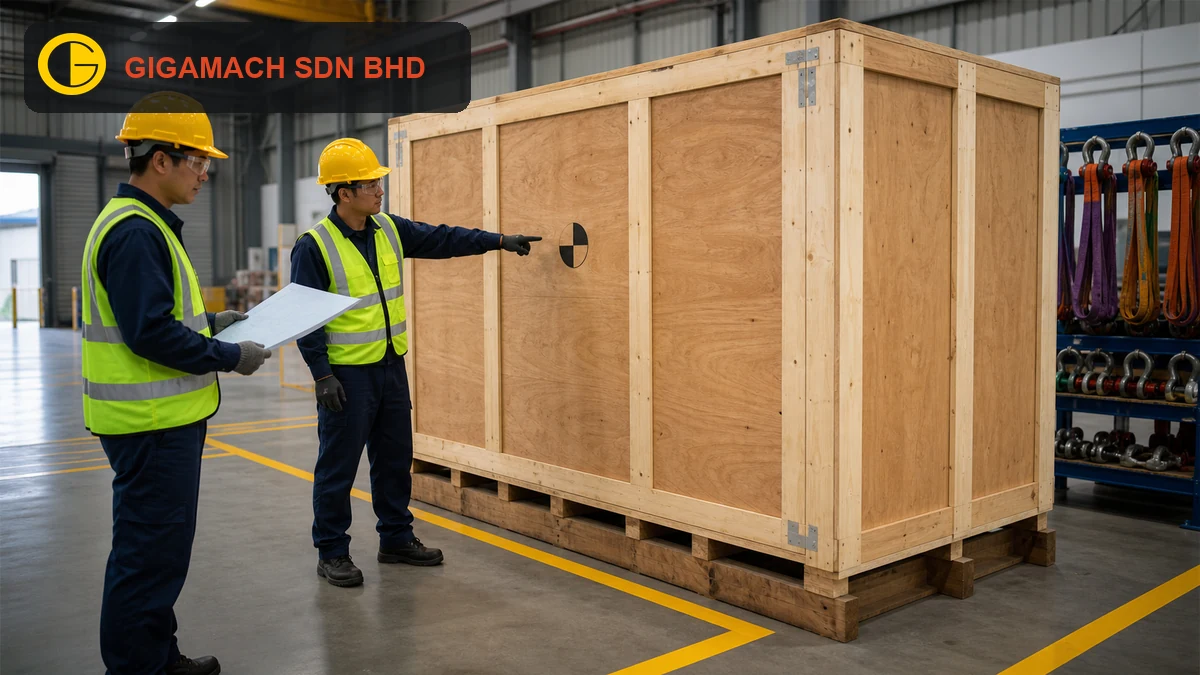
Industrial machine relocation with rated handling equipment, PPE-equipped workers, controlled movement, and a clear exclusion zone for safety education.
AI-generated illustrative safety visual by GIGAMACH SDN BHD.

Planning for machine relocation Malaysia requires more than the correct machine or lifting equipment. Once machinery is enclosed, the crate's outside shape can hide an offset load. Packing blocks, protective materials and accessories may also change the final balance.

Why Machinery packing and crating: verify and mark the true centre of gravity before handling. planning matters

A relocation succeeds only when the load, route, floor, handling equipment, people, and final position are treated as one coordinated plan. A safe lift at the starting point does not remove risks along the travel path or during final alignment.

The work method should be based on verified site and load information. A checklist supports the planning discussion, but it does not replace a task-specific assessment by competent personnel.

Practical pre-work checklist

  • Check 1: Verify the total packed weight and centre of gravity using reliable equipment and packing information.
  • Check 2: Never assume that the geometric centre of the crate is the balance point.
  • Check 3: Mark the verified centre of gravity clearly on more than one visible side.
  • Check 4: Identify approved handling or lifting points and check the skid, base and supports.
  • Check 5: Brief the lifting supervisor and rigger so the rigging arrangement matches the packed load.
  • Check 6: Use a controlled trial lift from safe positions and stop if the crate tilts unexpectedly.

Record the important findings during the site survey and brief the same controls to operators, riggers, signalmen, supervisors, and nearby work teams. Stop and reassess whenever the site condition or equipment configuration differs from the plan.

Common mistakes to avoid

  • Planning the lifting point but not surveying the complete travel route.
  • Estimating machine weight or centre of gravity from appearance alone.
  • Allowing hands or feet into crush zones during final positioning.

Related planning terms include industrial machinery installation, heavy machinery mover, equipment positioning. These should be used naturally to describe the actual work scope, not treated as interchangeable services.

Final verification before work starts

Before movement begins, walk the route with the operating team, confirm clearances and floor capacity, assign one signalman, and identify safe stopping and recovery positions.

The crate may look simple. Its true balance must be verified, marked and communicated.

Planning support for industrial work

GIGAMACH SDN BHD provides machine relocation and equipment positioning with a practical safety-first approach. Plan the scope early so the equipment, access, lifting method, transport, and final positioning can be coordinated before work begins.
Wednesday, August 19, 2026

LIFTING SUPERVISOR: WHEN CONDITIONS CHANGE, STOP AND REASSESS

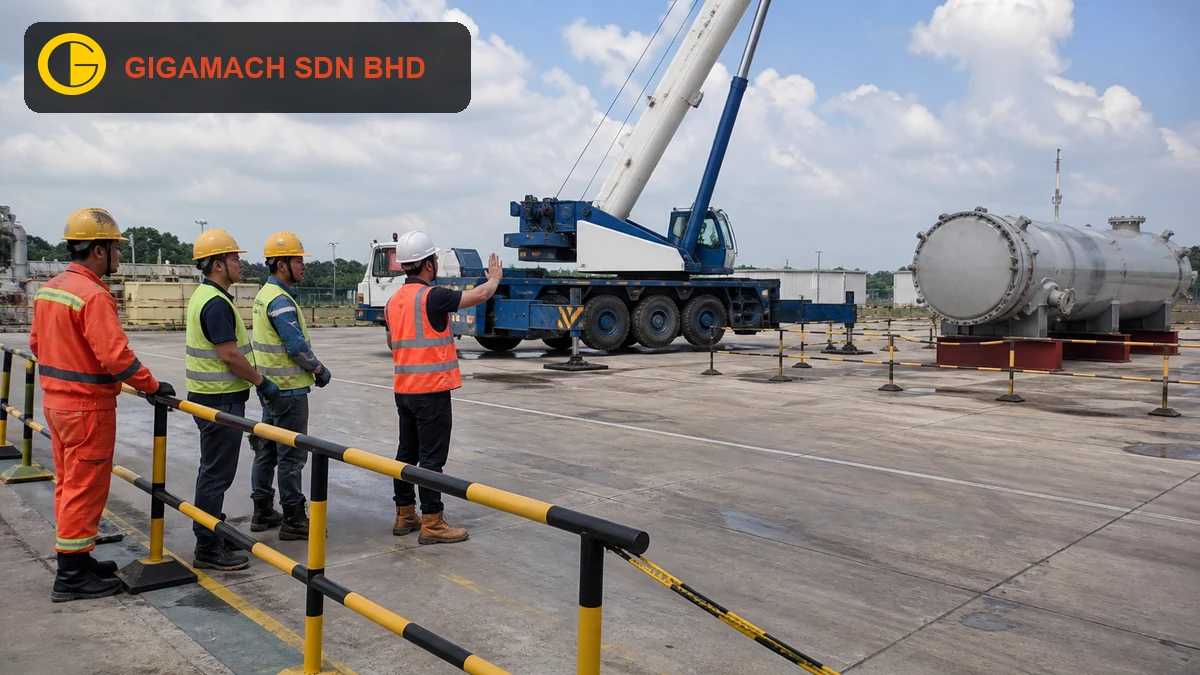
Lifting supervisor briefing a crane operator, rigger, and designated signalman behind a controlled barrier, with an idle crane and grounded load in the background for lifting-team safety education.
AI-generated illustrative safety visual by GIGAMACH SDN BHD.

Planning for lifting supervisor safety requires more than the correct machine or lifting equipment. A lifting plan describes an agreed method, but the worksite can change. Ground movement, deteriorating visibility, unexpected load behaviour, altered rigging or unauthorised entry can make the planned lift no longer valid.

For industrial teams working in Malaysia, early planning helps identify access, load, ground, personnel, and coordination risks before equipment is mobilised.

Why Lifting supervisor change control and stop-work coordination planning matters

A lift remains controlled only while the actual crane setup, load, rigging, path, access, visibility, weather, and team communication continue to match the agreed method. Change control gives the lifting supervisor a structured way to pause, review, and coordinate the team.

The work method should be based on verified site and load information. A checklist supports the planning discussion, but it does not replace a task-specific assessment by competent personnel.

Practical pre-work checklist

  • Check 1: Hold the operation and make sure the load is placed in a safe, controlled condition.
  • Check 2: Compare the crane setup, ground, load, rigging and lifting path with the approved method.
  • Check 3: Confirm that the exclusion zone and agreed communication remain effective.
  • Check 4: Involve the relevant responsible personnel when a change requires review or authorisation.
  • Check 5: Rebrief the crane operator, rigger, designated signalman and surrounding work groups.
  • Check 6: Resume only when the revised conditions and controls are understood.

Record the important findings during the site survey and brief the same controls to operators, riggers, signalmen, supervisors, and nearby work teams. Stop and reassess whenever the site condition or equipment configuration differs from the plan.

Common mistakes to avoid

  • Treating a minor site change as acceptable without checking its effect on the lift plan.
  • Restarting before the crane operator, rigger, designated signalman, and nearby teams understand the revised controls.
  • Confusing coordination responsibility with the crane operator's control of the crane or the rigger's hands-on duties.

Related planning terms include lift plan review, lifting team coordination, pre-lift briefing. These should be used naturally to describe the actual work scope, not treated as interchangeable services.

Final verification before work starts

Before resuming, confirm that the load is safe, the changed condition has received the required review, the exclusion zone and communication method remain effective, and every affected person has been rebriefed.

Planning support for industrial work

GIGAMACH SDN BHD provides lifting operations and lifting-team coordination with a practical safety-first approach. Plan the scope early so the equipment, access, lifting method, transport, and final positioning can be coordinated before work begins.
Friday, August 7, 2026

Lifting Gear Inspection: Inspect Before You Connect

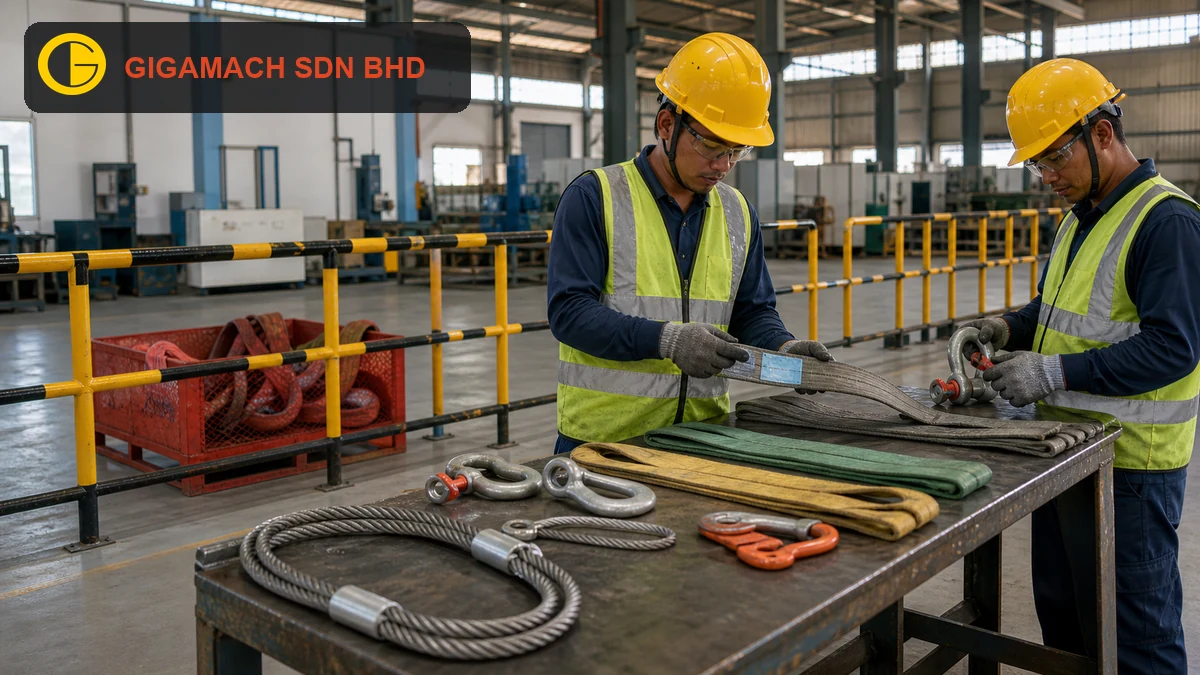
Two PPE-equipped rigging technicians inspecting web slings, a wire-rope sling, shackles, and hooks on a grounded factory bench, with damaged gear isolated behind a rigid exclusion barrier for lifting gear pre-use inspection education.
AI-generated illustrative safety visual by GIGAMACH SDN BHD.

Planning for heavy lifting services requires more than the correct machine or lifting equipment. A lifting gear inspection should happen before every connection, because a damaged sling or incompatible shackle can compromise the entire lifting method.

For industrial teams working in Peninsular Malaysia, early planning helps identify access, load, ground, personnel, and coordination risks before equipment is mobilised.

Why Lifting gear pre-use inspection: identification, condition checks, hardware checks, and defect quarantine. planning matters

Heavy lifting depends on verified load information, suitable equipment, stable support, controlled access, and clear communication. Each part of the lifting system must be considered together before force is applied to the load.

The work method should be based on verified site and load information. A checklist supports the planning discussion, but it does not replace a task-specific assessment by competent personnel.

Practical pre-work checklist

  • Check 1: Read the identification tag and confirm the working load limit matches the planned configuration.
  • Check 2: Inspect web slings for cuts, abrasion, heat damage and damaged stitching.
  • Check 3: Check wire-rope slings for broken wires, kinks, corrosion or crushed sections.
  • Check 4: Examine shackles, hooks and pins for wear, deformation, damaged threads and correct engagement.
  • Check 5: Confirm components are compatible, correctly oriented and protected from sharp edges.
  • Check 6: Tag, isolate and report suspect gear—never improvise a repair or return it to the rack.

Record the important findings during the site survey and brief the same controls to operators, riggers, signalmen, supervisors, and nearby work teams. Stop and reassess whenever the site condition or equipment configuration differs from the plan.

Common mistakes to avoid

  • Proceeding with incomplete load data or unverified lifting points.
  • Treating ground support, sling angles, or exclusion zones as secondary.
  • Continuing movement after communication or visibility has been lost.

Related planning terms include rigging services, gantry lifting, hydraulic jacking. These should be used naturally to describe the actual work scope, not treated as interchangeable services.

Final verification before work starts

Before the main operation, confirm the approved method, equipment capacity, ground support, rigging arrangement, exclusion zone, communications, and stop-work conditions with the full team.

A safe lift starts before the hook is connected: inspect, verify and remove defects from service.

Planning support for industrial work

GIGAMACH SDN BHD provides heavy lifting, rigging, and industrial handling with a practical safety-first approach. Plan the scope early so the equipment, access, lifting method, transport, and final positioning can be coordinated before work begins.
INDUSTRIAL DELIVERY: IS THE RECEIVING SITE READY?

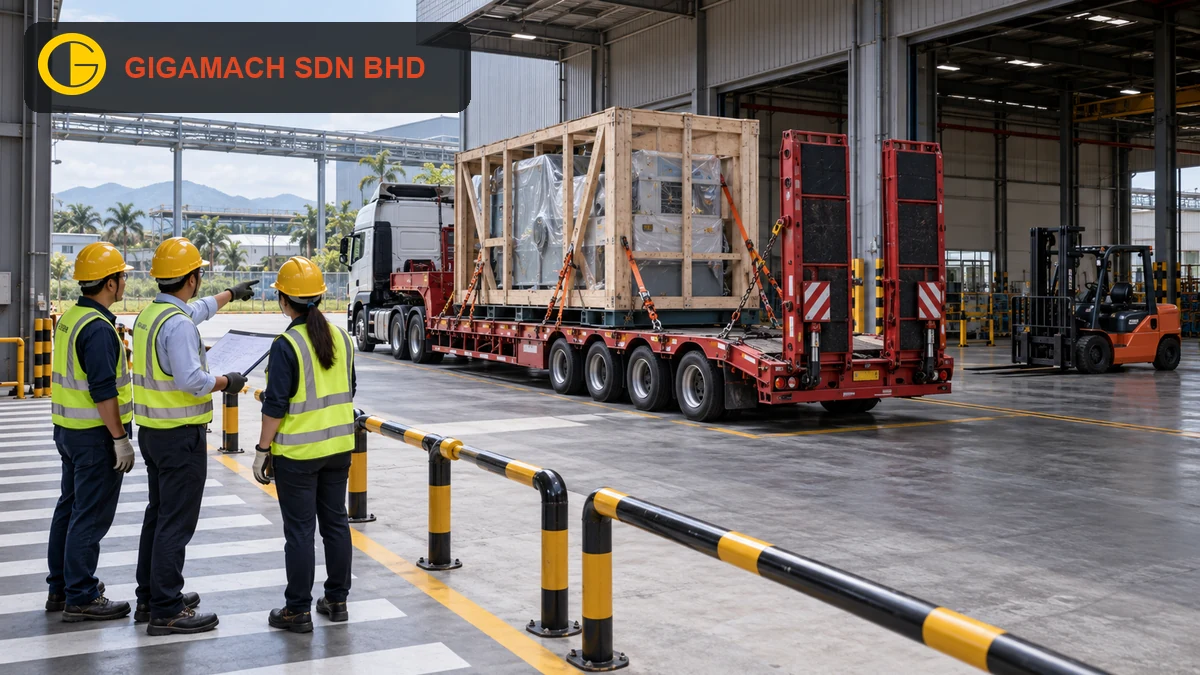
AI-generated illustrative safety visual by GIGAMACH SDN BHD. Planning for industrial machinery transportation requires more than the correc...