Showing posts with label GroundConditions. Show all posts

Monday, August 17, 2026

MOBILE CRANE SETUP: SUPPORT THE OUTRIGGERS BEFORE THE LOAD

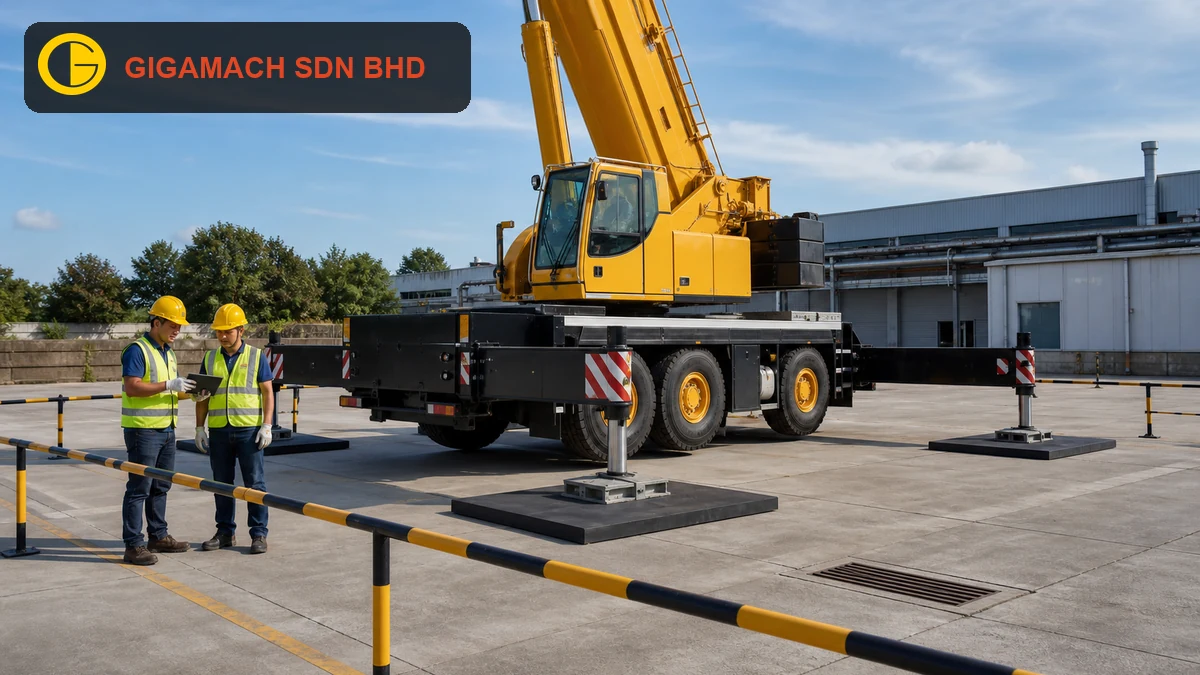
Mobile crane fully supported on engineered outrigger mats in a factory yard, with PPE-equipped personnel outside a controlled exclusion zone for crane ground-support safety education.
AI-generated illustrative safety visual by GIGAMACH SDN BHD.

Planning for mobile crane operations requires more than the correct machine or lifting equipment. Mobile crane operations depend on more than crane capacity. Stability begins at the ground, where a drain, underground service, recent backfill, weak pavement or uneven support can change how outrigger reactions are carried.

For industrial teams working in Malaysia, early planning helps identify access, load, ground, personnel, and coordination risks before equipment is mobilised.

Why Mobile crane ground support and outrigger stability planning matters

Crane stability depends on how the complete setup transfers load into the supporting surface. Crane configuration, operating radius, outrigger reactions, ground capacity, underground features, and load-distributing support must therefore be reviewed together.

The work method should be based on verified site and load information. A checklist supports the planning discussion, but it does not replace a task-specific assessment by competent personnel.

Practical pre-work checklist

  • Check 1: Confirm the planned crane configuration, load, radius and expected outrigger reactions.
  • Check 2: Assess soil, pavement, slope, excavations and known underground services.
  • Check 3: Select suitable mats or engineered support to distribute the reaction.
  • Check 4: Deploy outriggers as planned, maintain full pad contact and level the crane.
  • Check 5: Keep people clear of outriggers, mats and the crane's operating zone.
  • Check 6: Recheck level, pad contact and settlement after setup and controlled initial loading.

Record the important findings during the site survey and brief the same controls to operators, riggers, signalmen, supervisors, and nearby work teams. Stop and reassess whenever the site condition or equipment configuration differs from the plan.

Common mistakes to avoid

  • Assuming concrete or asphalt is suitable without checking what lies below it.
  • Selecting outrigger mats by appearance instead of the planned reaction and allowable ground pressure.
  • Checking crane level only at setup and overlooking settlement during initial loading.

Related planning terms include crane setup safety, outrigger ground support, heavy lifting services. These should be used naturally to describe the actual work scope, not treated as interchangeable services.

Final verification before work starts

Before lifting, confirm the crane configuration, planned reactions, surface and underground conditions, outrigger deployment, mat contact, crane level, exclusion zone, and monitoring method. Stop and reassess if support moves or conditions no longer match the plan.

Planning support for industrial work

GIGAMACH SDN BHD provides mobile crane operations and heavy lifting with a practical safety-first approach. Plan the scope early so the equipment, access, lifting method, transport, and final positioning can be coordinated before work begins.

Tuesday, August 11, 2026

AERIAL WORK PLATFORM SELECTION: CHOOSE REACH, NOT GUESSWORK

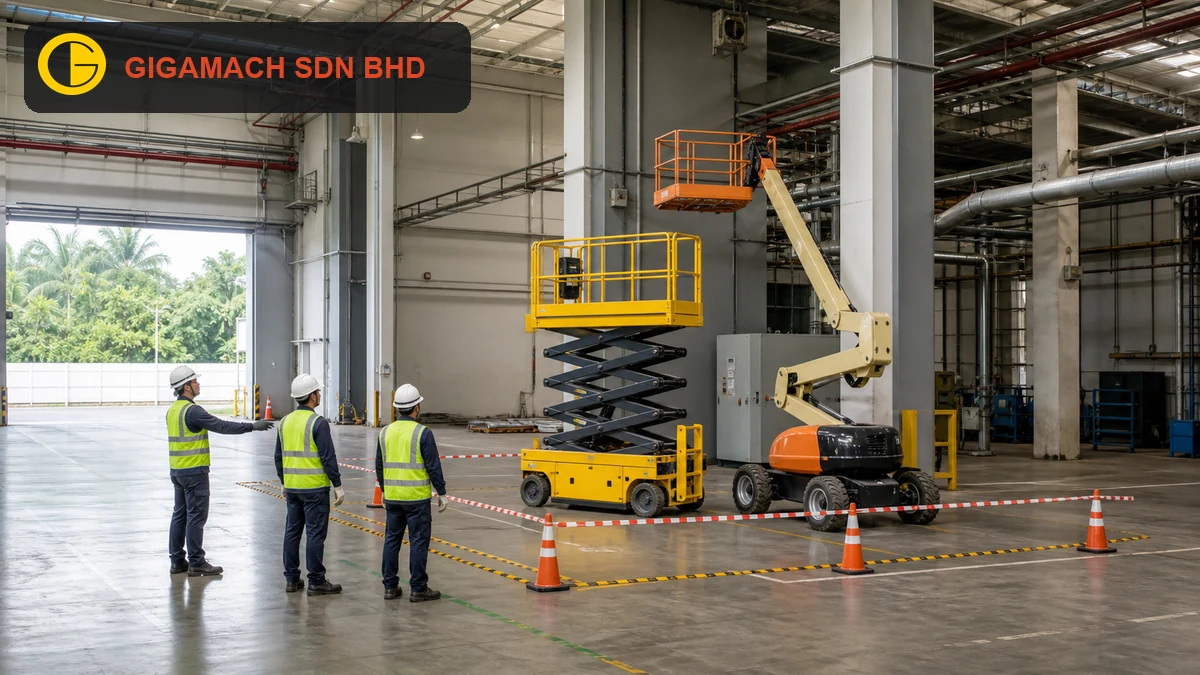
Scissor lift and articulated boom lift partially raised on a level factory floor, with three PPE-equipped workers outside marked exclusion zones comparing vertical access and outreach for aerial work platform selection education.
AI-generated illustrative safety visual by GIGAMACH SDN BHD.

Planning for boom lift and scissor lift rental requires more than the correct machine or lifting equipment. Good aerial work platform selection starts with the work envelope—not the machine name. A scissor lift is suited to mainly vertical access with a stable platform, while a boom lift provides outreach around obstacles when the setup area allows it.

For industrial teams working in Shah Alam, Selangor, early planning helps identify access, load, ground, personnel, and coordination risks before equipment is mobilised.

Why Aerial work platform selection: choosing between scissor-lift vertical access and boom-lift outreach. planning matters

Access equipment must match the required working height, outreach, platform load, ground condition, and surrounding hazards. Selecting a machine by height alone can leave the operator without suitable reach or a stable operating setup.

The work method should be based on verified site and load information. A checklist supports the planning discussion, but it does not replace a task-specific assessment by competent personnel.

Practical pre-work checklist

  • Check 1: Confirm the required working height and horizontal outreach.
  • Check 2: Check the total platform load, including people, tools, and materials.
  • Check 3: Assess ground capacity, slope, access width, and turning space.
  • Check 4: Identify overhead obstructions, traffic, and the exclusion zone.
  • Check 5: Match indoor or outdoor conditions with the correct power source and machine type.
  • Check 6: Complete pre-use checks and follow the manufacturer’s instructions and site controls.

Record the important findings during the site survey and brief the same controls to operators, riggers, signalmen, supervisors, and nearby work teams. Stop and reassess whenever the site condition or equipment configuration differs from the plan.

Common mistakes to avoid

  • Selecting equipment before checking ground condition and access width.
  • Ignoring platform capacity, overhead hazards, or nearby vehicle traffic.
  • Starting work without completing the pre-use and function checks.

Related planning terms include aerial work platform selection, pre-use inspection, working at height. These should be used naturally to describe the actual work scope, not treated as interchangeable services.

Final verification before work starts

Before raising the platform, verify the work zone, emergency lowering arrangement, operator communication, weather limitations, and safe access to and from the platform.

Planning support for industrial work

GIGAMACH SDN BHD provides boom lift and scissor lift rental with a practical safety-first approach. Plan the scope early so the equipment, access, lifting method, transport, and final positioning can be coordinated before work begins.
INDUSTRIAL DELIVERY: IS THE RECEIVING SITE READY?

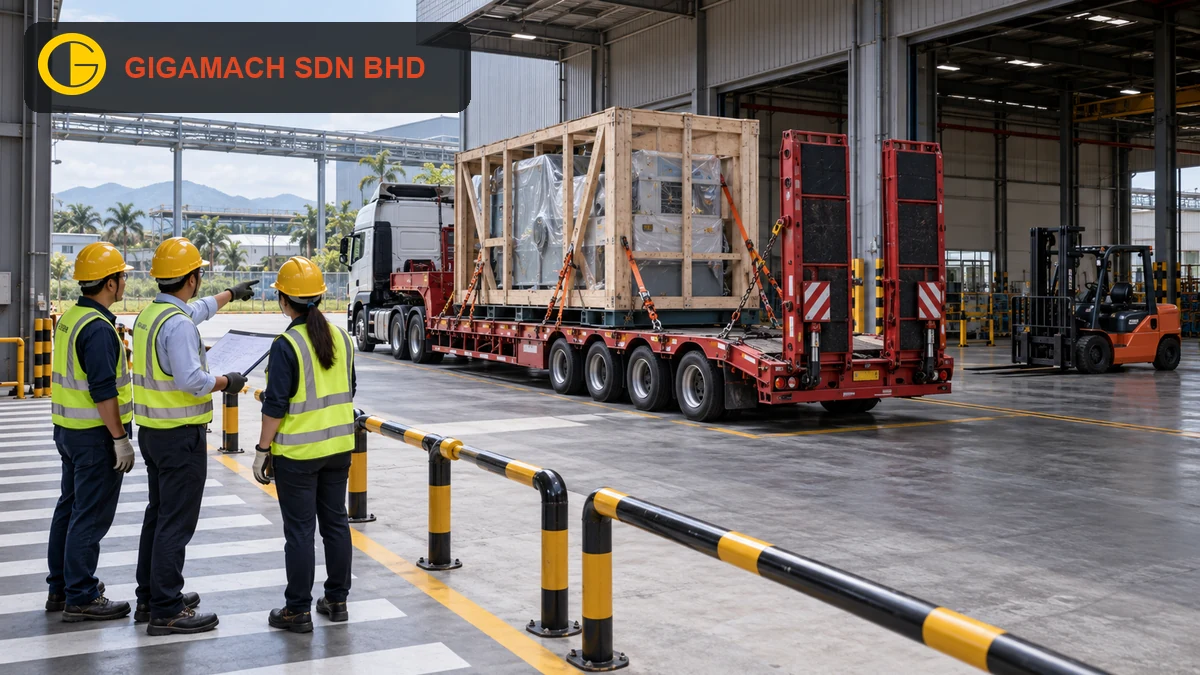
AI-generated illustrative safety visual by GIGAMACH SDN BHD. Planning for industrial machinery transportation requires more than the correc...