Showing posts with label HeavyLiftingServices. Show all posts

Monday, August 17, 2026

MOBILE CRANE SETUP: SUPPORT THE OUTRIGGERS BEFORE THE LOAD

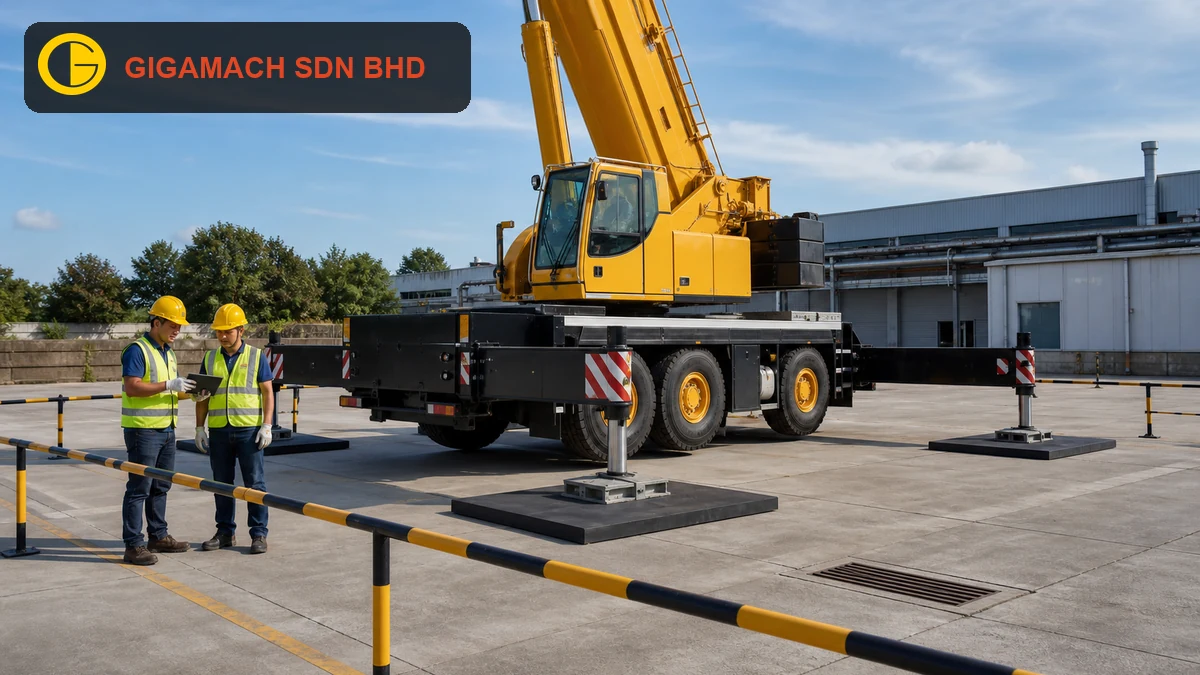
Mobile crane fully supported on engineered outrigger mats in a factory yard, with PPE-equipped personnel outside a controlled exclusion zone for crane ground-support safety education.
AI-generated illustrative safety visual by GIGAMACH SDN BHD.

Planning for mobile crane operations requires more than the correct machine or lifting equipment. Mobile crane operations depend on more than crane capacity. Stability begins at the ground, where a drain, underground service, recent backfill, weak pavement or uneven support can change how outrigger reactions are carried.

For industrial teams working in Malaysia, early planning helps identify access, load, ground, personnel, and coordination risks before equipment is mobilised.

Why Mobile crane ground support and outrigger stability planning matters

Crane stability depends on how the complete setup transfers load into the supporting surface. Crane configuration, operating radius, outrigger reactions, ground capacity, underground features, and load-distributing support must therefore be reviewed together.

The work method should be based on verified site and load information. A checklist supports the planning discussion, but it does not replace a task-specific assessment by competent personnel.

Practical pre-work checklist

  • Check 1: Confirm the planned crane configuration, load, radius and expected outrigger reactions.
  • Check 2: Assess soil, pavement, slope, excavations and known underground services.
  • Check 3: Select suitable mats or engineered support to distribute the reaction.
  • Check 4: Deploy outriggers as planned, maintain full pad contact and level the crane.
  • Check 5: Keep people clear of outriggers, mats and the crane's operating zone.
  • Check 6: Recheck level, pad contact and settlement after setup and controlled initial loading.

Record the important findings during the site survey and brief the same controls to operators, riggers, signalmen, supervisors, and nearby work teams. Stop and reassess whenever the site condition or equipment configuration differs from the plan.

Common mistakes to avoid

  • Assuming concrete or asphalt is suitable without checking what lies below it.
  • Selecting outrigger mats by appearance instead of the planned reaction and allowable ground pressure.
  • Checking crane level only at setup and overlooking settlement during initial loading.

Related planning terms include crane setup safety, outrigger ground support, heavy lifting services. These should be used naturally to describe the actual work scope, not treated as interchangeable services.

Final verification before work starts

Before lifting, confirm the crane configuration, planned reactions, surface and underground conditions, outrigger deployment, mat contact, crane level, exclusion zone, and monitoring method. Stop and reassess if support moves or conditions no longer match the plan.

Planning support for industrial work

GIGAMACH SDN BHD provides mobile crane operations and heavy lifting with a practical safety-first approach. Plan the scope early so the equipment, access, lifting method, transport, and final positioning can be coordinated before work begins.

Friday, August 7, 2026

Lifting Gear Inspection: Inspect Before You Connect

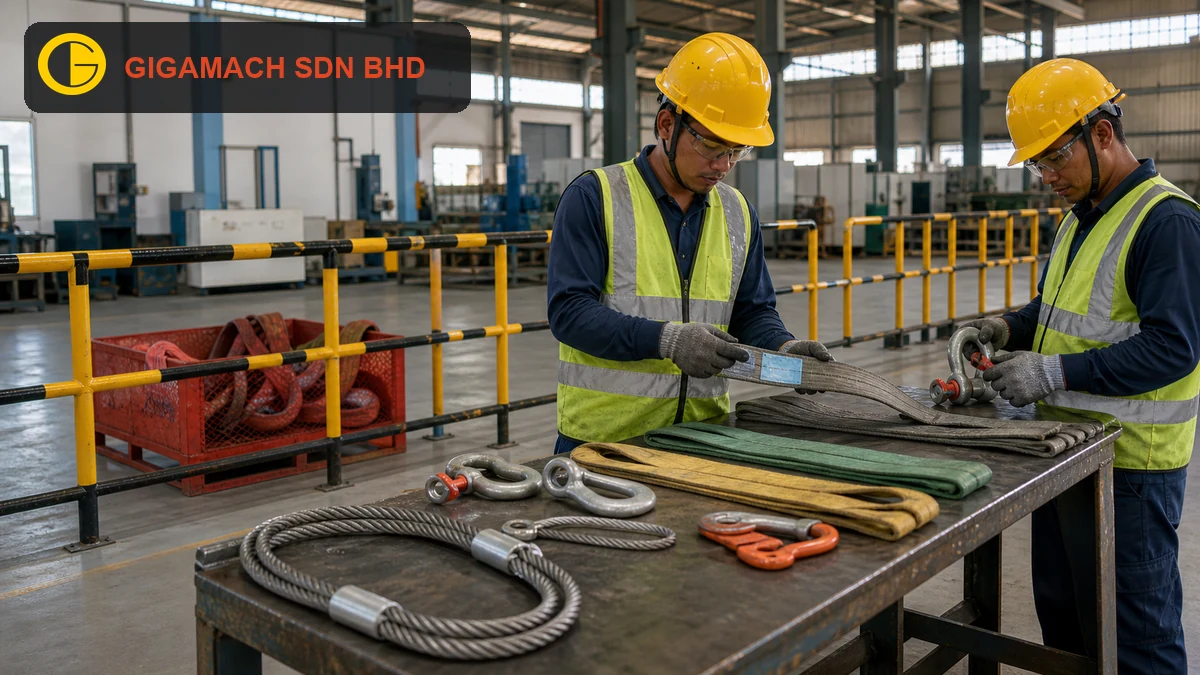
Two PPE-equipped rigging technicians inspecting web slings, a wire-rope sling, shackles, and hooks on a grounded factory bench, with damaged gear isolated behind a rigid exclusion barrier for lifting gear pre-use inspection education.
AI-generated illustrative safety visual by GIGAMACH SDN BHD.

Planning for heavy lifting services requires more than the correct machine or lifting equipment. A lifting gear inspection should happen before every connection, because a damaged sling or incompatible shackle can compromise the entire lifting method.

For industrial teams working in Peninsular Malaysia, early planning helps identify access, load, ground, personnel, and coordination risks before equipment is mobilised.

Why Lifting gear pre-use inspection: identification, condition checks, hardware checks, and defect quarantine. planning matters

Heavy lifting depends on verified load information, suitable equipment, stable support, controlled access, and clear communication. Each part of the lifting system must be considered together before force is applied to the load.

The work method should be based on verified site and load information. A checklist supports the planning discussion, but it does not replace a task-specific assessment by competent personnel.

Practical pre-work checklist

  • Check 1: Read the identification tag and confirm the working load limit matches the planned configuration.
  • Check 2: Inspect web slings for cuts, abrasion, heat damage and damaged stitching.
  • Check 3: Check wire-rope slings for broken wires, kinks, corrosion or crushed sections.
  • Check 4: Examine shackles, hooks and pins for wear, deformation, damaged threads and correct engagement.
  • Check 5: Confirm components are compatible, correctly oriented and protected from sharp edges.
  • Check 6: Tag, isolate and report suspect gear—never improvise a repair or return it to the rack.

Record the important findings during the site survey and brief the same controls to operators, riggers, signalmen, supervisors, and nearby work teams. Stop and reassess whenever the site condition or equipment configuration differs from the plan.

Common mistakes to avoid

  • Proceeding with incomplete load data or unverified lifting points.
  • Treating ground support, sling angles, or exclusion zones as secondary.
  • Continuing movement after communication or visibility has been lost.

Related planning terms include rigging services, gantry lifting, hydraulic jacking. These should be used naturally to describe the actual work scope, not treated as interchangeable services.

Final verification before work starts

Before the main operation, confirm the approved method, equipment capacity, ground support, rigging arrangement, exclusion zone, communications, and stop-work conditions with the full team.

A safe lift starts before the hook is connected: inspect, verify and remove defects from service.

Planning support for industrial work

GIGAMACH SDN BHD provides heavy lifting, rigging, and industrial handling with a practical safety-first approach. Plan the scope early so the equipment, access, lifting method, transport, and final positioning can be coordinated before work begins.
INDUSTRIAL DELIVERY: IS THE RECEIVING SITE READY?

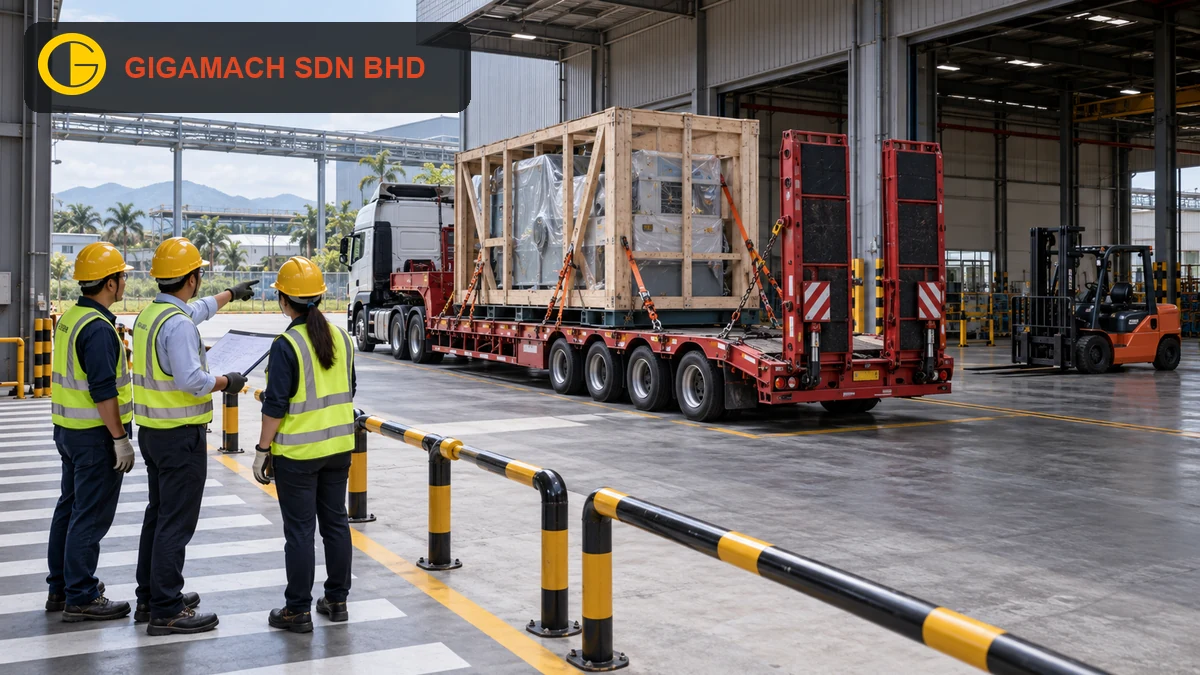
AI-generated illustrative safety visual by GIGAMACH SDN BHD. Planning for industrial machinery transportation requires more than the correc...