Showing posts with label Heavy Lifting. Show all posts

Monday, August 3, 2026

Gantry Lifting Requires Balanced, Synchronized Movement

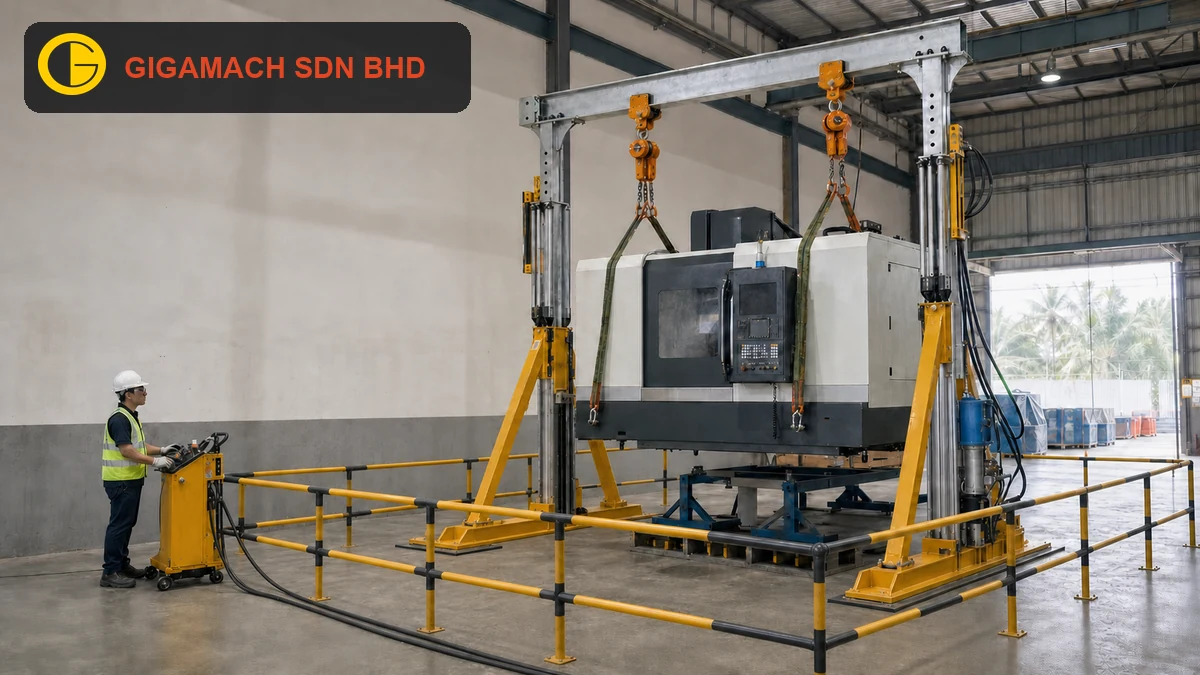
Portable hydraulic gantry lifting a level CNC machine above rated support stands, with stationary bases, a rigid exclusion barrier, and a PPE-equipped operator at a remote control station for gantry lifting safety education.
AI-generated illustrative safety visual by GIGAMACH SDN BHD.

Planning for heavy lifting services requires more than the correct machine or lifting equipment. Hydraulic gantries can lift and position heavy machinery in restricted areas, but the load path, support surface, beam arrangement, and synchronization must remain controlled.

For industrial teams working in Peninsular Malaysia, early planning helps identify access, load, ground, personnel, and coordination risks before equipment is mobilised.

Why Gantry Lifting planning matters

Heavy lifting depends on verified load information, suitable equipment, stable support, controlled access, and clear communication. Each part of the lifting system must be considered together before force is applied to the load.

The work method should be based on verified site and load information. A checklist supports the planning discussion, but it does not replace a task-specific assessment by competent personnel.

Practical pre-work checklist

  • Check 1: Verify the gantry, beam, header, and rigging capacities.
  • Check 2: Assess floor strength and use suitable load-spreading support.
  • Check 3: Confirm lift points and the machine centre of gravity.
  • Check 4: Raise and travel in small synchronized increments.
  • Check 5: Monitor level, support, clearance, and exclusion zones continuously.

Record the important findings during the site survey and brief the same controls to operators, riggers, signalmen, supervisors, and nearby work teams. Stop and reassess whenever the site condition or equipment configuration differs from the plan.

Common mistakes to avoid

  • Proceeding with incomplete load data or unverified lifting points.
  • Treating ground support, sling angles, or exclusion zones as secondary.
  • Continuing movement after communication or visibility has been lost.

Related planning terms include rigging services, gantry lifting, hydraulic jacking. These should be used naturally to describe the actual work scope, not treated as interchangeable services.

Final verification before work starts

Before the main operation, confirm the approved method, equipment capacity, ground support, rigging arrangement, exclusion zone, communications, and stop-work conditions with the full team.

Precision gantry work depends on keeping every tower and every load movement within the planned configuration.

Planning support for industrial work

GIGAMACH SDN BHD provides heavy lifting, rigging, and industrial handling with a practical safety-first approach. Plan the scope early so the equipment, access, lifting method, transport, and final positioning can be coordinated before work begins.

Sunday, July 26, 2026

Rigging Checks Before the Load Leaves the Ground

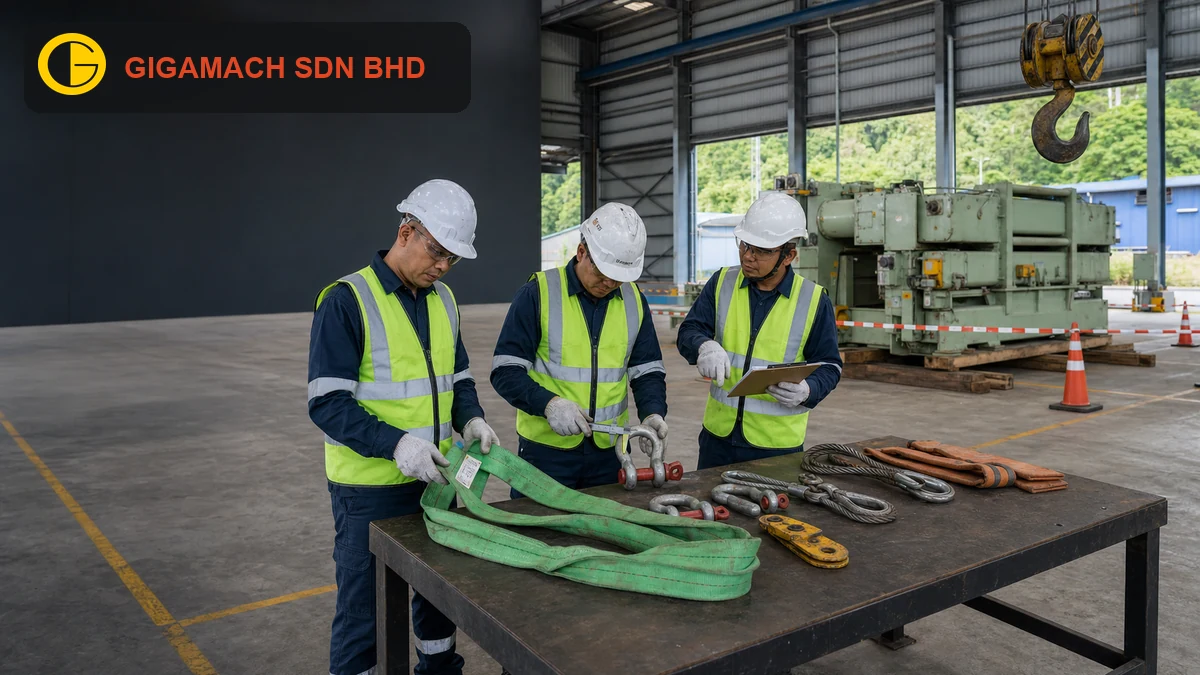
Gigamach industrial safety illustration for Rigging Safety
AI-generated illustrative safety visual by GIGAMACH SDN BHD.

Rigging connects the lifting equipment to the load. A small defect, incorrect sling angle, or unsuitable lifting point can affect the stability of the entire operation.

Practical safety checks

  • Match every sling, shackle, and hook to the planned load.
  • Inspect identification tags, wear, deformation, and damage.
  • Protect slings where they contact sharp edges.
  • Confirm lifting points and sling angles before tensioning.
  • Conduct a controlled trial lift and check load balance.

Rigging should be verified before lifting higher, not corrected after the load is already suspended.

GIGAMACH SDN BHD supports machine relocation, heavy lifting, rigging, gantry lifting, hydraulic jacking, and industrial equipment positioning with a practical safety-first approach.

Saturday, July 25, 2026

Machine Relocation in Malaysia: A Practical Planning Guide

 Relocating industrial machinery requires more than simply lifting and transporting equipment. Machine weight, dimensions, centre of gravity, access limitations, floor conditions, lifting points, production schedules, and final positioning must all be considered before work begins.

1. Conduct a Site Assessment

Inspect the existing and new locations before planning the move. Measure access routes, doorways, ceiling clearance, floor conditions, turning space, and the final installation area. Identify any obstacles that could affect the operation.

2. Confirm the Machine Information

Record the machine’s weight, dimensions, centre of gravity, approved lifting points, and sensitive components. Accurate information helps the project team select suitable equipment and develop a controlled moving plan.

3. Select Suitable Moving Equipment

Depending on the site conditions, a machine relocation may require cranes, forklifts, machinery skates, gantry systems, hydraulic jacks, rigging equipment, or a combination of these solutions.

4. Plan and Inspect the Route

Check the entire movement route for slopes, weak surfaces, tight corners, overhead hazards, restricted clearances, and interaction with workers or ongoing factory operations.

5. Establish an Exclusion Zone

Keep unauthorised personnel away from the work area. The responsibilities of the supervisor, signalman, equipment operators, and rigging team should be clearly communicated before movement begins.

6. Prepare the Final Position

Confirm the machine orientation, foundation, surrounding clearance, installation access, and required positioning accuracy before starting the relocation.

Professional Machine Relocation in Malaysia

GIGAMACH SDN BHD provides machine relocation, factory relocation, heavy lifting, crane operations, rigging, gantry lifting, hydraulic jacking, and industrial equipment positioning services in Malaysia.

Every relocation project presents different challenges. Proper assessment, suitable equipment, and coordinated execution help protect personnel, machinery, and surrounding facilities.

Contact GIGAMACH SDN BHD to discuss the requirements of your next machinery relocation project.


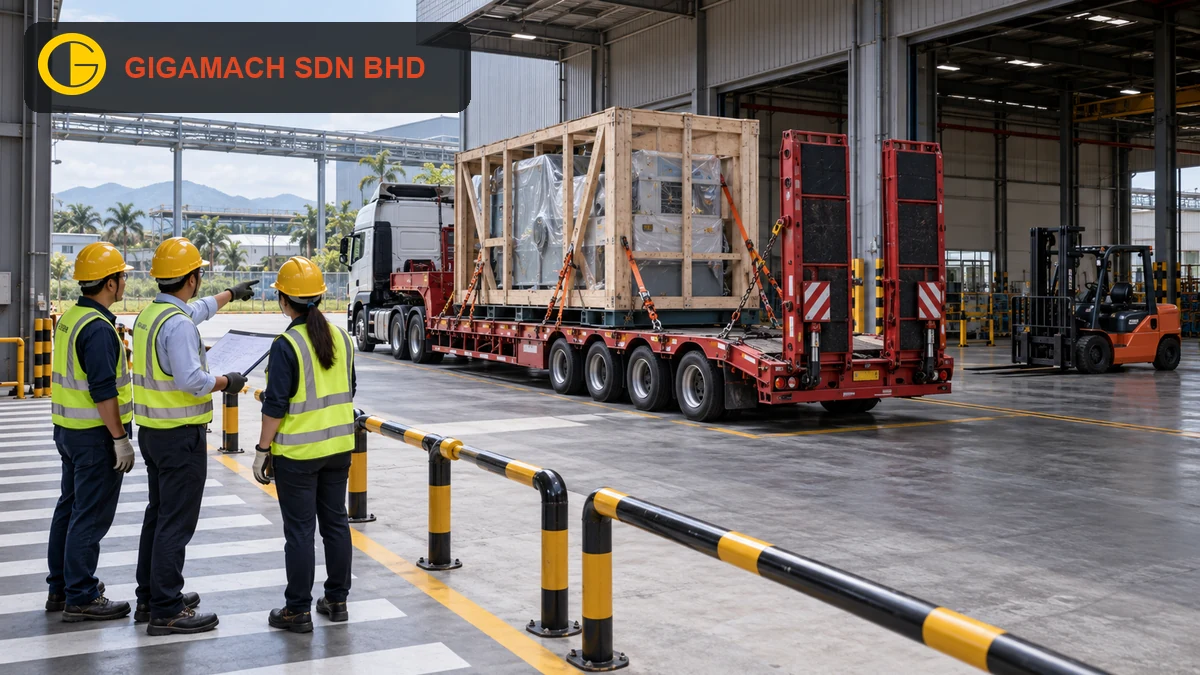
INDUSTRIAL DELIVERY: IS THE RECEIVING SITE READY?

AI-generated illustrative safety visual by GIGAMACH SDN BHD. Planning for industrial machinery transportation requires more than the correc...