Showing posts with label ContaminationControl. Show all posts

Thursday, September 10, 2026

CLEANROOM CLASSIFICATION: CONFIRM WHAT THE ROOM REQUIRES

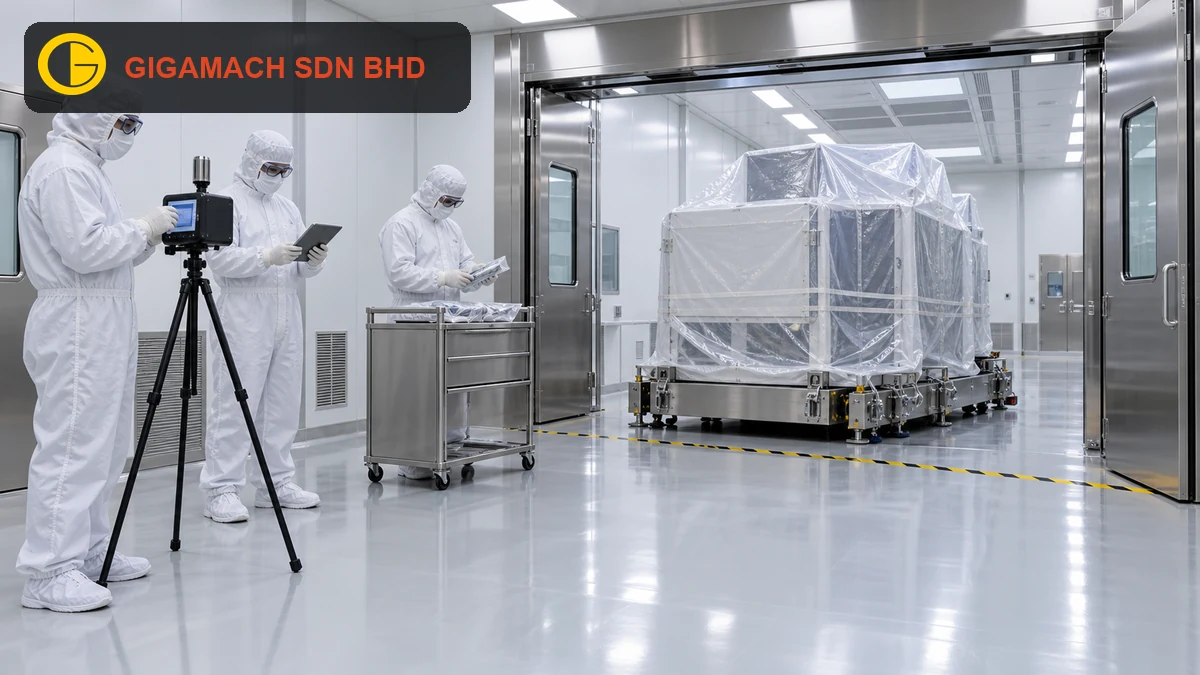
Wrapped precision machine on a clean stainless-steel transfer dolly, with fully gowned technicians, protected cleanroom surfaces, and a controlled exclusion route for cleanroom machinery transfer safety education.
AI-generated illustrative safety visual by GIGAMACH SDN BHD.

Planning for cleanroom machinery relocation Malaysia requires more than the correct machine or lifting equipment. Cleanroom machinery relocation should begin with one basic question: which classification framework and room condition apply to the work?

Why Cleanroom ISO classification and pharmaceutical GMP grade awareness before machinery handling matters

A cleanroom transfer must protect the equipment, controlled route, room surfaces, and contamination-control programme while preserving ordinary machinery-moving controls. Facility access rules, material transfer, load stability, and final release therefore need one coordinated method.

The work method should be based on verified site and load information. A checklist supports the planning discussion, but it does not replace a task-specific assessment by competent personnel.

Practical pre-work checklist

  • Check 1: Confirm whether the facility specifies an ISO class, GMP grade or both.
  • Check 2: Verify the room state and operating conditions for the task.
  • Check 3: Follow the facility’s approved gowning and material-transfer flow.
  • Check 4: Use cleaned, compatible tools and suitable transfer equipment.
  • Check 5: Protect surfaces, airflow, access routes and task-specific ESD controls.
  • Check 6: Coordinate cleaning, monitoring and authorised release after positioning.

Record the important findings during the site survey and brief the same controls to operators, riggers, signalmen, supervisors, and nearby work teams. Stop and reassess whenever the site condition or equipment configuration differs from the plan.

Common mistakes to avoid

  • Bringing untreated packaging, dirty wheels, or unapproved tools into the controlled area.
  • Protecting the machine but overlooking floors, doors, airlocks, and sensitive finishes.
  • Treating contamination control as a substitute for isolation, route, pinch-point, and exclusion-zone controls.

Related planning terms include cleanroom machinery relocation, cleanroom equipment installation, controlled-environment machinery handling. These should be used naturally to describe the actual work scope, not treated as interchangeable services.

Final verification before work starts

Before entry, confirm facility authorisation, cleanroom preparation, equipment condition, route protection, load control, communication, and stop-work conditions. After positioning, coordinate cleaning, inspection, documentation, and any required monitoring or authorised release with the facility team.

Verify the requirement. Protect the environment.

Planning support for industrial work

GIGAMACH SDN BHD provides cleanroom machinery relocation and equipment installation with a practical safety-first approach. Plan the scope early so the equipment, access, lifting method, transport, and final positioning can be coordinated before work begins.

Friday, September 4, 2026

CLEANROOM MACHINE INSTALLATION: CONTROL CONTAMINATION DURING FINAL SETUP

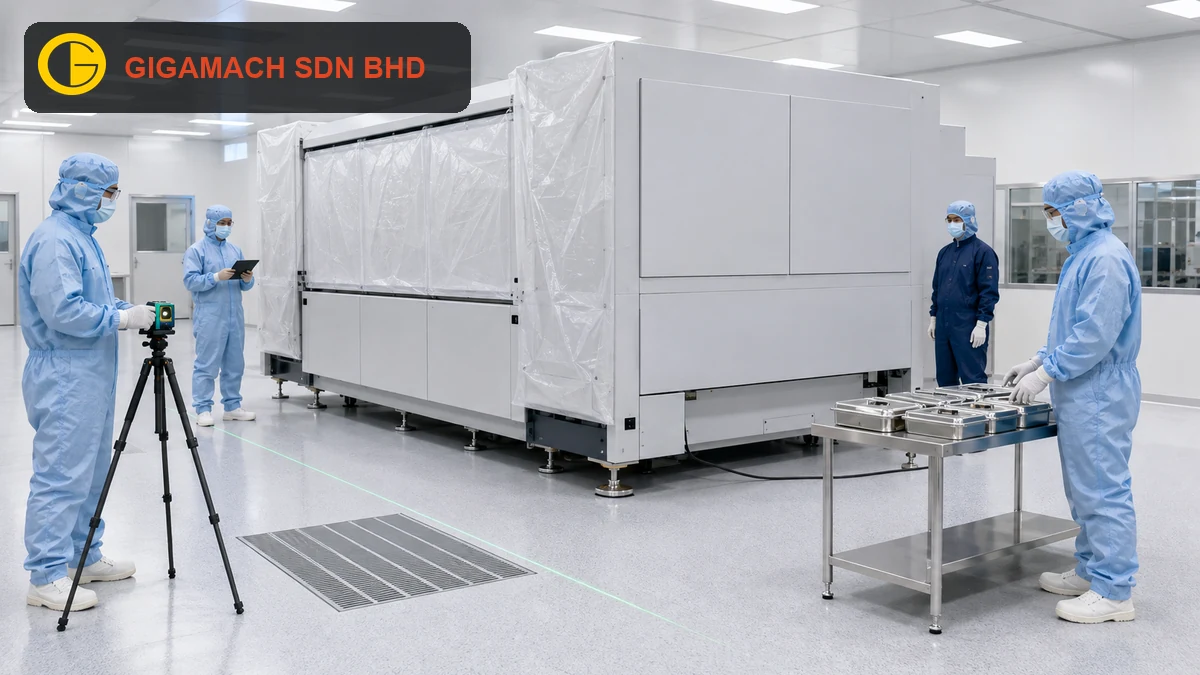
Wrapped precision machine in a cleanroom with fully gowned technicians checking positioning, covers and the controlled work area for cleanroom machinery installation education.
AI-generated illustrative safety visual by GIGAMACH SDN BHD.

Planning for cleanroom machinery relocation Malaysia requires more than the correct machine or lifting equipment. Moving a machine into position is only part of cleanroom equipment installation. The team must also control what enters the room, how the work affects the controlled environment and how the area is released after completion.

Why Cleanroom machine installation — contamination control from entry planning to authorised handover matters

A cleanroom transfer must protect the equipment, controlled route, room surfaces, and contamination-control programme while preserving ordinary machinery-moving controls. Facility access rules, material transfer, load stability, and final release therefore need one coordinated method.

The work method should be based on verified site and load information. A checklist supports the planning discussion, but it does not replace a task-specific assessment by competent personnel.

Practical pre-work checklist

  • Check 1: Confirm the facility's required cleanroom class, room state, access procedure, work permit and approved method before entry.
  • Check 2: Prepare cleanroom-compatible tools, transfer equipment, covers and protective materials as required by the facility.
  • Check 3: Check wheels and contact surfaces, and remove unsuitable packaging before controlled entry.
  • Check 4: Keep covers in place until needed, contain tools and parts, protect airflow paths and maintain safe positioning controls.
  • Check 5: Remove materials, clean and inspect the work area, then coordinate any required monitoring or requalification with the authorised facility team.

Record the important findings during the site survey and brief the same controls to operators, riggers, signalmen, supervisors, and nearby work teams. Stop and reassess whenever the site condition or equipment configuration differs from the plan.

Common mistakes to avoid

  • Bringing untreated packaging, dirty wheels, or unapproved tools into the controlled area.
  • Protecting the machine but overlooking floors, doors, airlocks, and sensitive finishes.
  • Treating contamination control as a substitute for isolation, route, pinch-point, and exclusion-zone controls.

Related planning terms include cleanroom machinery relocation, cleanroom equipment installation, controlled-environment machinery handling. These should be used naturally to describe the actual work scope, not treated as interchangeable services.

Final verification before work starts

Before entry, confirm facility authorisation, cleanroom preparation, equipment condition, route protection, load control, communication, and stop-work conditions. After positioning, coordinate cleaning, inspection, documentation, and any required monitoring or authorised release with the facility team.

Control the move. Protect the environment.

Planning support for industrial work

GIGAMACH SDN BHD provides cleanroom machinery relocation and equipment installation with a practical safety-first approach. Plan the scope early so the equipment, access, lifting method, transport, and final positioning can be coordinated before work begins.
Friday, August 14, 2026

CLEANROOM EQUIPMENT TRANSFER: CONTROL WHAT ENTERS THE ROOM

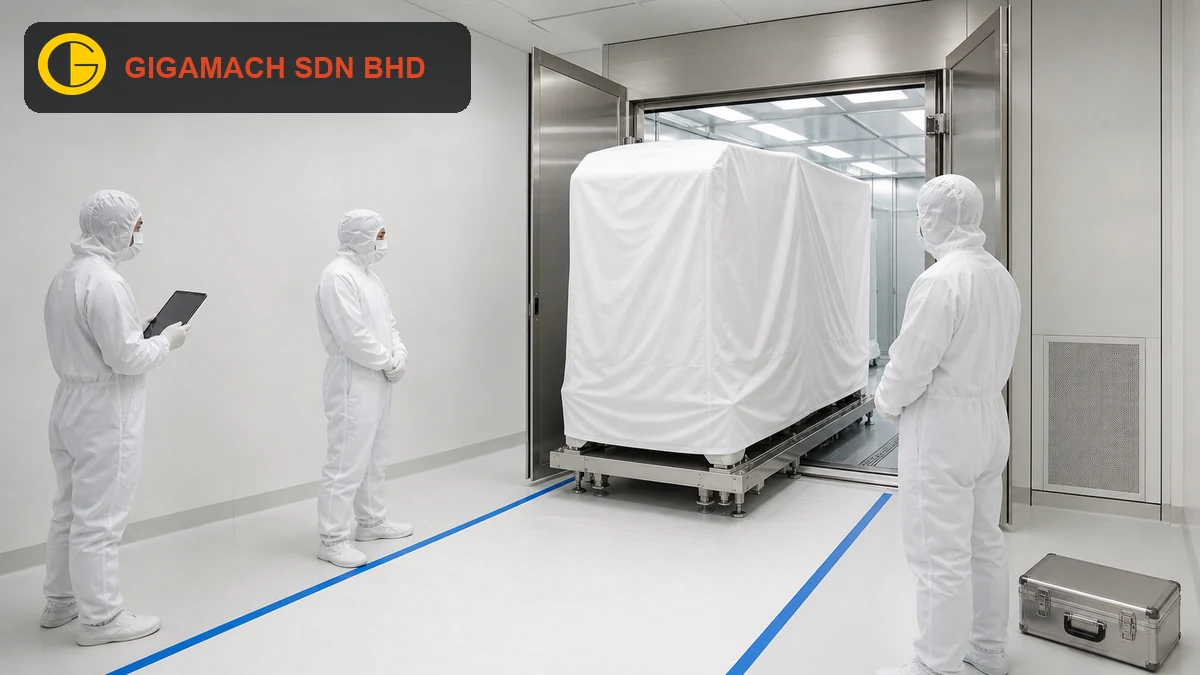
Wrapped precision machine on a clean stainless-steel transfer dolly, with fully gowned technicians, protected cleanroom surfaces, and a controlled exclusion route for cleanroom machinery transfer safety education.
AI-generated illustrative safety visual by GIGAMACH SDN BHD.

Planning for cleanroom machinery relocation Malaysia requires more than the correct machine or lifting equipment. Cleanroom machinery relocation requires two plans working together: contamination control and safe equipment handling. A clean-looking tool, wheel, cover, or package is not automatically suitable for a controlled environment.

Why Cleanroom equipment transfer: material control, ESD precautions, and safe positioning. planning matters

A cleanroom transfer must protect the equipment, controlled route, room surfaces, and contamination-control programme while preserving ordinary machinery-moving controls. Facility access rules, material transfer, load stability, and final release therefore need one coordinated method.

The work method should be based on verified site and load information. A checklist supports the planning discussion, but it does not replace a task-specific assessment by competent personnel.

Practical pre-work checklist

  • Check 1: Confirm the facility’s required cleanroom class, room state, access procedure, and approved work method.
  • Check 2: Remove unnecessary outer packaging and follow the authorised wipe-down and material-transfer process.
  • Check 3: Use approved low-shedding covers, clean handling equipment, protected wheels, and compatible tools.
  • Check 4: Apply ESD controls only where the equipment, product, or facility requires them.
  • Check 5: Protect floors, walls, airlocks, and the full route while maintaining pinch-point and exclusion-zone controls.
  • Check 6: Coordinate post-work cleaning, inspection, monitoring, and release with the facility’s authorised team.

Record the important findings during the site survey and brief the same controls to operators, riggers, signalmen, supervisors, and nearby work teams. Stop and reassess whenever the site condition or equipment configuration differs from the plan.

Common mistakes to avoid

  • Bringing untreated packaging, dirty wheels, or unapproved tools into the controlled area.
  • Protecting the machine but overlooking floors, doors, airlocks, and sensitive finishes.
  • Treating contamination control as a substitute for isolation, route, pinch-point, and exclusion-zone controls.

Related planning terms include cleanroom machinery relocation, cleanroom equipment installation, controlled-environment machinery handling. These should be used naturally to describe the actual work scope, not treated as interchangeable services.

Final verification before work starts

Before entry, confirm facility authorisation, cleanroom preparation, equipment condition, route protection, load control, communication, and stop-work conditions. After positioning, coordinate cleaning, inspection, documentation, and any required monitoring or authorised release with the facility team.

Planning support for industrial work

GIGAMACH SDN BHD provides cleanroom machinery relocation and equipment installation with a practical safety-first approach. Plan the scope early so the equipment, access, lifting method, transport, and final positioning can be coordinated before work begins.
Tuesday, August 4, 2026

Cleanroom Machine Transfer: Protect the Route Before Entry

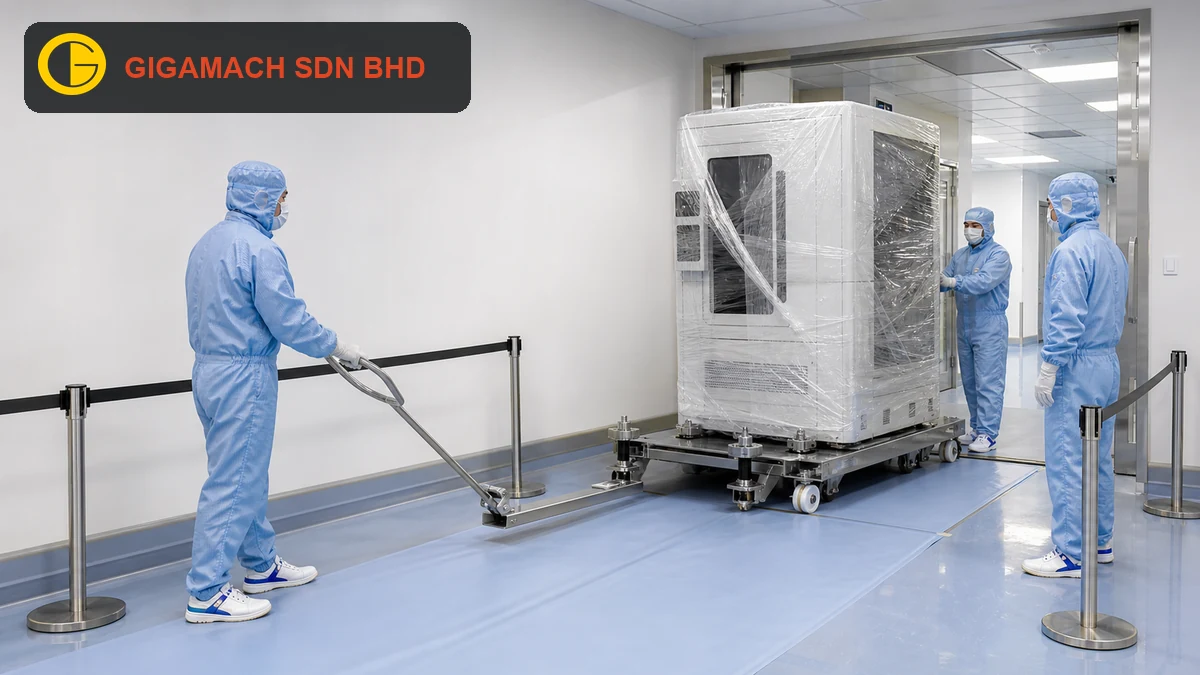
Wrapped precision machine on a clean stainless-steel transfer dolly, with fully gowned technicians, protected cleanroom surfaces, and a controlled exclusion route for cleanroom machinery transfer safety education.
AI-generated illustrative safety visual by GIGAMACH SDN BHD.

Planning for heavy lifting services requires more than the correct machine or lifting equipment. Cleanroom machinery relocation in Malaysia begins before equipment reaches the airlock. A successful transfer must protect both the machine and the controlled environment.

Why Cleanroom machinery transfer planning: protect the controlled route before entry. planning matters

A cleanroom transfer must protect the equipment, controlled route, room surfaces, and contamination-control programme while preserving ordinary machinery-moving controls. Facility access rules, material transfer, load stability, and final release therefore need one coordinated method.

The work method should be based on verified site and load information. A checklist supports the planning discussion, but it does not replace a task-specific assessment by competent personnel.

Practical pre-work checklist

  • Check 1: Confirm the facility's required room class, room state, access procedure and work permit.
  • Check 2: Coordinate gowning, PPE, tool cleaning and material-transfer steps with the authorised facility team.
  • Check 3: Remove unnecessary outer packaging and use approved low-shedding covers, clean dollies and clean wheels.
  • Check 4: Protect floors, walls, doors and sensitive finishes along the full route.
  • Check 5: Maintain isolation, centre-of-gravity awareness, pinch-point control, an exclusion zone and one clear communication method.
  • Check 6: After positioning, clean and inspect the area, document the move and coordinate any required monitoring or release.

Record the important findings during the site survey and brief the same controls to operators, riggers, signalmen, supervisors, and nearby work teams. Stop and reassess whenever the site condition or equipment configuration differs from the plan.

Common mistakes to avoid

  • Bringing untreated packaging, dirty wheels, or unapproved tools into the controlled area.
  • Protecting the machine but overlooking floors, doors, airlocks, and sensitive finishes.
  • Treating contamination control as a substitute for isolation, route, pinch-point, and exclusion-zone controls.

Related planning terms include cleanroom machinery relocation, cleanroom equipment installation, controlled-environment machinery handling. These should be used naturally to describe the actual work scope, not treated as interchangeable services.

Final verification before work starts

Before entry, confirm facility authorisation, cleanroom preparation, equipment condition, route protection, load control, communication, and stop-work conditions. After positioning, coordinate cleaning, inspection, documentation, and any required monitoring or authorised release with the facility team.

Planning support for industrial work

GIGAMACH SDN BHD provides cleanroom machinery relocation and equipment installation with a practical safety-first approach. Plan the scope early so the equipment, access, lifting method, transport, and final positioning can be coordinated before work begins.
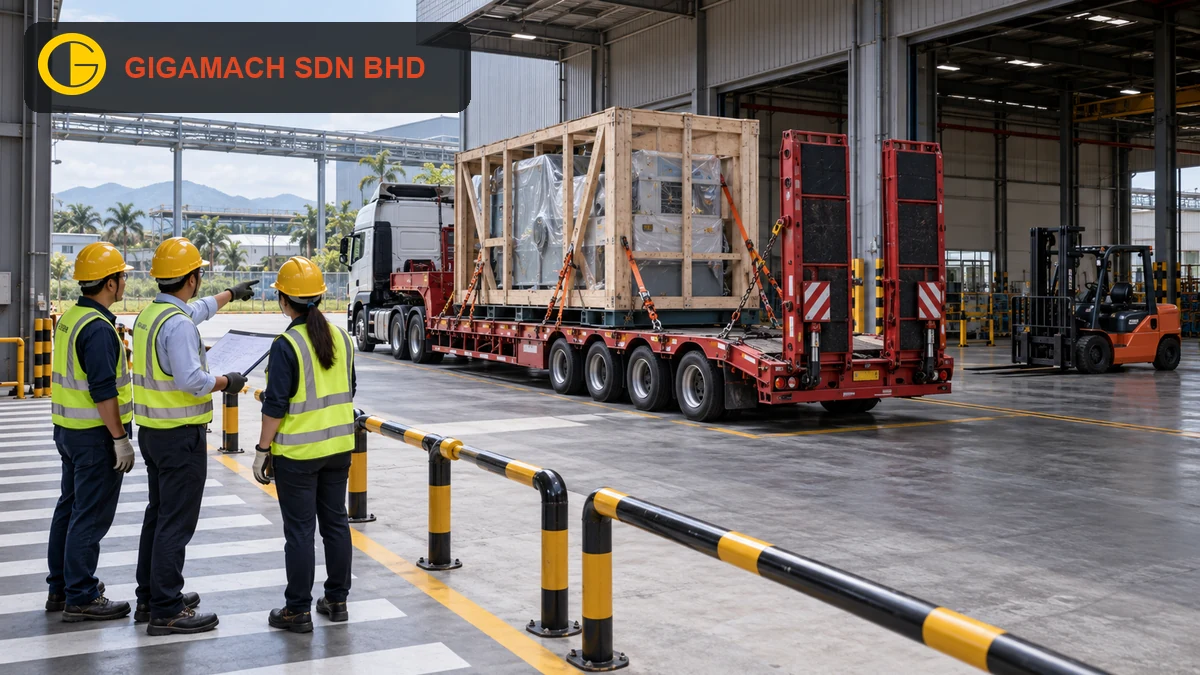
INDUSTRIAL DELIVERY: IS THE RECEIVING SITE READY?

AI-generated illustrative safety visual by GIGAMACH SDN BHD. Planning for industrial machinery transportation requires more than the correc...