Showing posts with label MachineryLoading. Show all posts

Tuesday, August 18, 2026

CONTAINER STUFFING: CONTROL THE LOAD BEFORE THE DOORS CLOSE

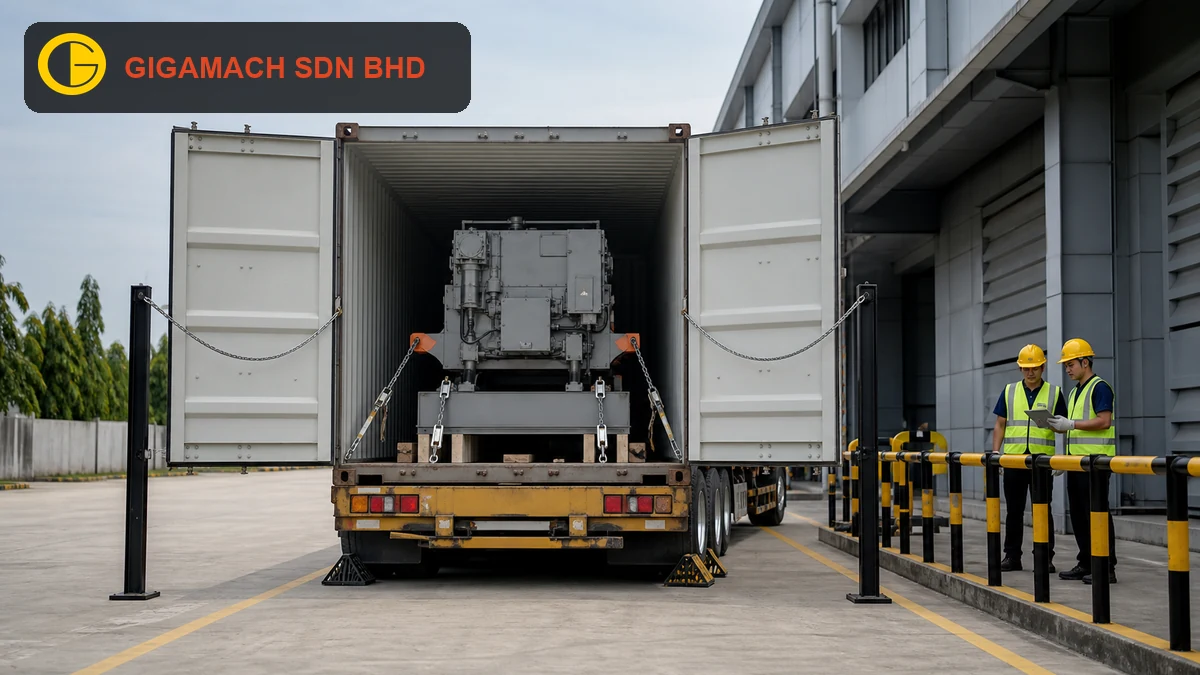
Heavy industrial machinery being safely prepared for transport with rated lifting equipment, secure packing, PPE, and controlled access.
AI-generated illustrative safety visual by GIGAMACH SDN BHD.

Planning for industrial machinery transportation requires more than the correct machine or lifting equipment. Container stuffing is not complete when machinery fits inside. Weight distribution, support, restraint and door clearance must remain controlled throughout transport and unloading.

For industrial teams working in Peninsular Malaysia, early planning helps identify access, load, ground, personnel, and coordination risks before equipment is mobilised.

Why Container stuffing planning and final restraint verification planning matters

Industrial transport starts before the vehicle arrives. The load dimensions, weight distribution, restraint points, lifting method, route, unloading space, and final handover must be coordinated as one operation.

The work method should be based on verified site and load information. A checklist supports the planning discussion, but it does not replace a task-specific assessment by competent personnel.

Practical pre-work checklist

  • Check 1: Verify the machinery weight, dimensions, centre of gravity and handling points.
  • Check 2: Inspect the container floor, structure, payload limit and suitable restraint points.
  • Check 3: Plan a straight loading path with matched handling equipment and one agreed signal.
  • Check 4: Position the load to manage axle and floor loading without blocking safe restraint access.
  • Check 5: Use suitable blocking, bracing and restraint while protecting sensitive machine surfaces.
  • Check 6: Confirm stability, restraint tension, door clearance and documented condition from a safe position.

Record the important findings during the site survey and brief the same controls to operators, riggers, signalmen, supervisors, and nearby work teams. Stop and reassess whenever the site condition or equipment configuration differs from the plan.

Common mistakes to avoid

  • Choosing transport equipment before confirming dimensions and weight.
  • Using unsuitable restraint or packing around sensitive machine parts.
  • Reaching the destination without a verified unloading and access plan.

Related planning terms include machinery loading and unloading, packing and crating services, container stuffing and unstuffing. These should be used naturally to describe the actual work scope, not treated as interchangeable services.

Final verification before work starts

Confirm the packing condition, lifting points, restraint plan, vehicle capacity, route constraints, unloading equipment, and receiving-area access before dispatch.

Planning support for industrial work

GIGAMACH SDN BHD provides industrial transportation, loading, and packing with a practical safety-first approach. Plan the scope early so the equipment, access, lifting method, transport, and final positioning can be coordinated before work begins.

Wednesday, August 12, 2026

HEAVY MACHINERY LOADING: CONTROL THE TRANSFER BEFORE THE JOURNEY

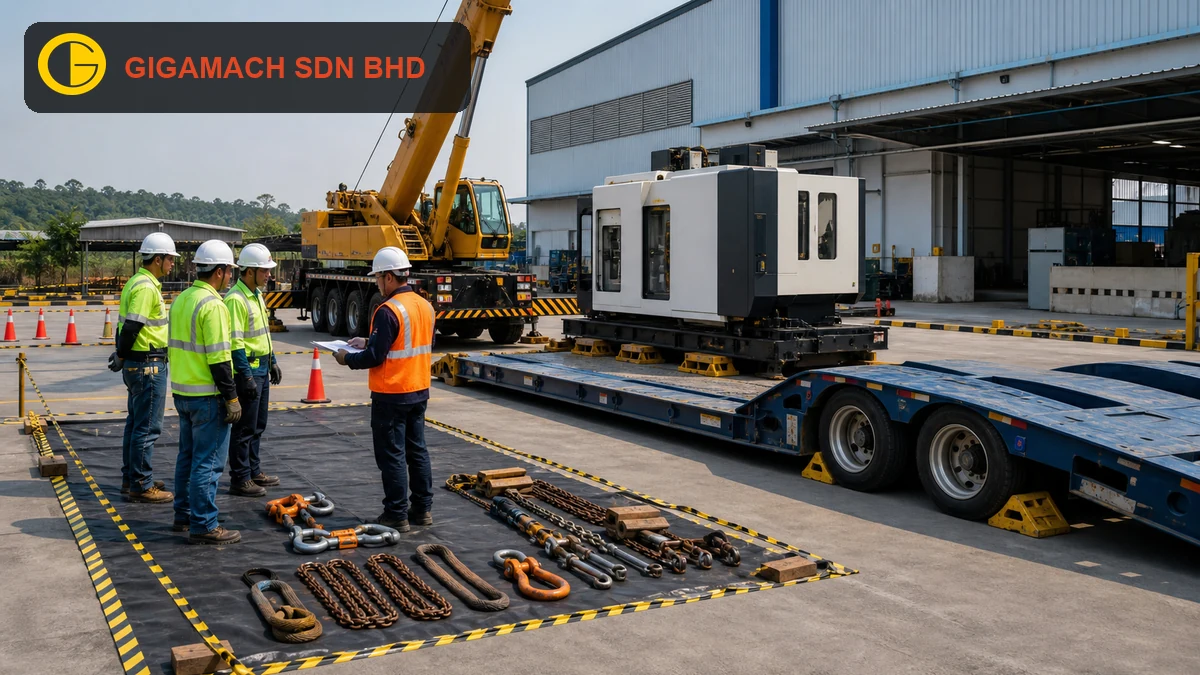
Heavy industrial machinery being safely prepared for transport with rated lifting equipment, secure packing, PPE, and controlled access.
AI-generated illustrative safety visual by GIGAMACH SDN BHD.

Planning for industrial machinery transportation requires more than the correct machine or lifting equipment. Heavy machinery loading is not complete when the machine reaches the trailer. The vehicle, lifting method, load position, and restraints must work as one controlled system.

For industrial teams working in Peninsular Malaysia, early planning helps identify access, load, ground, personnel, and coordination risks before equipment is mobilised.

Why Heavy machinery loading and trailer restraint planning. planning matters

Industrial transport starts before the vehicle arrives. The load dimensions, weight distribution, restraint points, lifting method, route, unloading space, and final handover must be coordinated as one operation.

The work method should be based on verified site and load information. A checklist supports the planning discussion, but it does not replace a task-specific assessment by competent personnel.

Practical pre-work checklist

  • Check 1: Immobilise the trailer and confirm the loading area is firm and level.
  • Check 2: Verify equipment capacity, machine weight, centre of gravity, and approved support points.
  • Check 3: Check deck condition, access alignment, overhead clearance, and the full exclusion zone.
  • Check 4: Use one agreed signal and keep personnel clear of the load path and pinch points.
  • Check 5: Move slowly, pause to confirm alignment, and stop if the load or equipment shifts.
  • Check 6: Position and secure the machine with suitable restraints before releasing the lifting or moving equipment.

Record the important findings during the site survey and brief the same controls to operators, riggers, signalmen, supervisors, and nearby work teams. Stop and reassess whenever the site condition or equipment configuration differs from the plan.

Common mistakes to avoid

  • Choosing transport equipment before confirming dimensions and weight.
  • Using unsuitable restraint or packing around sensitive machine parts.
  • Reaching the destination without a verified unloading and access plan.

Related planning terms include machinery loading and unloading, packing and crating services, container stuffing and unstuffing. These should be used naturally to describe the actual work scope, not treated as interchangeable services.

Final verification before work starts

Confirm the packing condition, lifting points, restraint plan, vehicle capacity, route constraints, unloading equipment, and receiving-area access before dispatch.

Planning support for industrial work

GIGAMACH SDN BHD provides industrial transportation, loading, and packing with a practical safety-first approach. Plan the scope early so the equipment, access, lifting method, transport, and final positioning can be coordinated before work begins.
INDUSTRIAL DELIVERY: IS THE RECEIVING SITE READY?

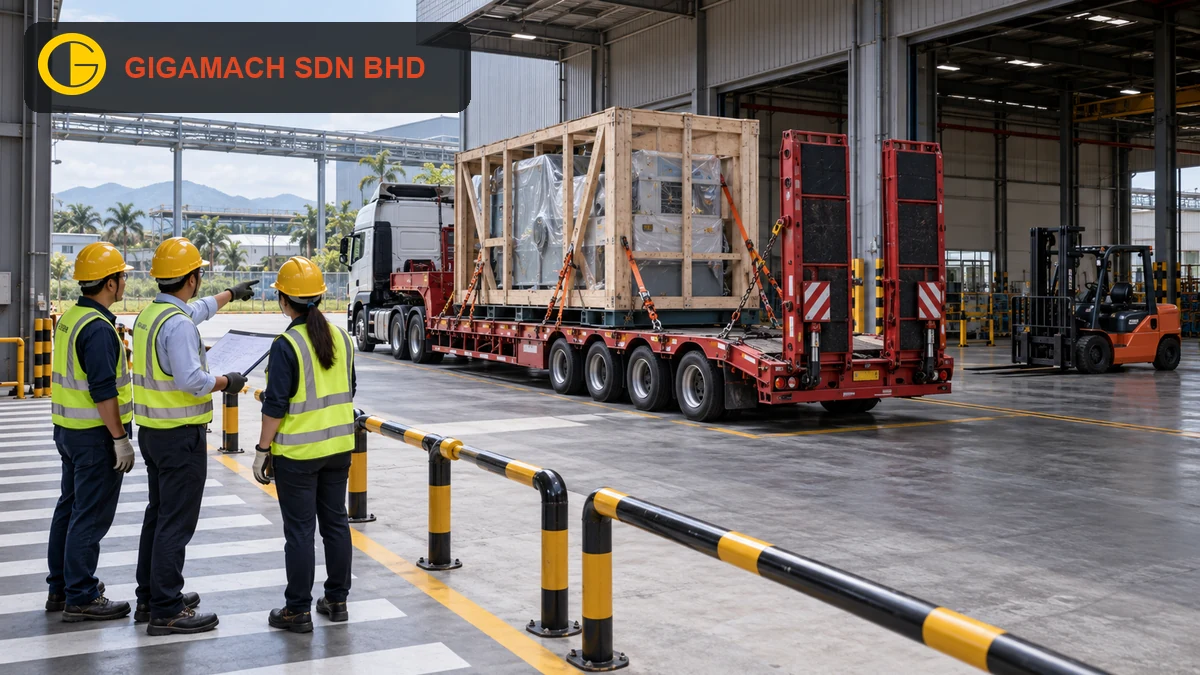
AI-generated illustrative safety visual by GIGAMACH SDN BHD. Planning for industrial machinery transportation requires more than the correc...