Showing posts with label RoutePlanning. Show all posts

Sunday, September 13, 2026

INDUSTRIAL TRANSPORT: CHECK THE ROUTE BEFORE DISPATCH

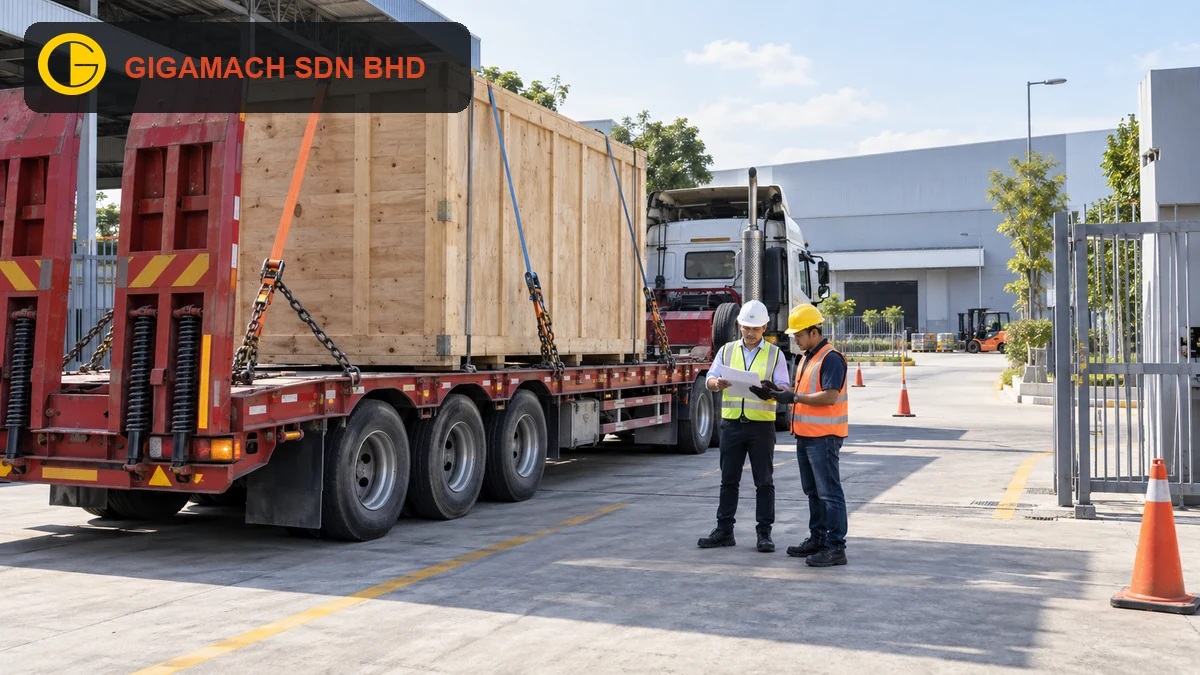
Heavy industrial machinery being safely prepared for transport with rated lifting equipment, secure packing, PPE, and controlled access.
AI-generated illustrative safety visual by GIGAMACH SDN BHD.

Planning for industrial machinery transportation requires more than the correct machine or lifting equipment. A machine can be secure on the trailer while the journey is still not ready. Before the wheels turn, confirm that the complete route and final approach suit the loaded vehicle—not only the destination address.

For industrial teams working in Peninsular Malaysia, early planning helps identify access, load, ground, personnel, and coordination risks before equipment is mobilised.

Why Industrial transportation route readiness before dispatching crated machinery matters

Industrial transport starts before the vehicle arrives. The load dimensions, weight distribution, restraint points, lifting method, route, unloading space, and final handover must be coordinated as one operation.

The work method should be based on verified site and load information. A checklist supports the planning discussion, but it does not replace a task-specific assessment by competent personnel.

Practical pre-work checklist

  • Check 1: Verify the loaded height, width, length and reliable weight information.
  • Check 2: Check route restrictions and required arrangements with the relevant authorised parties.
  • Check 3: Confirm turning space, gates, gradients and overhead clearances.
  • Check 4: Prepare a safe staging area and suitable unloading access at the destination.
  • Check 5: Agree on the arrival contact, timing and stop-and-reassess process.

Record the important findings during the site survey and brief the same controls to operators, riggers, signalmen, supervisors, and nearby work teams. Stop and reassess whenever the site condition or equipment configuration differs from the plan.

Common mistakes to avoid

  • Choosing transport equipment before confirming dimensions and weight.
  • Using unsuitable restraint or packing around sensitive machine parts.
  • Reaching the destination without a verified unloading and access plan.

Related planning terms include machinery loading and unloading, packing and crating services, container stuffing and unstuffing. These should be used naturally to describe the actual work scope, not treated as interchangeable services.

Final verification before work starts

Confirm the packing condition, lifting points, restraint plan, vehicle capacity, route constraints, unloading equipment, and receiving-area access before dispatch.

Know the load. Check the route. Arrive ready.

Planning support for industrial work

GIGAMACH SDN BHD provides industrial transportation, loading, and packing with a practical safety-first approach. Plan the scope early so the equipment, access, lifting method, transport, and final positioning can be coordinated before work begins.

Friday, August 21, 2026

MACHINERY SKATES: CONTROL DIRECTION BEFORE THE LOAD ROLLS

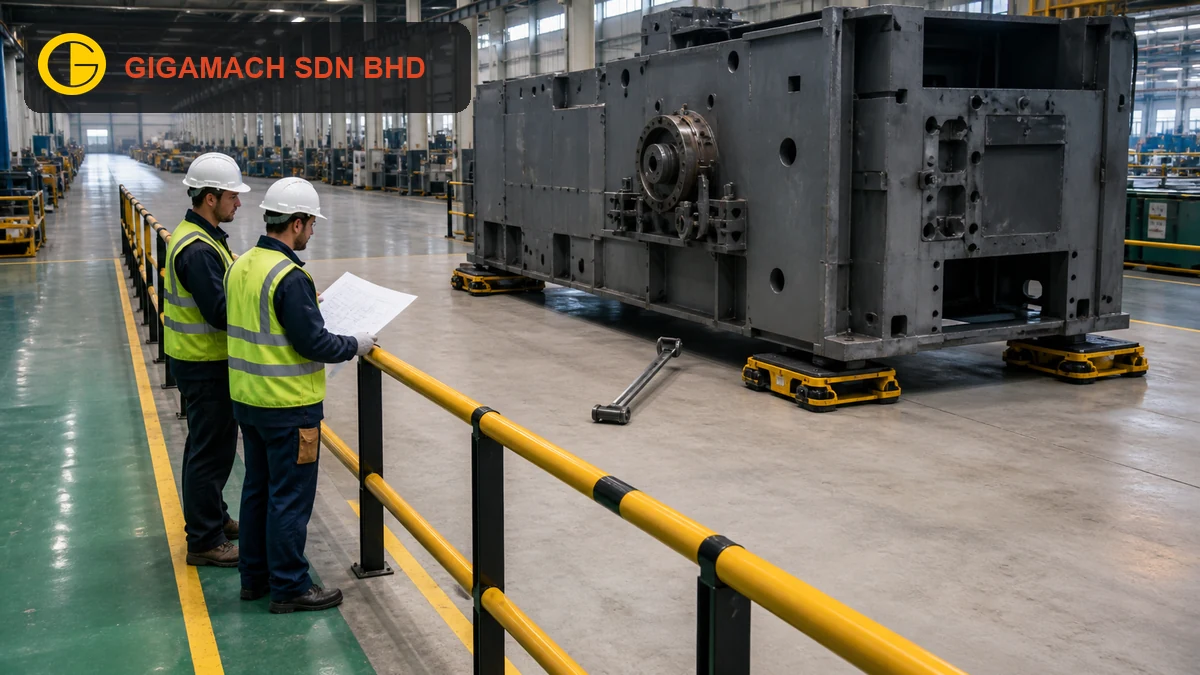
Industrial machine relocation with rated handling equipment, PPE-equipped workers, controlled movement, and a clear exclusion zone for safety education.
AI-generated illustrative safety visual by GIGAMACH SDN BHD.

Planning for machine relocation Malaysia requires more than the correct machine or lifting equipment. Machinery skates can move a heavy machine through tight factory spaces, but low speed does not remove crush, stability or steering risks. A controlled machine relocation Malaysia plan should treat the load, floor and travel route as one system.

Why Machinery skate movement: control direction before the load rolls. planning matters

A relocation succeeds only when the load, route, floor, handling equipment, people, and final position are treated as one coordinated plan. A safe lift at the starting point does not remove risks along the travel path or during final alignment.

The work method should be based on verified site and load information. A checklist supports the planning discussion, but it does not replace a task-specific assessment by competent personnel.

Practical pre-work checklist

  • Check 1: Verify the machine weight, centre of gravity and engineered support points.
  • Check 2: Select compatible, rated skates and a planned load-transfer method.
  • Check 3: Survey floor capacity, joints, slopes, clearances and every planned turn.
  • Check 4: Assign one movement leader and one clear communication method.
  • Check 5: Keep hands and feet clear; use purpose-designed steering or pushing tools.
  • Check 6: Move in short increments, stop to verify skate seating and alignment, then block the load securely.

Record the important findings during the site survey and brief the same controls to operators, riggers, signalmen, supervisors, and nearby work teams. Stop and reassess whenever the site condition or equipment configuration differs from the plan.

Common mistakes to avoid

  • Planning the lifting point but not surveying the complete travel route.
  • Estimating machine weight or centre of gravity from appearance alone.
  • Allowing hands or feet into crush zones during final positioning.

Related planning terms include industrial machinery installation, heavy machinery mover, equipment positioning. These should be used naturally to describe the actual work scope, not treated as interchangeable services.

Final verification before work starts

Before movement begins, walk the route with the operating team, confirm clearances and floor capacity, assign one signalman, and identify safe stopping and recovery positions.

Planning support for industrial work

GIGAMACH SDN BHD provides machine relocation and equipment positioning with a practical safety-first approach. Plan the scope early so the equipment, access, lifting method, transport, and final positioning can be coordinated before work begins.
Thursday, August 6, 2026

Industrial Transportation: Check the Route Before the Load Rolls

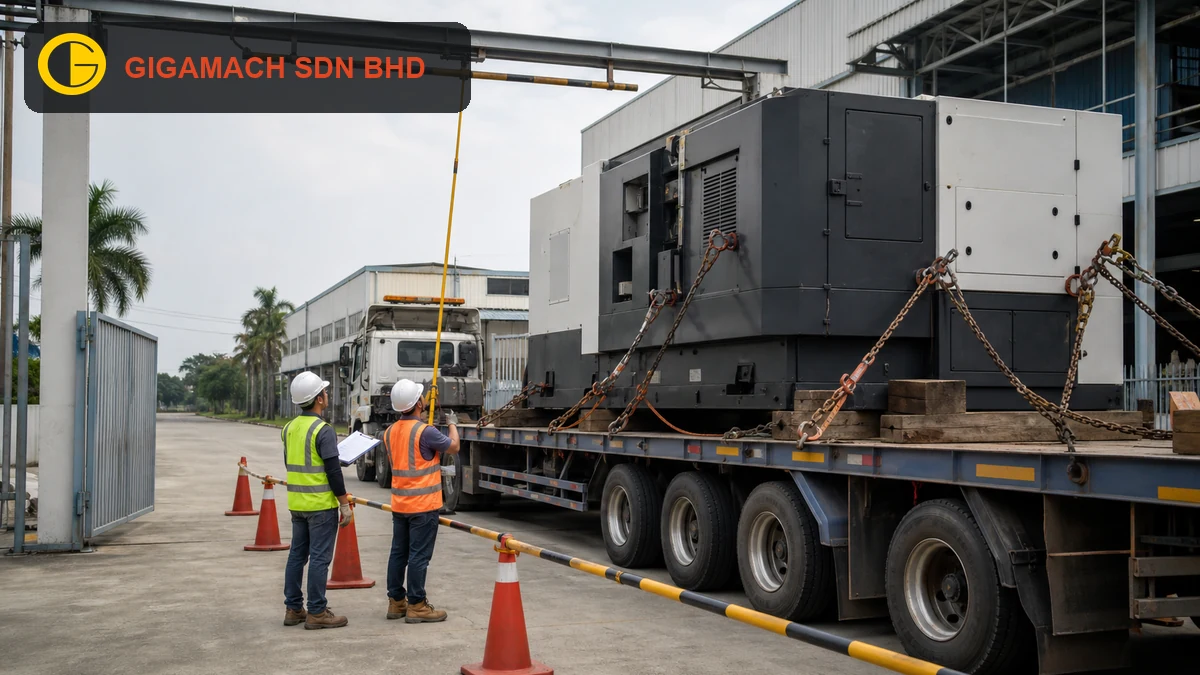
CNC-type industrial machine secured on a stationary low-bed trailer at a factory entrance, with PPE-equipped workers checking overhead clearance from behind a rigid exclusion barrier for transport route planning education.
AI-generated illustrative safety visual by GIGAMACH SDN BHD.

Planning for industrial machinery transportation requires more than the correct machine or lifting equipment. Heavy machinery transport begins long before the vehicle moves. A route that appears clear on paper can still contain tight turns, weak surfaces, overhead hazards or access restrictions.

For industrial teams working in Peninsular Malaysia, early planning helps identify access, load, ground, personnel, and coordination risks before equipment is mobilised.

Why Industrial transportation route coordination — verify the full route before heavy machinery moves. planning matters

Industrial transport starts before the vehicle arrives. The load dimensions, weight distribution, restraint points, lifting method, route, unloading space, and final handover must be coordinated as one operation.

The work method should be based on verified site and load information. A checklist supports the planning discussion, but it does not replace a task-specific assessment by competent personnel.

Practical pre-work checklist

  • Check 1: Confirm the total transported weight, height and width, including the trailer and restraints.
  • Check 2: Survey turning radii, gate openings, gradients and overhead clearances.
  • Check 3: Verify ground conditions, route limits and suitable staging areas.
  • Check 4: Plan traffic control, site access and required coordination before arrival.
  • Check 5: Brief the driver, escort team and spotter on one communication method.
  • Check 6: Stop and reassess if the route, weather, load security or site conditions change.

Record the important findings during the site survey and brief the same controls to operators, riggers, signalmen, supervisors, and nearby work teams. Stop and reassess whenever the site condition or equipment configuration differs from the plan.

Common mistakes to avoid

  • Choosing transport equipment before confirming dimensions and weight.
  • Using unsuitable restraint or packing around sensitive machine parts.
  • Reaching the destination without a verified unloading and access plan.

Related planning terms include machinery loading and unloading, packing and crating services, container stuffing and unstuffing. These should be used naturally to describe the actual work scope, not treated as interchangeable services.

Final verification before work starts

Confirm the packing condition, lifting points, restraint plan, vehicle capacity, route constraints, unloading equipment, and receiving-area access before dispatch.

Planning support for industrial work

GIGAMACH SDN BHD provides industrial transportation, loading, and packing with a practical safety-first approach. Plan the scope early so the equipment, access, lifting method, transport, and final positioning can be coordinated before work begins.
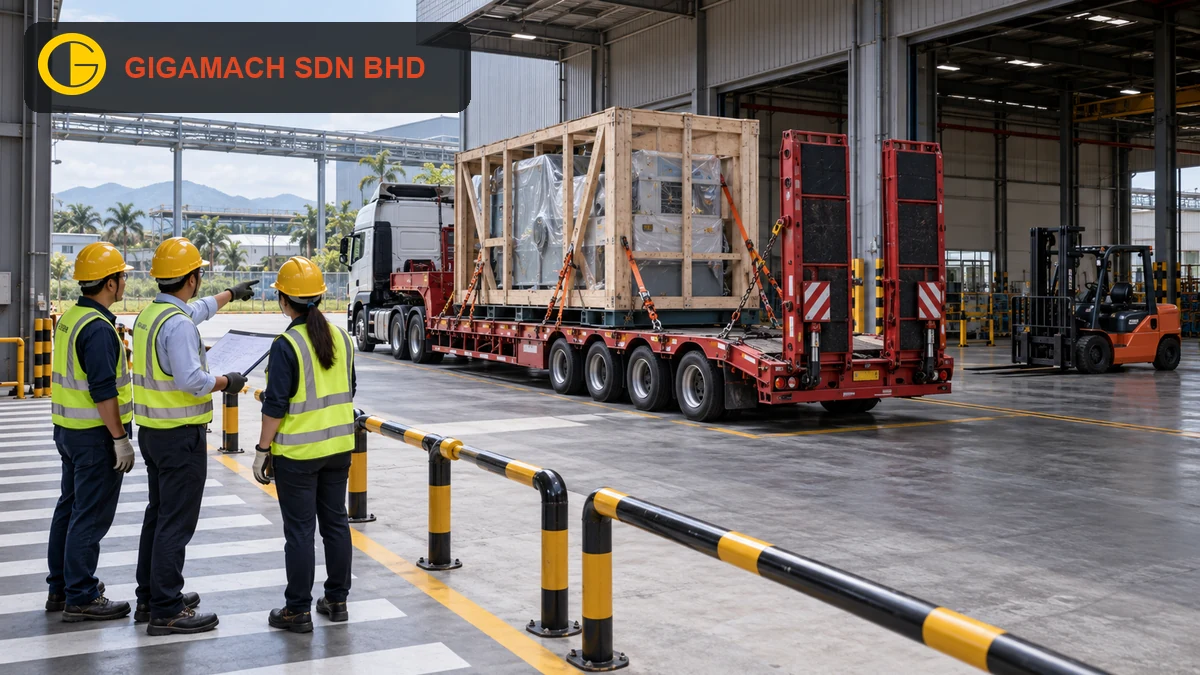
INDUSTRIAL DELIVERY: IS THE RECEIVING SITE READY?

AI-generated illustrative safety visual by GIGAMACH SDN BHD. Planning for industrial machinery transportation requires more than the correc...