Showing posts with label AerialWorkPlatform. Show all posts

Friday, September 11, 2026

BOOM LIFT POSITIONING: PROTECT THE OPERATOR FROM TRAPPING HAZARDS

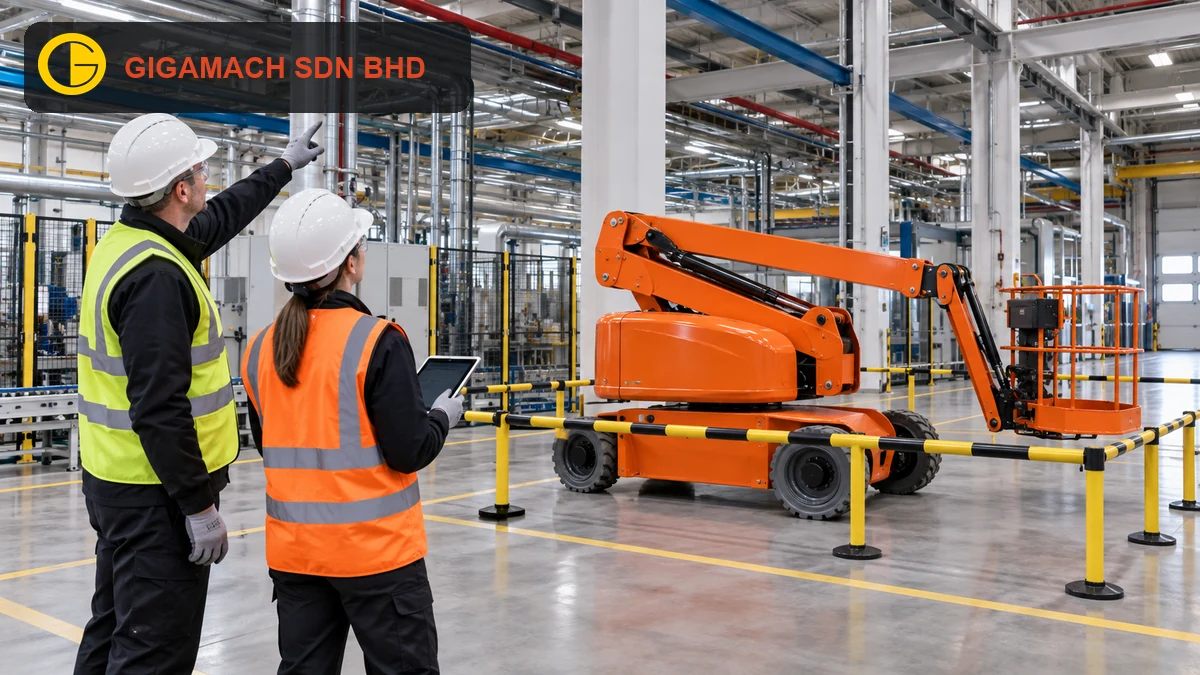
Grounded orange articulated boom lift inside a factory while two PPE-equipped technicians assess beams, pipework and clearances before positioning work.
AI-generated illustrative safety visual by GIGAMACH SDN BHD.

Planning for boom lift and scissor lift rental requires more than the correct machine or lifting equipment. When a boom lift works near beams, pipework, walls or equipment, a small platform movement can close the available clearance quickly. The operator must stay aware of the full work envelope—not only the task directly ahead.

For industrial teams working in Shah Alam, Selangor, early planning helps identify access, load, ground, personnel, and coordination risks before equipment is mobilised.

Why Boom lift positioning and operator protection from trapping hazards near structures matters

Access equipment must match the required working height, outreach, platform load, ground condition, and surrounding hazards. Selecting a machine by height alone can leave the operator without suitable reach or a stable operating setup.

The work method should be based on verified site and load information. A checklist supports the planning discussion, but it does not replace a task-specific assessment by competent personnel.

Practical pre-work checklist

  • Check 1: Inspect overhead, side and travel-path hazards before elevation.
  • Check 2: Choose a setup that avoids positioning the platform between fixed structures.
  • Check 3: Use slow, deliberate movements and maintain sight of the movement.
  • Check 4: Keep the body inside the guardrails and use fall protection as required by the manufacturer and site.
  • Check 5: Control the area below and maintain communication with capable ground support.
  • Check 6: Stop before clearance is lost; reposition instead of forcing the platform or overreaching.

Record the important findings during the site survey and brief the same controls to operators, riggers, signalmen, supervisors, and nearby work teams. Stop and reassess whenever the site condition or equipment configuration differs from the plan.

Common mistakes to avoid

  • Selecting equipment before checking ground condition and access width.
  • Ignoring platform capacity, overhead hazards, or nearby vehicle traffic.
  • Starting work without completing the pre-use and function checks.

Related planning terms include aerial work platform selection, pre-use inspection, working at height. These should be used naturally to describe the actual work scope, not treated as interchangeable services.

Final verification before work starts

Before raising the platform, verify the work zone, emergency lowering arrangement, operator communication, weather limitations, and safe access to and from the platform.

Keep clearance. Keep control.

Planning support for industrial work

GIGAMACH SDN BHD provides boom lift and scissor lift rental with a practical safety-first approach. Plan the scope early so the equipment, access, lifting method, transport, and final positioning can be coordinated before work begins.

Monday, August 24, 2026

SCISSOR LIFT CAPACITY: COUNT THE WHOLE PLATFORM LOAD

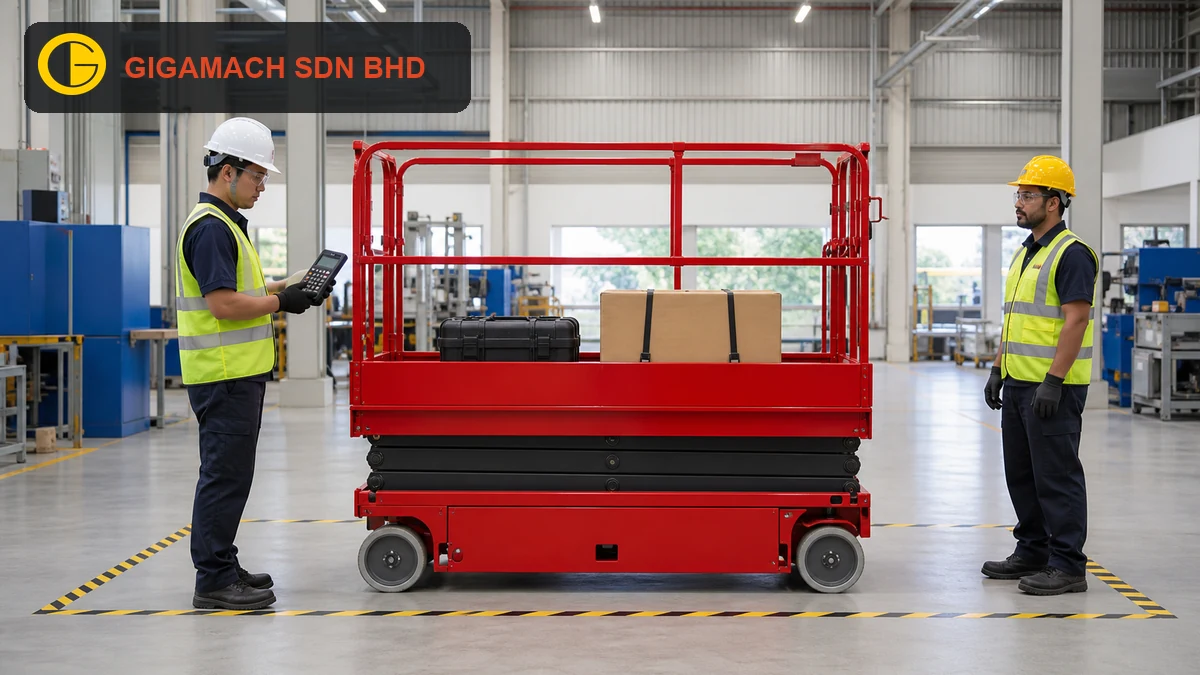
Electric scissor lift fully lowered on a level factory floor, with two PPE-equipped technicians outside a marked exclusion zone checking ground and wheel conditions for scissor lift safety education.
AI-generated illustrative safety visual by GIGAMACH SDN BHD.

Planning for boom lift and scissor lift rental requires more than the correct machine or lifting equipment. Scissor lift capacity is not only about the number of people on the platform. Tools, materials, accessories and anything added during the job contribute to the total load.

For industrial teams working in Shah Alam, Selangor, early planning helps identify access, load, ground, personnel, and coordination risks before equipment is mobilised.

Why Scissor lift platform capacity: count people, tools, materials and accessories before elevation. planning matters

Access equipment must match the required working height, outreach, platform load, ground condition, and surrounding hazards. Selecting a machine by height alone can leave the operator without suitable reach or a stable operating setup.

The work method should be based on verified site and load information. A checklist supports the planning discussion, but it does not replace a task-specific assessment by competent personnel.

Practical pre-work checklist

  • Check 1: Read the manufacturer's platform rating before use.
  • Check 2: Include every person, tool, material and approved accessory in the calculation.
  • Check 3: Keep the load evenly arranged and within the permitted platform area.
  • Check 4: Secure tools and materials so they cannot shift or fall.
  • Check 5: Close the entry gate and maintain clear guardrail protection.
  • Check 6: Stop and verify if the total load or equipment configuration is uncertain.

Record the important findings during the site survey and brief the same controls to operators, riggers, signalmen, supervisors, and nearby work teams. Stop and reassess whenever the site condition or equipment configuration differs from the plan.

Common mistakes to avoid

  • Selecting equipment before checking ground condition and access width.
  • Ignoring platform capacity, overhead hazards, or nearby vehicle traffic.
  • Starting work without completing the pre-use and function checks.

Related planning terms include aerial work platform selection, pre-use inspection, working at height. These should be used naturally to describe the actual work scope, not treated as interchangeable services.

Final verification before work starts

Before raising the platform, verify the work zone, emergency lowering arrangement, operator communication, weather limitations, and safe access to and from the platform.

Count every item before elevation. Stay within the rated limit.

Planning support for industrial work

GIGAMACH SDN BHD provides boom lift and scissor lift rental with a practical safety-first approach. Plan the scope early so the equipment, access, lifting method, transport, and final positioning can be coordinated before work begins.
Thursday, August 20, 2026

BOOM LIFT EMERGENCY LOWERING: PLAN BEFORE ELEVATION

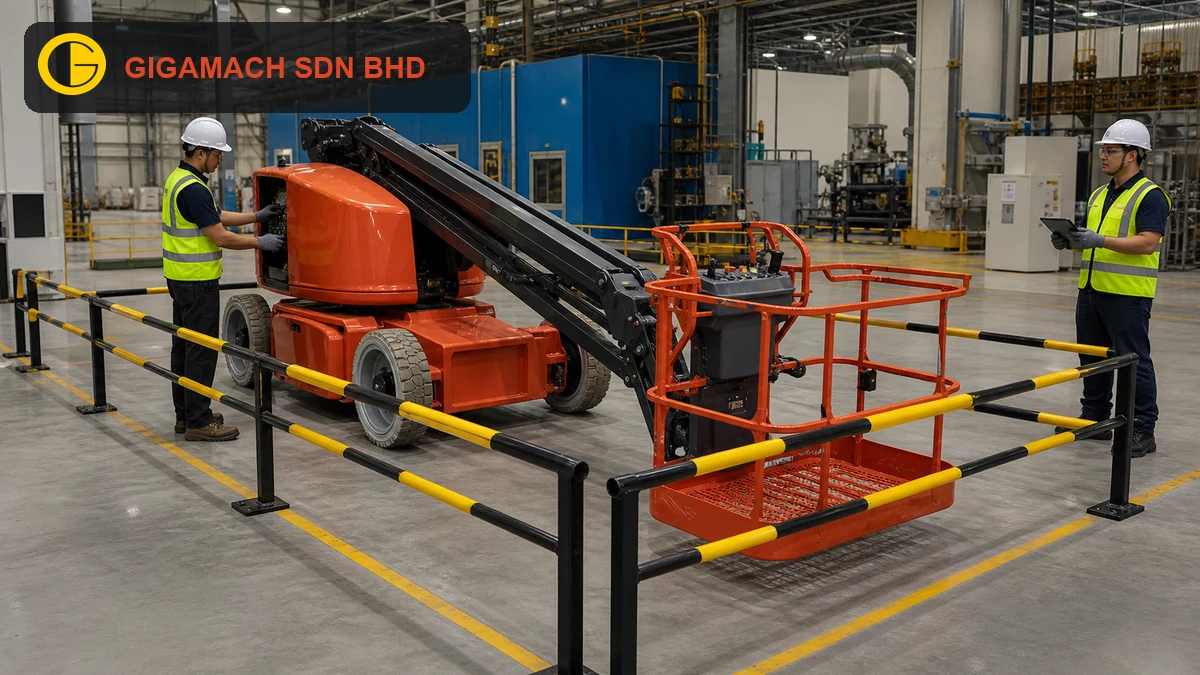
Electric scissor lift fully lowered on a level factory floor, with two PPE-equipped technicians outside a marked exclusion zone checking ground and wheel conditions for scissor lift safety education.
AI-generated illustrative safety visual by GIGAMACH SDN BHD.

Planning for boom lift and scissor lift rental requires more than the correct machine or lifting equipment. Boom lift safety includes knowing how the platform can be brought down if normal controls fail or the operator cannot continue. An emergency plan should be understood before the platform leaves the ground—not improvised after a problem occurs.

For industrial teams working in Shah Alam, Selangor, early planning helps identify access, load, ground, personnel, and coordination risks before equipment is mobilised.

Why Boom lift emergency-lowering readiness and ground-support coordination planning matters

Access equipment must match the required working height, outreach, platform load, ground condition, and surrounding hazards. Selecting a machine by height alone can leave the operator without suitable reach or a stable operating setup.

The work method should be based on verified site and load information. A checklist supports the planning discussion, but it does not replace a task-specific assessment by competent personnel.

Practical pre-work checklist

  • Check 1: Locate the ground controls and emergency-lowering system for the specific machine.
  • Check 2: Complete the required function checks according to the operator's manual and site procedure.
  • Check 3: Assign a ground person who understands the agreed communication and escalation method.
  • Check 4: Keep access to the base controls and emergency area clear throughout the task.
  • Check 5: Confirm what to do if communication is lost, power fails or the operator becomes unwell.
  • Check 6: Use emergency controls only as instructed and authorised for the situation.

Record the important findings during the site survey and brief the same controls to operators, riggers, signalmen, supervisors, and nearby work teams. Stop and reassess whenever the site condition or equipment configuration differs from the plan.

Common mistakes to avoid

  • Selecting equipment before checking ground condition and access width.
  • Ignoring platform capacity, overhead hazards, or nearby vehicle traffic.
  • Starting work without completing the pre-use and function checks.

Related planning terms include aerial work platform selection, pre-use inspection, working at height. These should be used naturally to describe the actual work scope, not treated as interchangeable services.

Final verification before work starts

Before raising the platform, verify the work zone, emergency lowering arrangement, operator communication, weather limitations, and safe access to and from the platform.

Planning support for industrial work

GIGAMACH SDN BHD provides boom lift and scissor lift rental with a practical safety-first approach. Plan the scope early so the equipment, access, lifting method, transport, and final positioning can be coordinated before work begins.
Tuesday, August 11, 2026

AERIAL WORK PLATFORM SELECTION: CHOOSE REACH, NOT GUESSWORK

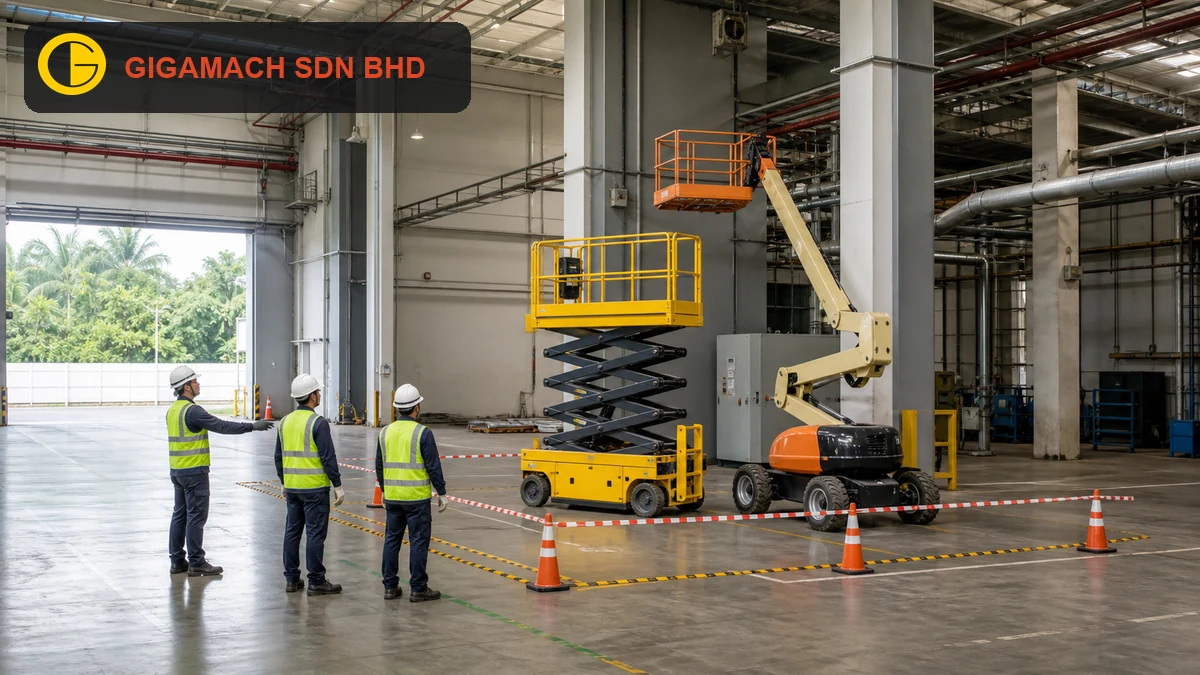
Scissor lift and articulated boom lift partially raised on a level factory floor, with three PPE-equipped workers outside marked exclusion zones comparing vertical access and outreach for aerial work platform selection education.
AI-generated illustrative safety visual by GIGAMACH SDN BHD.

Planning for boom lift and scissor lift rental requires more than the correct machine or lifting equipment. Good aerial work platform selection starts with the work envelope—not the machine name. A scissor lift is suited to mainly vertical access with a stable platform, while a boom lift provides outreach around obstacles when the setup area allows it.

For industrial teams working in Shah Alam, Selangor, early planning helps identify access, load, ground, personnel, and coordination risks before equipment is mobilised.

Why Aerial work platform selection: choosing between scissor-lift vertical access and boom-lift outreach. planning matters

Access equipment must match the required working height, outreach, platform load, ground condition, and surrounding hazards. Selecting a machine by height alone can leave the operator without suitable reach or a stable operating setup.

The work method should be based on verified site and load information. A checklist supports the planning discussion, but it does not replace a task-specific assessment by competent personnel.

Practical pre-work checklist

  • Check 1: Confirm the required working height and horizontal outreach.
  • Check 2: Check the total platform load, including people, tools, and materials.
  • Check 3: Assess ground capacity, slope, access width, and turning space.
  • Check 4: Identify overhead obstructions, traffic, and the exclusion zone.
  • Check 5: Match indoor or outdoor conditions with the correct power source and machine type.
  • Check 6: Complete pre-use checks and follow the manufacturer’s instructions and site controls.

Record the important findings during the site survey and brief the same controls to operators, riggers, signalmen, supervisors, and nearby work teams. Stop and reassess whenever the site condition or equipment configuration differs from the plan.

Common mistakes to avoid

  • Selecting equipment before checking ground condition and access width.
  • Ignoring platform capacity, overhead hazards, or nearby vehicle traffic.
  • Starting work without completing the pre-use and function checks.

Related planning terms include aerial work platform selection, pre-use inspection, working at height. These should be used naturally to describe the actual work scope, not treated as interchangeable services.

Final verification before work starts

Before raising the platform, verify the work zone, emergency lowering arrangement, operator communication, weather limitations, and safe access to and from the platform.

Planning support for industrial work

GIGAMACH SDN BHD provides boom lift and scissor lift rental with a practical safety-first approach. Plan the scope early so the equipment, access, lifting method, transport, and final positioning can be coordinated before work begins.
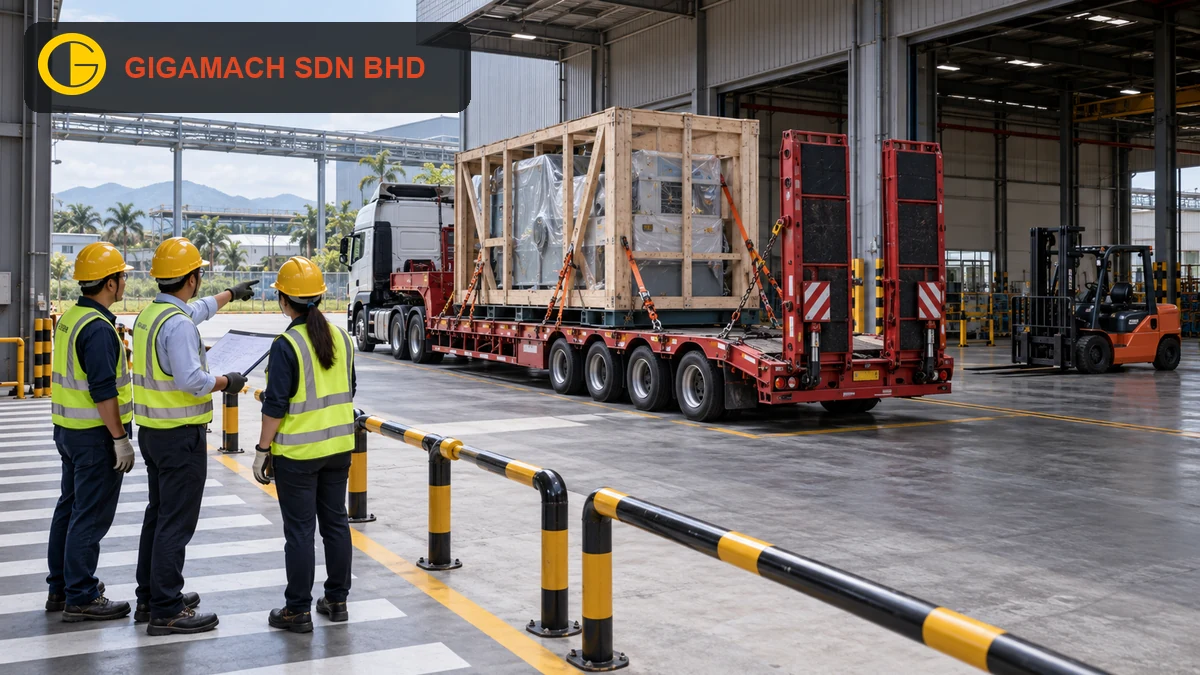
INDUSTRIAL DELIVERY: IS THE RECEIVING SITE READY?

AI-generated illustrative safety visual by GIGAMACH SDN BHD. Planning for industrial machinery transportation requires more than the correc...