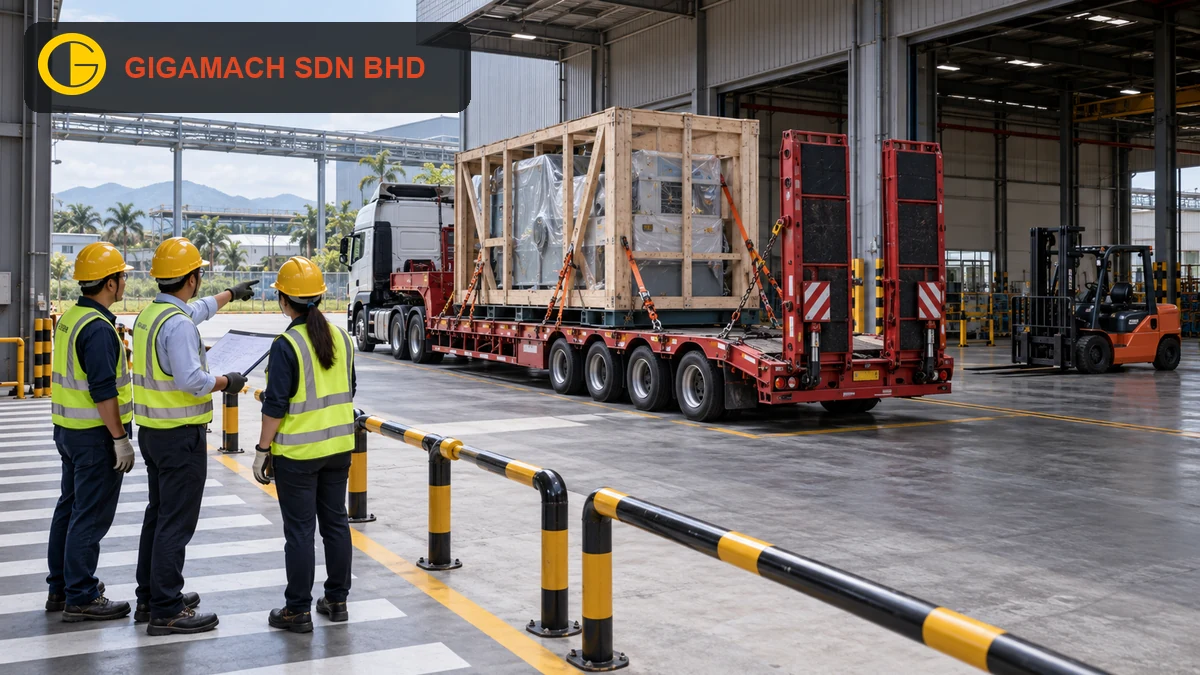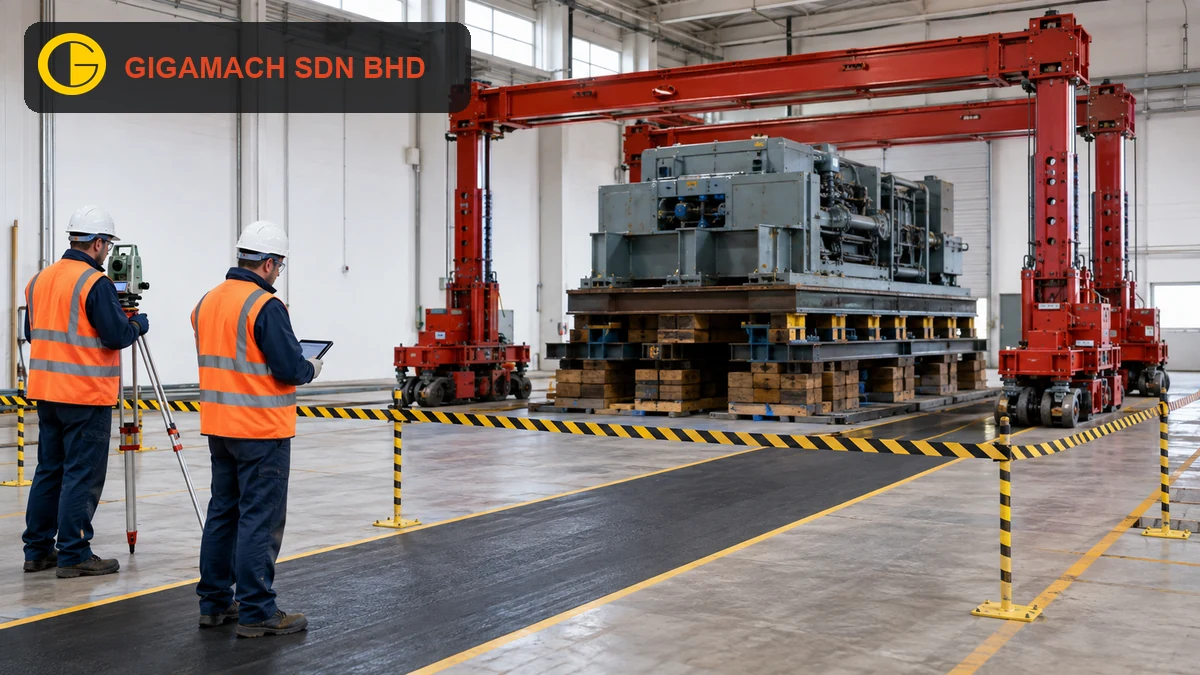
Planning for heavy lifting services requires more than the correct machine or lifting equipment. A gantry lift may begin vertically, but control can still be lost when a loaded gantry travels across an uneven, obstructed or unsuitable floor. Route preparation matters before the machine leaves its supports.
For industrial teams working in Peninsular Malaysia, early planning helps identify access, load, ground, personnel, and coordination risks before equipment is mobilised.
Why Gantry lifting travel-path preparation and controlled load movement matters
Heavy lifting depends on verified load information, suitable equipment, stable support, controlled access, and clear communication. Each part of the lifting system must be considered together before force is applied to the load.
The work method should be based on verified site and load information. A checklist supports the planning discussion, but it does not replace a task-specific assessment by competent personnel.
Practical pre-work checklist
- Check 1: Confirm that the floor and temporary supports suit the planned reactions.
- Check 2: Check runway level, alignment, transitions and cleanliness.
- Check 3: Measure overhead and side clearances for the gantry, load and rigging.
- Check 4: Establish a rigid exclusion zone and designate one movement leader.
- Check 5: Travel in small coordinated steps while monitoring wheels, track and load clearance.
- Check 6: Stop if resistance, settlement or alignment changes.
Record the important findings during the site survey and brief the same controls to operators, riggers, signalmen, supervisors, and nearby work teams. Stop and reassess whenever the site condition or equipment configuration differs from the plan.
Common mistakes to avoid
- Proceeding with incomplete load data or unverified lifting points.
- Treating ground support, sling angles, or exclusion zones as secondary.
- Continuing movement after communication or visibility has been lost.
Related planning terms include rigging services, gantry lifting, hydraulic jacking. These should be used naturally to describe the actual work scope, not treated as interchangeable services.
Final verification before work starts
Before the main operation, confirm the approved method, equipment capacity, ground support, rigging arrangement, exclusion zone, communications, and stop-work conditions with the full team.
Prepare the path. Control the move.
Planning support for industrial work
GIGAMACH SDN BHD provides heavy lifting, rigging, and industrial handling with a practical safety-first approach. Plan the scope early so the equipment, access, lifting method, transport, and final positioning can be coordinated before work begins.