Showing posts with label Gigamach. Show all posts

Sunday, September 20, 2026

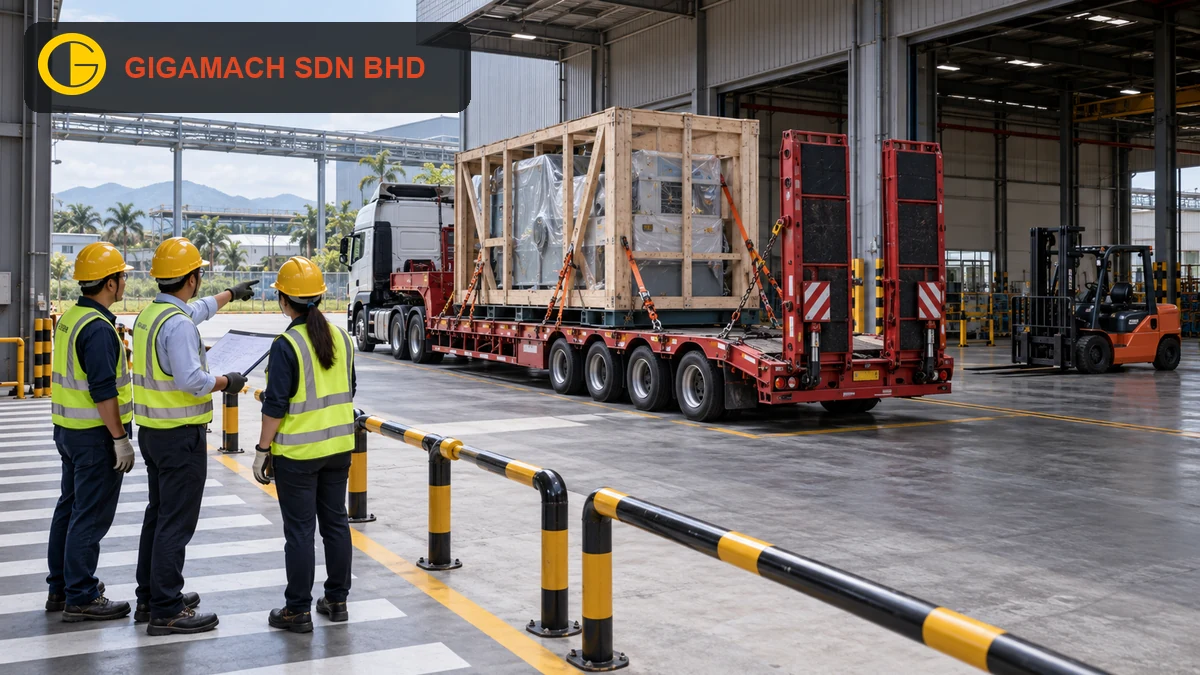
INDUSTRIAL DELIVERY: IS THE RECEIVING SITE READY?

Crated industrial machine secured on a low-loader in a marked factory receiving area, with PPE-equipped personnel reviewing the access route from behind a pedestrian barrier for destination-planning education.
AI-generated illustrative safety visual by GIGAMACH SDN BHD.

Planning for industrial machinery transportation requires more than the correct machine or lifting equipment. Industrial machinery transportation does not end when the truck reaches the factory gate. A safe, efficient arrival depends on preparing the destination before the machine is delivered.

For industrial teams working in Peninsular Malaysia, early planning helps identify access, load, ground, personnel, and coordination risks before equipment is mobilised.

Why Destination readiness before industrial machinery delivery matters

Industrial transport starts before the vehicle arrives. The load dimensions, weight distribution, restraint points, lifting method, route, unloading space, and final handover must be coordinated as one operation.

The work method should be based on verified site and load information. A checklist supports the planning discussion, but it does not replace a task-specific assessment by competent personnel.

Practical pre-work checklist

  • Check 1: Clear the access route and check gates, corners, overhead clearance and floor conditions.
  • Check 2: Confirm a suitable staging and unloading area.
  • Check 3: Prepare the planned handling equipment and keep it ready for inspection.
  • Check 4: Separate pedestrians and unrelated traffic from the delivery path.
  • Check 5: Agree on the site contact, arrival time and stop point with the transport team.

Record the important findings during the site survey and brief the same controls to operators, riggers, signalmen, supervisors, and nearby work teams. Stop and reassess whenever the site condition or equipment configuration differs from the plan.

Common mistakes to avoid

  • Choosing transport equipment before confirming dimensions and weight.
  • Using unsuitable restraint or packing around sensitive machine parts.
  • Reaching the destination without a verified unloading and access plan.

Related planning terms include machinery loading and unloading, packing and crating services, container stuffing and unstuffing. These should be used naturally to describe the actual work scope, not treated as interchangeable services.

Final verification before work starts

Confirm the packing condition, lifting points, restraint plan, vehicle capacity, route constraints, unloading equipment, and receiving-area access before dispatch.

Prepare the destination. Control the arrival.

Planning support for industrial work

GIGAMACH SDN BHD provides industrial transportation, loading, and packing with a practical safety-first approach. Plan the scope early so the equipment, access, lifting method, transport, and final positioning can be coordinated before work begins.

Saturday, September 19, 2026

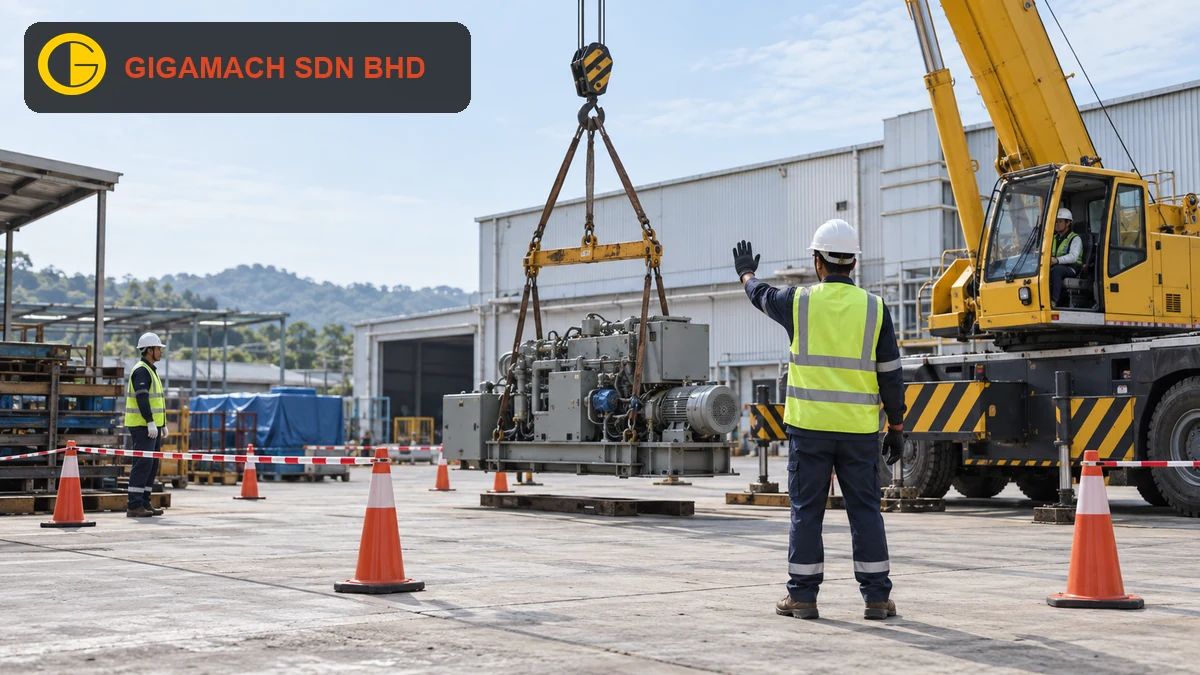
LIFTING SIGNALS: ONE CLEAR DIRECTION

Mobile crane holding an industrial machine low inside a controlled exclusion zone while a PPE-equipped signalman gives a stop signal from a position visible to the operator.
AI-generated illustrative safety visual by GIGAMACH SDN BHD.

Planning for lifting team coordination requires more than the correct machine or lifting equipment. During a lifting operation, the operator must receive clear and consistent instructions. Conflicting signals, blocked visibility or lost radio contact can turn a controlled movement into an unexpected one.

For industrial teams working in Malaysia, early planning helps identify access, load, ground, personnel, and coordination risks before equipment is mobilised.

Why Signalman communication and controlled stopping during lifting operations matters

When the crane operator relies on a signal person, movement is safe only while the instruction remains clear, agreed, and understood. A visible designated signalman and a reliable backup method help the team stop before confusion becomes unintended load movement.

The work method should be based on verified site and load information. A checklist supports the planning discussion, but it does not replace a task-specific assessment by competent personnel.

Practical pre-work checklist

  • Check 1: Designate one signalman for routine movement.
  • Check 2: Agree on the hand signals, radio channel and backup method.
  • Check 3: Confirm that the signalman remains visible or in reliable contact with the operator.
  • Check 4: Brief the emergency stop signal to everyone involved.

Record the important findings during the site survey and brief the same controls to operators, riggers, signalmen, supervisors, and nearby work teams. Stop and reassess whenever the site condition or equipment configuration differs from the plan.

Common mistakes to avoid

  • Allowing several people to direct routine crane movement at the same time.
  • Starting without checking line of sight, radio clarity, and the agreed signal method.
  • Continuing or restarting after communication is interrupted before contact is re-established.

Related planning terms include signalman communication, crane hand signals, rigging team communication. These should be used naturally to describe the actual work scope, not treated as interchangeable services.

Final verification before work starts

Before movement, confirm the designated signalman, agreed hand or voice signals, radio channel, operator visibility, emergency-stop response, exclusion zone, and the point at which the team must stop and re-establish communication.

Agree the signal. Control the move.

Planning support for industrial work

GIGAMACH SDN BHD provides lifting operations and rigging coordination with a practical safety-first approach. Plan the scope early so the equipment, access, lifting method, transport, and final positioning can be coordinated before work begins.
Wednesday, September 16, 2026

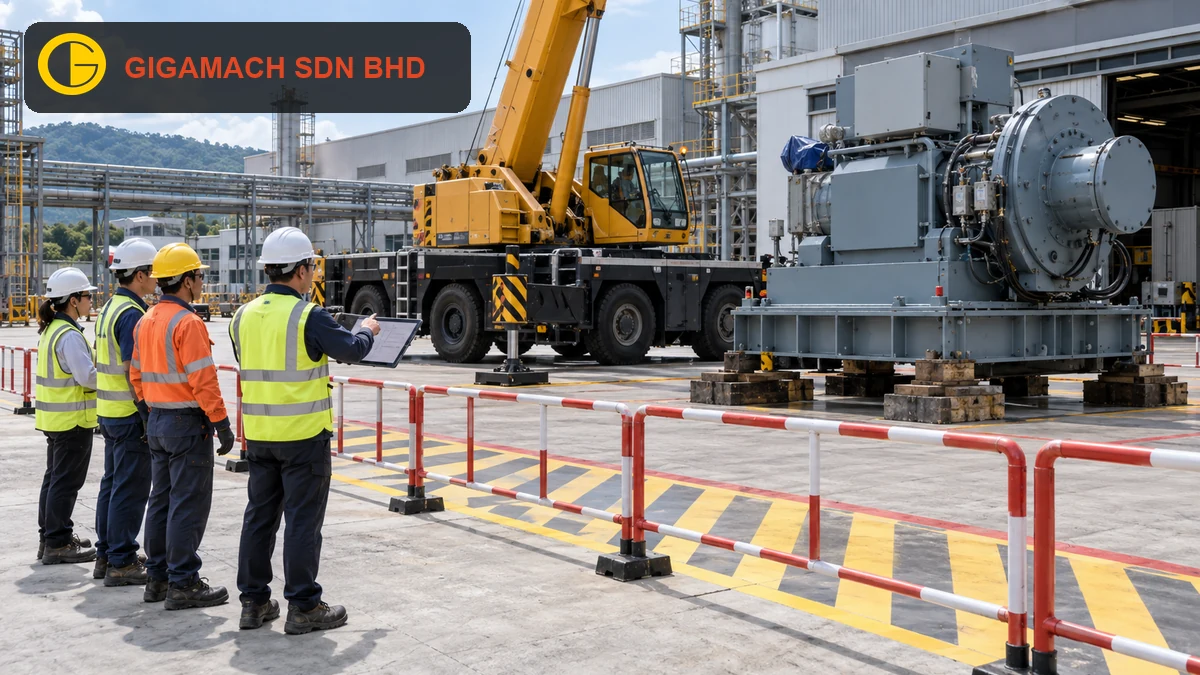
Exclusion Zones Keep Lifting Hazards Contained

Industrial heavy lifting operation with rated rigging, stable support, PPE-equipped workers, and a controlled exclusion zone for safety education.
AI-generated illustrative safety visual by GIGAMACH SDN BHD.

Planning for heavy lifting services requires more than the correct machine or lifting equipment. A lifting operation creates changing hazards around the suspended load, lifting equipment, counterweight, and travel path. Clear boundaries help prevent workers from entering those areas.

For industrial teams working in Peninsular Malaysia, early planning helps identify access, load, ground, personnel, and coordination risks before equipment is mobilised.

Why Exclusion Zones matters

Heavy lifting depends on verified load information, suitable equipment, stable support, controlled access, and clear communication. Each part of the lifting system must be considered together before force is applied to the load.

The work method should be based on verified site and load information. A checklist supports the planning discussion, but it does not replace a task-specific assessment by competent personnel.

Practical pre-work checklist

  • Check 1: Define the lifting and travel zones before work starts.
  • Check 2: Use barriers and signs that remain visible throughout the task.
  • Check 3: Control all access points and brief nearby work teams.
  • Check 4: Keep personnel clear of suspended loads and pinch points.
  • Check 5: Adjust the boundary whenever the lifting configuration changes.

Record the important findings during the site survey and brief the same controls to operators, riggers, signalmen, supervisors, and nearby work teams. Stop and reassess whenever the site condition or equipment configuration differs from the plan.

Common mistakes to avoid

  • Proceeding with incomplete load data or unverified lifting points.
  • Treating ground support, sling angles, or exclusion zones as secondary.
  • Continuing movement after communication or visibility has been lost.

Related planning terms include rigging services, gantry lifting, hydraulic jacking. These should be used naturally to describe the actual work scope, not treated as interchangeable services.

Final verification before work starts

Before the main operation, confirm the approved method, equipment capacity, ground support, rigging arrangement, exclusion zone, communications, and stop-work conditions with the full team.

An exclusion zone is effective only when its limits are understood, maintained, and actively controlled.

Planning support for industrial work

GIGAMACH SDN BHD provides heavy lifting, rigging, and industrial handling with a practical safety-first approach. Plan the scope early so the equipment, access, lifting method, transport, and final positioning can be coordinated before work begins.
Sunday, September 13, 2026

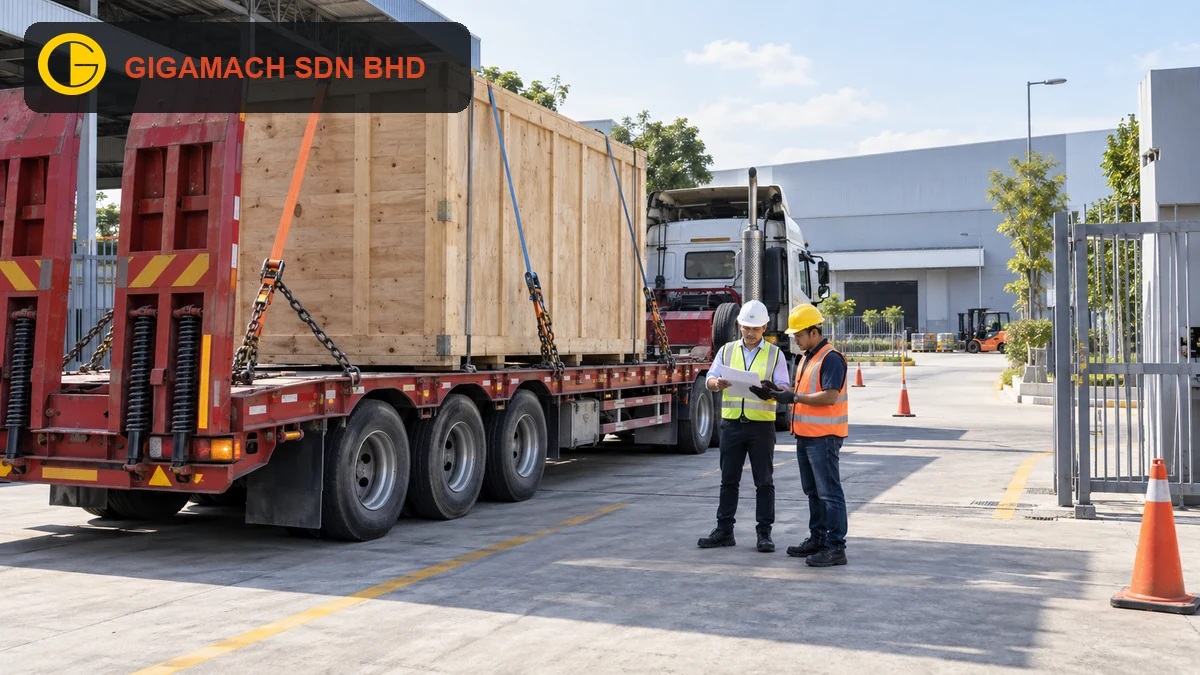
INDUSTRIAL TRANSPORT: CHECK THE ROUTE BEFORE DISPATCH

Heavy industrial machinery being safely prepared for transport with rated lifting equipment, secure packing, PPE, and controlled access.
AI-generated illustrative safety visual by GIGAMACH SDN BHD.

Planning for industrial machinery transportation requires more than the correct machine or lifting equipment. A machine can be secure on the trailer while the journey is still not ready. Before the wheels turn, confirm that the complete route and final approach suit the loaded vehicle—not only the destination address.

For industrial teams working in Peninsular Malaysia, early planning helps identify access, load, ground, personnel, and coordination risks before equipment is mobilised.

Why Industrial transportation route readiness before dispatching crated machinery matters

Industrial transport starts before the vehicle arrives. The load dimensions, weight distribution, restraint points, lifting method, route, unloading space, and final handover must be coordinated as one operation.

The work method should be based on verified site and load information. A checklist supports the planning discussion, but it does not replace a task-specific assessment by competent personnel.

Practical pre-work checklist

  • Check 1: Verify the loaded height, width, length and reliable weight information.
  • Check 2: Check route restrictions and required arrangements with the relevant authorised parties.
  • Check 3: Confirm turning space, gates, gradients and overhead clearances.
  • Check 4: Prepare a safe staging area and suitable unloading access at the destination.
  • Check 5: Agree on the arrival contact, timing and stop-and-reassess process.

Record the important findings during the site survey and brief the same controls to operators, riggers, signalmen, supervisors, and nearby work teams. Stop and reassess whenever the site condition or equipment configuration differs from the plan.

Common mistakes to avoid

  • Choosing transport equipment before confirming dimensions and weight.
  • Using unsuitable restraint or packing around sensitive machine parts.
  • Reaching the destination without a verified unloading and access plan.

Related planning terms include machinery loading and unloading, packing and crating services, container stuffing and unstuffing. These should be used naturally to describe the actual work scope, not treated as interchangeable services.

Final verification before work starts

Confirm the packing condition, lifting points, restraint plan, vehicle capacity, route constraints, unloading equipment, and receiving-area access before dispatch.

Know the load. Check the route. Arrive ready.

Planning support for industrial work

GIGAMACH SDN BHD provides industrial transportation, loading, and packing with a practical safety-first approach. Plan the scope early so the equipment, access, lifting method, transport, and final positioning can be coordinated before work begins.
Saturday, September 12, 2026

FORKLIFT FORK PLACEMENT: SUPPORT THE LOAD BEFORE YOU LIFT

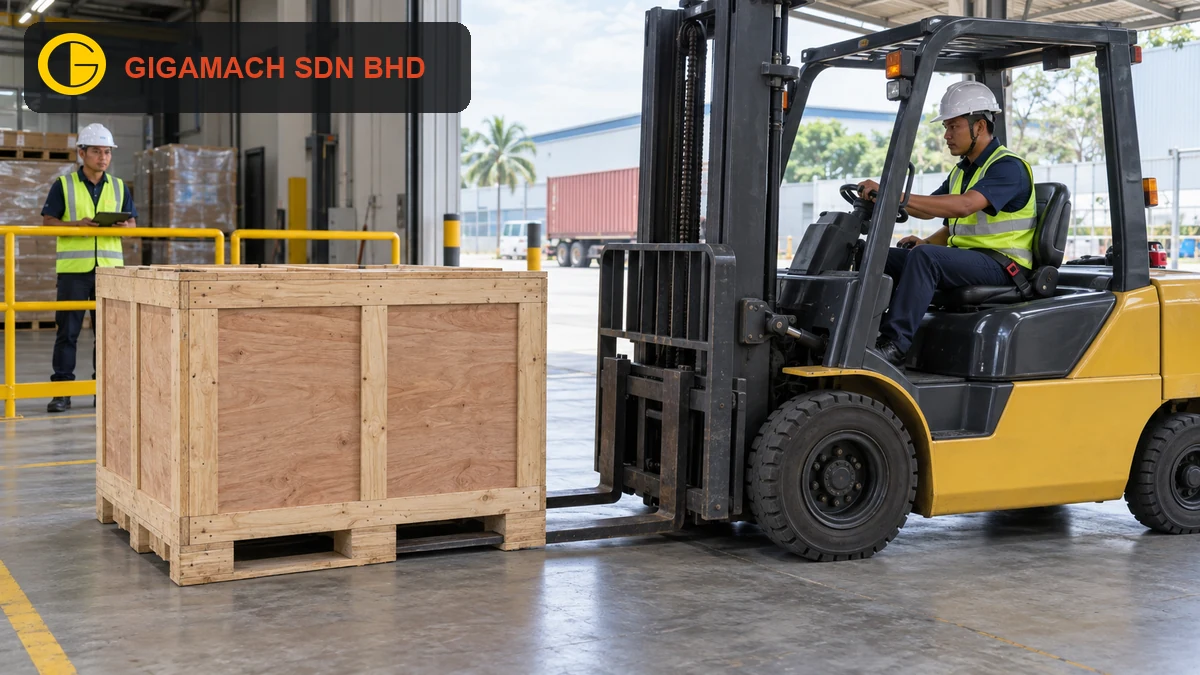
Unbranded counterbalanced forklift stopped at a grounded machinery crate with both forks aligned beneath the skid, a belted operator in the cab, and a PPE spotter behind a rigid barrier for fork-placement safety education.
AI-generated illustrative safety visual by GIGAMACH SDN BHD.

Planning for forklift operations requires more than the correct machine or lifting equipment. Safe forklift operations begin before the forks leave the floor. A crate can look balanced while its real weight distribution and support points tell a different story.

For industrial teams working in Malaysia, early planning helps identify access, load, ground, personnel, and coordination risks before equipment is mobilised.

Why Forklift fork placement and load-support verification before moving crated industrial machinery matters

Forklift capacity depends on the complete operating condition, not only the load weight. Load dimensions, centre of gravity, attachment, fork position, lift height, travel surface, and pedestrian control must be considered together before movement begins.

The work method should be based on verified site and load information. A checklist supports the planning discussion, but it does not replace a task-specific assessment by competent personnel.

Practical pre-work checklist

  • Check 1: Confirm the packed weight, dimensions and centre of gravity from reliable information.
  • Check 2: Check the forklift data plate and any attachment effect on capacity.
  • Check 3: Space the forks as widely as the load safely permits and centre them.
  • Check 4: Insert the forks fully beneath sound, intended support points.
  • Check 5: Keep everyone clear and make a low trial lift to check stability.

Record the important findings during the site survey and brief the same controls to operators, riggers, signalmen, supervisors, and nearby work teams. Stop and reassess whenever the site condition or equipment configuration differs from the plan.

Common mistakes to avoid

  • Using the load weight alone without checking its dimensions and centre-of-gravity position.
  • Assuming the capacity shown for one load centre or attachment applies to every configuration.
  • Testing an uncertain pickup at height or with pedestrians inside the travel route.

Related planning terms include forklift load centre, forklift load stability, industrial material handling. These should be used naturally to describe the actual work scope, not treated as interchangeable services.

Final verification before work starts

Before lifting, confirm the load, data plate, attachment, fork spacing, support, pickup position, travel route, visibility, ground condition, and pedestrian separation. Test the pickup at minimum practical height and stop if the load or truck behaves unexpectedly.

Center it. Support it. Test it low.

Planning support for industrial work

GIGAMACH SDN BHD provides forklift operations and industrial equipment positioning with a practical safety-first approach. Plan the scope early so the equipment, access, lifting method, transport, and final positioning can be coordinated before work begins.
Friday, September 11, 2026

BOOM LIFT POSITIONING: PROTECT THE OPERATOR FROM TRAPPING HAZARDS

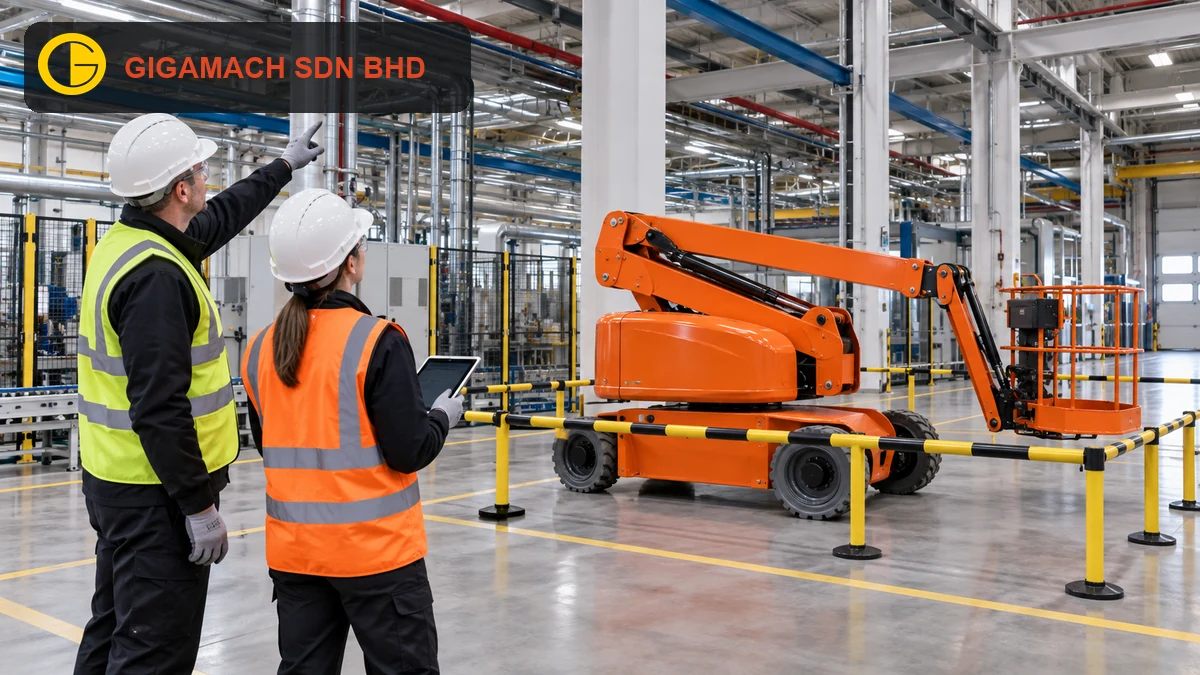
Grounded orange articulated boom lift inside a factory while two PPE-equipped technicians assess beams, pipework and clearances before positioning work.
AI-generated illustrative safety visual by GIGAMACH SDN BHD.

Planning for boom lift and scissor lift rental requires more than the correct machine or lifting equipment. When a boom lift works near beams, pipework, walls or equipment, a small platform movement can close the available clearance quickly. The operator must stay aware of the full work envelope—not only the task directly ahead.

For industrial teams working in Shah Alam, Selangor, early planning helps identify access, load, ground, personnel, and coordination risks before equipment is mobilised.

Why Boom lift positioning and operator protection from trapping hazards near structures matters

Access equipment must match the required working height, outreach, platform load, ground condition, and surrounding hazards. Selecting a machine by height alone can leave the operator without suitable reach or a stable operating setup.

The work method should be based on verified site and load information. A checklist supports the planning discussion, but it does not replace a task-specific assessment by competent personnel.

Practical pre-work checklist

  • Check 1: Inspect overhead, side and travel-path hazards before elevation.
  • Check 2: Choose a setup that avoids positioning the platform between fixed structures.
  • Check 3: Use slow, deliberate movements and maintain sight of the movement.
  • Check 4: Keep the body inside the guardrails and use fall protection as required by the manufacturer and site.
  • Check 5: Control the area below and maintain communication with capable ground support.
  • Check 6: Stop before clearance is lost; reposition instead of forcing the platform or overreaching.

Record the important findings during the site survey and brief the same controls to operators, riggers, signalmen, supervisors, and nearby work teams. Stop and reassess whenever the site condition or equipment configuration differs from the plan.

Common mistakes to avoid

  • Selecting equipment before checking ground condition and access width.
  • Ignoring platform capacity, overhead hazards, or nearby vehicle traffic.
  • Starting work without completing the pre-use and function checks.

Related planning terms include aerial work platform selection, pre-use inspection, working at height. These should be used naturally to describe the actual work scope, not treated as interchangeable services.

Final verification before work starts

Before raising the platform, verify the work zone, emergency lowering arrangement, operator communication, weather limitations, and safe access to and from the platform.

Keep clearance. Keep control.

Planning support for industrial work

GIGAMACH SDN BHD provides boom lift and scissor lift rental with a practical safety-first approach. Plan the scope early so the equipment, access, lifting method, transport, and final positioning can be coordinated before work begins.

Thursday, September 10, 2026

CLEANROOM CLASSIFICATION: CONFIRM WHAT THE ROOM REQUIRES

Wrapped precision machine on a clean stainless-steel transfer dolly, with fully gowned technicians, protected cleanroom surfaces, and a controlled exclusion route for cleanroom machinery transfer safety education.
AI-generated illustrative safety visual by GIGAMACH SDN BHD.

Planning for cleanroom machinery relocation Malaysia requires more than the correct machine or lifting equipment. Cleanroom machinery relocation should begin with one basic question: which classification framework and room condition apply to the work?

Why Cleanroom ISO classification and pharmaceutical GMP grade awareness before machinery handling matters

A cleanroom transfer must protect the equipment, controlled route, room surfaces, and contamination-control programme while preserving ordinary machinery-moving controls. Facility access rules, material transfer, load stability, and final release therefore need one coordinated method.

The work method should be based on verified site and load information. A checklist supports the planning discussion, but it does not replace a task-specific assessment by competent personnel.

Practical pre-work checklist

  • Check 1: Confirm whether the facility specifies an ISO class, GMP grade or both.
  • Check 2: Verify the room state and operating conditions for the task.
  • Check 3: Follow the facility’s approved gowning and material-transfer flow.
  • Check 4: Use cleaned, compatible tools and suitable transfer equipment.
  • Check 5: Protect surfaces, airflow, access routes and task-specific ESD controls.
  • Check 6: Coordinate cleaning, monitoring and authorised release after positioning.

Record the important findings during the site survey and brief the same controls to operators, riggers, signalmen, supervisors, and nearby work teams. Stop and reassess whenever the site condition or equipment configuration differs from the plan.

Common mistakes to avoid

  • Bringing untreated packaging, dirty wheels, or unapproved tools into the controlled area.
  • Protecting the machine but overlooking floors, doors, airlocks, and sensitive finishes.
  • Treating contamination control as a substitute for isolation, route, pinch-point, and exclusion-zone controls.

Related planning terms include cleanroom machinery relocation, cleanroom equipment installation, controlled-environment machinery handling. These should be used naturally to describe the actual work scope, not treated as interchangeable services.

Final verification before work starts

Before entry, confirm facility authorisation, cleanroom preparation, equipment condition, route protection, load control, communication, and stop-work conditions. After positioning, coordinate cleaning, inspection, documentation, and any required monitoring or authorised release with the facility team.

Verify the requirement. Protect the environment.

Planning support for industrial work

GIGAMACH SDN BHD provides cleanroom machinery relocation and equipment installation with a practical safety-first approach. Plan the scope early so the equipment, access, lifting method, transport, and final positioning can be coordinated before work begins.
Monday, September 7, 2026

GANTRY LIFTING: PREPARE THE TRAVEL PATH BEFORE THE LOAD MOVES

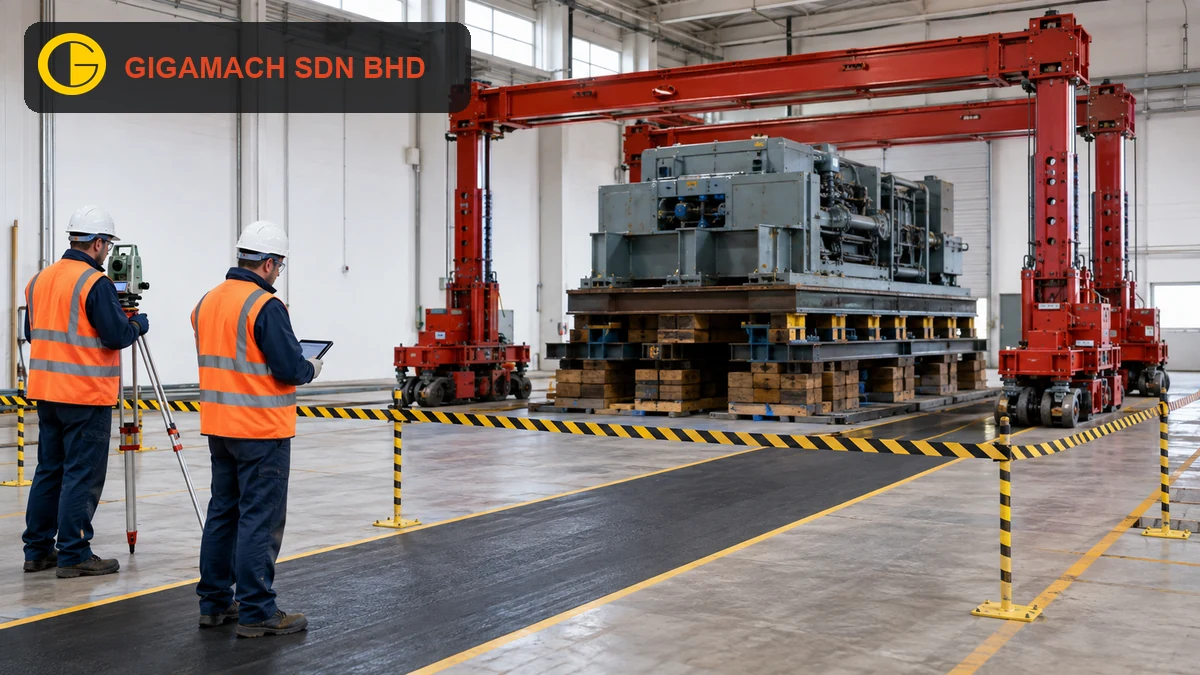
Industrial machine grounded on engineered supports beneath a modular hydraulic gantry, with PPE-equipped technicians behind a rigid barrier checking the clear level travel path for gantry lifting safety education.
AI-generated illustrative safety visual by GIGAMACH SDN BHD.

Planning for heavy lifting services requires more than the correct machine or lifting equipment. A gantry lift may begin vertically, but control can still be lost when a loaded gantry travels across an uneven, obstructed or unsuitable floor. Route preparation matters before the machine leaves its supports.

For industrial teams working in Peninsular Malaysia, early planning helps identify access, load, ground, personnel, and coordination risks before equipment is mobilised.

Why Gantry lifting travel-path preparation and controlled load movement matters

Heavy lifting depends on verified load information, suitable equipment, stable support, controlled access, and clear communication. Each part of the lifting system must be considered together before force is applied to the load.

The work method should be based on verified site and load information. A checklist supports the planning discussion, but it does not replace a task-specific assessment by competent personnel.

Practical pre-work checklist

  • Check 1: Confirm that the floor and temporary supports suit the planned reactions.
  • Check 2: Check runway level, alignment, transitions and cleanliness.
  • Check 3: Measure overhead and side clearances for the gantry, load and rigging.
  • Check 4: Establish a rigid exclusion zone and designate one movement leader.
  • Check 5: Travel in small coordinated steps while monitoring wheels, track and load clearance.
  • Check 6: Stop if resistance, settlement or alignment changes.

Record the important findings during the site survey and brief the same controls to operators, riggers, signalmen, supervisors, and nearby work teams. Stop and reassess whenever the site condition or equipment configuration differs from the plan.

Common mistakes to avoid

  • Proceeding with incomplete load data or unverified lifting points.
  • Treating ground support, sling angles, or exclusion zones as secondary.
  • Continuing movement after communication or visibility has been lost.

Related planning terms include rigging services, gantry lifting, hydraulic jacking. These should be used naturally to describe the actual work scope, not treated as interchangeable services.

Final verification before work starts

Before the main operation, confirm the approved method, equipment capacity, ground support, rigging arrangement, exclusion zone, communications, and stop-work conditions with the full team.

Prepare the path. Control the move.

Planning support for industrial work

GIGAMACH SDN BHD provides heavy lifting, rigging, and industrial handling with a practical safety-first approach. Plan the scope early so the equipment, access, lifting method, transport, and final positioning can be coordinated before work begins.

Friday, September 4, 2026

CLEANROOM MACHINE INSTALLATION: CONTROL CONTAMINATION DURING FINAL SETUP

Wrapped precision machine in a cleanroom with fully gowned technicians checking positioning, covers and the controlled work area for cleanroom machinery installation education.
AI-generated illustrative safety visual by GIGAMACH SDN BHD.

Planning for cleanroom machinery relocation Malaysia requires more than the correct machine or lifting equipment. Moving a machine into position is only part of cleanroom equipment installation. The team must also control what enters the room, how the work affects the controlled environment and how the area is released after completion.

Why Cleanroom machine installation — contamination control from entry planning to authorised handover matters

A cleanroom transfer must protect the equipment, controlled route, room surfaces, and contamination-control programme while preserving ordinary machinery-moving controls. Facility access rules, material transfer, load stability, and final release therefore need one coordinated method.

The work method should be based on verified site and load information. A checklist supports the planning discussion, but it does not replace a task-specific assessment by competent personnel.

Practical pre-work checklist

  • Check 1: Confirm the facility's required cleanroom class, room state, access procedure, work permit and approved method before entry.
  • Check 2: Prepare cleanroom-compatible tools, transfer equipment, covers and protective materials as required by the facility.
  • Check 3: Check wheels and contact surfaces, and remove unsuitable packaging before controlled entry.
  • Check 4: Keep covers in place until needed, contain tools and parts, protect airflow paths and maintain safe positioning controls.
  • Check 5: Remove materials, clean and inspect the work area, then coordinate any required monitoring or requalification with the authorised facility team.

Record the important findings during the site survey and brief the same controls to operators, riggers, signalmen, supervisors, and nearby work teams. Stop and reassess whenever the site condition or equipment configuration differs from the plan.

Common mistakes to avoid

  • Bringing untreated packaging, dirty wheels, or unapproved tools into the controlled area.
  • Protecting the machine but overlooking floors, doors, airlocks, and sensitive finishes.
  • Treating contamination control as a substitute for isolation, route, pinch-point, and exclusion-zone controls.

Related planning terms include cleanroom machinery relocation, cleanroom equipment installation, controlled-environment machinery handling. These should be used naturally to describe the actual work scope, not treated as interchangeable services.

Final verification before work starts

Before entry, confirm facility authorisation, cleanroom preparation, equipment condition, route protection, load control, communication, and stop-work conditions. After positioning, coordinate cleaning, inspection, documentation, and any required monitoring or authorised release with the facility team.

Control the move. Protect the environment.

Planning support for industrial work

GIGAMACH SDN BHD provides cleanroom machinery relocation and equipment installation with a practical safety-first approach. Plan the scope early so the equipment, access, lifting method, transport, and final positioning can be coordinated before work begins.
Thursday, September 3, 2026

MACHINE UNLOADING: PREPARE THE LANDING ZONE FIRST

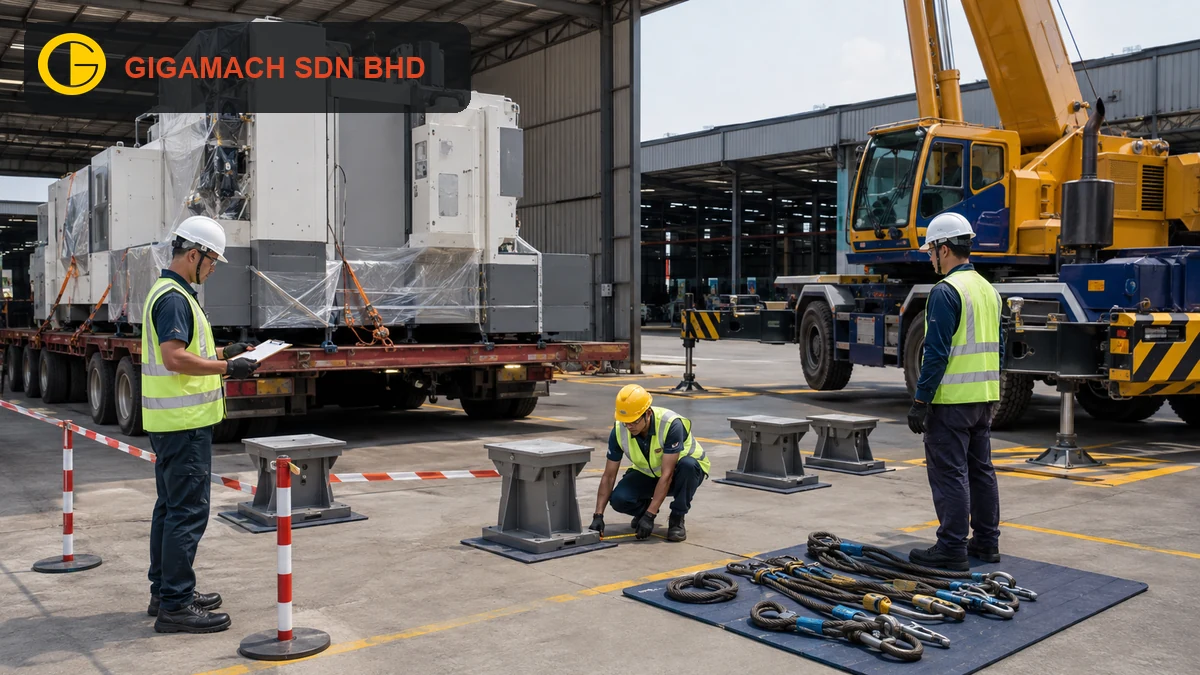
Large industrial machine secured on a stationary flatbed trailer, with PPE-equipped workers preparing engineered landing supports, a clear route, and a controlled exclusion zone for machine unloading safety education.
AI-generated illustrative safety visual by GIGAMACH SDN BHD.

Planning for industrial machinery transportation requires more than the correct machine or lifting equipment. A safe unloading plan does not end when the machine leaves the trailer. Before any heavy machinery handling begins, the team should know exactly where the load will land, how it will be supported and how the final position will be verified.

For industrial teams working in Peninsular Malaysia, early planning helps identify access, load, ground, personnel, and coordination risks before equipment is mobilised.

Why Machine unloading landing-zone preparation and controlled load release planning matters

Industrial transport starts before the vehicle arrives. The load dimensions, weight distribution, restraint points, lifting method, route, unloading space, and final handover must be coordinated as one operation.

The work method should be based on verified site and load information. A checklist supports the planning discussion, but it does not replace a task-specific assessment by competent personnel.

Practical pre-work checklist

  • Check 1: Clear and inspect the unloading route and landing area.
  • Check 2: Confirm the floor can support the planned operation and final load.
  • Check 3: Prepare suitable supports at the verified landing points.
  • Check 4: Mark the final position and maintain a controlled exclusion zone.
  • Check 5: Lower with control, confirm stability and release the rigging only when safe.

Record the important findings during the site survey and brief the same controls to operators, riggers, signalmen, supervisors, and nearby work teams. Stop and reassess whenever the site condition or equipment configuration differs from the plan.

Common mistakes to avoid

  • Choosing transport equipment before confirming dimensions and weight.
  • Using unsuitable restraint or packing around sensitive machine parts.
  • Reaching the destination without a verified unloading and access plan.

Related planning terms include machinery loading and unloading, packing and crating services, container stuffing and unstuffing. These should be used naturally to describe the actual work scope, not treated as interchangeable services.

Final verification before work starts

Confirm the packing condition, lifting points, restraint plan, vehicle capacity, route constraints, unloading equipment, and receiving-area access before dispatch.

Prepare first. Unload with control.

Planning support for industrial work

GIGAMACH SDN BHD provides industrial transportation, loading, and packing with a practical safety-first approach. Plan the scope early so the equipment, access, lifting method, transport, and final positioning can be coordinated before work begins.
Saturday, August 29, 2026

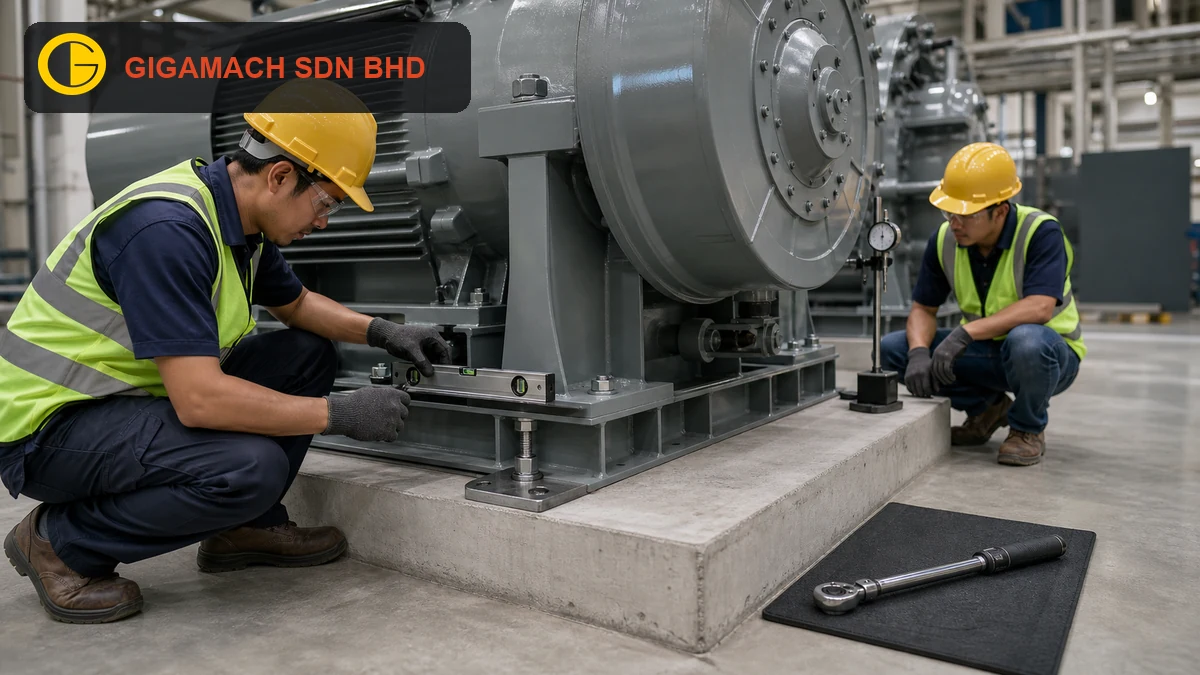
MACHINE INSTALLATION: ALIGN BEFORE FINAL FIXING

Industrial machine relocation with rated handling equipment, PPE-equipped workers, controlled movement, and a clear exclusion zone for safety education.
AI-generated illustrative safety visual by GIGAMACH SDN BHD.

Planning for machine relocation Malaysia requires more than the correct machine or lifting equipment. Final fixing should preserve the correct machine position—not pull an uneven base into place. During industrial machine installation, anchors, baseplates and supports should be checked before final tightening so alignment is not lost.

Why Machine installation final fixing — preserving alignment while anchors and fasteners are secured. planning matters

A relocation succeeds only when the load, route, floor, handling equipment, people, and final position are treated as one coordinated plan. A safe lift at the starting point does not remove risks along the travel path or during final alignment.

The work method should be based on verified site and load information. A checklist supports the planning discussion, but it does not replace a task-specific assessment by competent personnel.

Practical pre-work checklist

    Record the important findings during the site survey and brief the same controls to operators, riggers, signalmen, supervisors, and nearby work teams. Stop and reassess whenever the site condition or equipment configuration differs from the plan.

    Common mistakes to avoid

    • Planning the lifting point but not surveying the complete travel route.
    • Estimating machine weight or centre of gravity from appearance alone.
    • Allowing hands or feet into crush zones during final positioning.

    Related planning terms include industrial machinery installation, heavy machinery mover, equipment positioning. These should be used naturally to describe the actual work scope, not treated as interchangeable services.

    Final verification before work starts

    Before movement begins, walk the route with the operating team, confirm clearances and floor capacity, assign one signalman, and identify safe stopping and recovery positions.

    Align it, support it, fix it—then verify it.

    Planning support for industrial work

    GIGAMACH SDN BHD provides machine relocation and equipment positioning with a practical safety-first approach. Plan the scope early so the equipment, access, lifting method, transport, and final positioning can be coordinated before work begins.
    Thursday, August 27, 2026

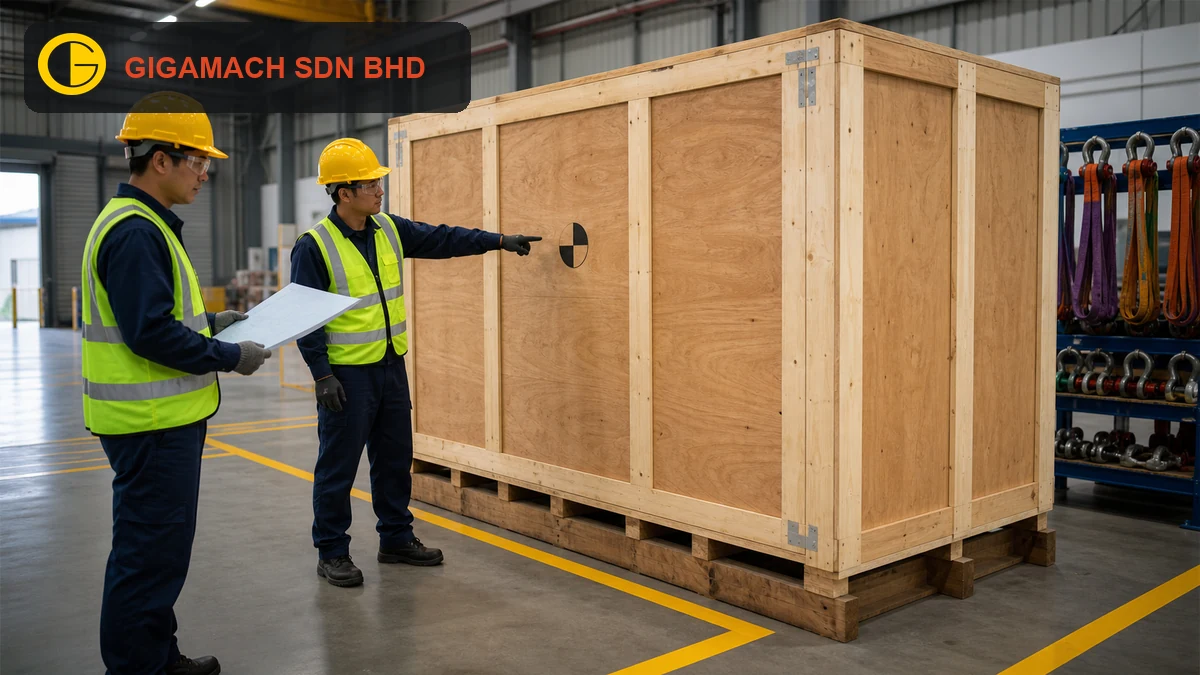
    CRATED MACHINERY: MARK THE TRUE CENTRE OF GRAVITY

    Industrial machine relocation with rated handling equipment, PPE-equipped workers, controlled movement, and a clear exclusion zone for safety education.
    AI-generated illustrative safety visual by GIGAMACH SDN BHD.

    Planning for machine relocation Malaysia requires more than the correct machine or lifting equipment. Once machinery is enclosed, the crate's outside shape can hide an offset load. Packing blocks, protective materials and accessories may also change the final balance.

    Why Machinery packing and crating: verify and mark the true centre of gravity before handling. planning matters

    A relocation succeeds only when the load, route, floor, handling equipment, people, and final position are treated as one coordinated plan. A safe lift at the starting point does not remove risks along the travel path or during final alignment.

    The work method should be based on verified site and load information. A checklist supports the planning discussion, but it does not replace a task-specific assessment by competent personnel.

    Practical pre-work checklist

    • Check 1: Verify the total packed weight and centre of gravity using reliable equipment and packing information.
    • Check 2: Never assume that the geometric centre of the crate is the balance point.
    • Check 3: Mark the verified centre of gravity clearly on more than one visible side.
    • Check 4: Identify approved handling or lifting points and check the skid, base and supports.
    • Check 5: Brief the lifting supervisor and rigger so the rigging arrangement matches the packed load.
    • Check 6: Use a controlled trial lift from safe positions and stop if the crate tilts unexpectedly.

    Record the important findings during the site survey and brief the same controls to operators, riggers, signalmen, supervisors, and nearby work teams. Stop and reassess whenever the site condition or equipment configuration differs from the plan.

    Common mistakes to avoid

    • Planning the lifting point but not surveying the complete travel route.
    • Estimating machine weight or centre of gravity from appearance alone.
    • Allowing hands or feet into crush zones during final positioning.

    Related planning terms include industrial machinery installation, heavy machinery mover, equipment positioning. These should be used naturally to describe the actual work scope, not treated as interchangeable services.

    Final verification before work starts

    Before movement begins, walk the route with the operating team, confirm clearances and floor capacity, assign one signalman, and identify safe stopping and recovery positions.

    The crate may look simple. Its true balance must be verified, marked and communicated.

    Planning support for industrial work

    GIGAMACH SDN BHD provides machine relocation and equipment positioning with a practical safety-first approach. Plan the scope early so the equipment, access, lifting method, transport, and final positioning can be coordinated before work begins.

    Tuesday, August 25, 2026

    SALAM MAULIDUR RASUL

    Industrial heavy lifting operation with rated rigging, stable support, PPE-equipped workers, and a controlled exclusion zone for safety education.
    AI-generated illustrative safety visual by GIGAMACH SDN BHD.

    Planning for heavy lifting services requires more than the correct machine or lifting equipment. On this meaningful occasion, we join Malaysians in reflecting on the values of compassion, humility, responsibility and respect.

    Why Maulidur Rasul greeting: compassion, responsibility, respect and unity in our communities and workplaces. planning matters

    Heavy lifting depends on verified load information, suitable equipment, stable support, controlled access, and clear communication. Each part of the lifting system must be considered together before force is applied to the load.

    The work method should be based on verified site and load information. A checklist supports the planning discussion, but it does not replace a task-specific assessment by competent personnel.

    Practical pre-work checklist

    • Check 1: Care for the well-being of those around us.
    • Check 2: Act responsibly, even when nobody is watching.
    • Check 3: Communicate with patience and respect.
    • Check 4: Work together with trust and unity.

    Record the important findings during the site survey and brief the same controls to operators, riggers, signalmen, supervisors, and nearby work teams. Stop and reassess whenever the site condition or equipment configuration differs from the plan.

    Common mistakes to avoid

    • Proceeding with incomplete load data or unverified lifting points.
    • Treating ground support, sling angles, or exclusion zones as secondary.
    • Continuing movement after communication or visibility has been lost.

    Related planning terms include rigging services, gantry lifting, hydraulic jacking. These should be used naturally to describe the actual work scope, not treated as interchangeable services.

    Final verification before work starts

    Before the main operation, confirm the approved method, equipment capacity, ground support, rigging arrangement, exclusion zone, communications, and stop-work conditions with the full team.

    Salam Maulidur Rasul.

    Planning support for industrial work

    GIGAMACH SDN BHD provides heavy lifting, rigging, and industrial handling with a practical safety-first approach. Plan the scope early so the equipment, access, lifting method, transport, and final positioning can be coordinated before work begins.
    Monday, August 24, 2026

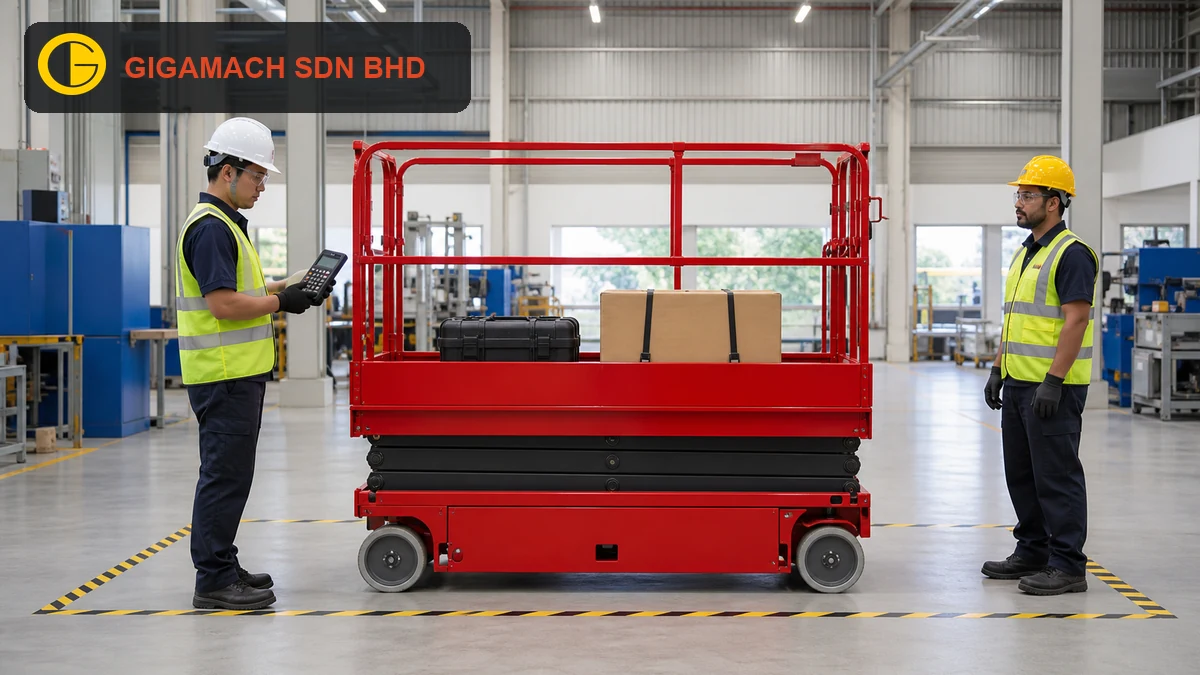
    SCISSOR LIFT CAPACITY: COUNT THE WHOLE PLATFORM LOAD

    Electric scissor lift fully lowered on a level factory floor, with two PPE-equipped technicians outside a marked exclusion zone checking ground and wheel conditions for scissor lift safety education.
    AI-generated illustrative safety visual by GIGAMACH SDN BHD.

    Planning for boom lift and scissor lift rental requires more than the correct machine or lifting equipment. Scissor lift capacity is not only about the number of people on the platform. Tools, materials, accessories and anything added during the job contribute to the total load.

    For industrial teams working in Shah Alam, Selangor, early planning helps identify access, load, ground, personnel, and coordination risks before equipment is mobilised.

    Why Scissor lift platform capacity: count people, tools, materials and accessories before elevation. planning matters

    Access equipment must match the required working height, outreach, platform load, ground condition, and surrounding hazards. Selecting a machine by height alone can leave the operator without suitable reach or a stable operating setup.

    The work method should be based on verified site and load information. A checklist supports the planning discussion, but it does not replace a task-specific assessment by competent personnel.

    Practical pre-work checklist

    • Check 1: Read the manufacturer's platform rating before use.
    • Check 2: Include every person, tool, material and approved accessory in the calculation.
    • Check 3: Keep the load evenly arranged and within the permitted platform area.
    • Check 4: Secure tools and materials so they cannot shift or fall.
    • Check 5: Close the entry gate and maintain clear guardrail protection.
    • Check 6: Stop and verify if the total load or equipment configuration is uncertain.

    Record the important findings during the site survey and brief the same controls to operators, riggers, signalmen, supervisors, and nearby work teams. Stop and reassess whenever the site condition or equipment configuration differs from the plan.

    Common mistakes to avoid

    • Selecting equipment before checking ground condition and access width.
    • Ignoring platform capacity, overhead hazards, or nearby vehicle traffic.
    • Starting work without completing the pre-use and function checks.

    Related planning terms include aerial work platform selection, pre-use inspection, working at height. These should be used naturally to describe the actual work scope, not treated as interchangeable services.

    Final verification before work starts

    Before raising the platform, verify the work zone, emergency lowering arrangement, operator communication, weather limitations, and safe access to and from the platform.

    Count every item before elevation. Stay within the rated limit.

    Planning support for industrial work

    GIGAMACH SDN BHD provides boom lift and scissor lift rental with a practical safety-first approach. Plan the scope early so the equipment, access, lifting method, transport, and final positioning can be coordinated before work begins.

    Sunday, August 23, 2026

    SUNDAY SAFETY RESET: AGREE BEFORE YOU MOVE

    Industrial heavy lifting operation with rated rigging, stable support, PPE-equipped workers, and a controlled exclusion zone for safety education.
    AI-generated illustrative safety visual by GIGAMACH SDN BHD.

    Planning for heavy lifting services requires more than the correct machine or lifting equipment. A short pre-work briefing can prevent confusion once heavy machinery handling begins. Before anyone touches the equipment, every team member should understand the same movement, route, signal and stopping conditions.

    For industrial teams working in Peninsular Malaysia, early planning helps identify access, load, ground, personnel, and coordination risks before equipment is mobilised.

    Why Sunday safety reset: align the team before heavy machinery handling begins. planning matters

    Heavy lifting depends on verified load information, suitable equipment, stable support, controlled access, and clear communication. Each part of the lifting system must be considered together before force is applied to the load.

    The work method should be based on verified site and load information. A checklist supports the planning discussion, but it does not replace a task-specific assessment by competent personnel.

    Practical pre-work checklist

    • Check 1: Confirm what will move, where it will finish and which route will be used.
    • Check 2: Identify one designated signalman and one clear communication method.
    • Check 3: Review exclusion zones, pinch points and each person's safe position.
    • Check 4: Check that the equipment, floor and access conditions match the plan.
    • Check 5: Agree that anyone may call for a pause when something looks unsafe or unclear.

    Record the important findings during the site survey and brief the same controls to operators, riggers, signalmen, supervisors, and nearby work teams. Stop and reassess whenever the site condition or equipment configuration differs from the plan.

    Common mistakes to avoid

    • Proceeding with incomplete load data or unverified lifting points.
    • Treating ground support, sling angles, or exclusion zones as secondary.
    • Continuing movement after communication or visibility has been lost.

    Related planning terms include rigging services, gantry lifting, hydraulic jacking. These should be used naturally to describe the actual work scope, not treated as interchangeable services.

    Final verification before work starts

    Before the main operation, confirm the approved method, equipment capacity, ground support, rigging arrangement, exclusion zone, communications, and stop-work conditions with the full team.

    One plan. One signal. One safe start.

    Planning support for industrial work

    GIGAMACH SDN BHD provides heavy lifting, rigging, and industrial handling with a practical safety-first approach. Plan the scope early so the equipment, access, lifting method, transport, and final positioning can be coordinated before work begins.
    Saturday, August 22, 2026

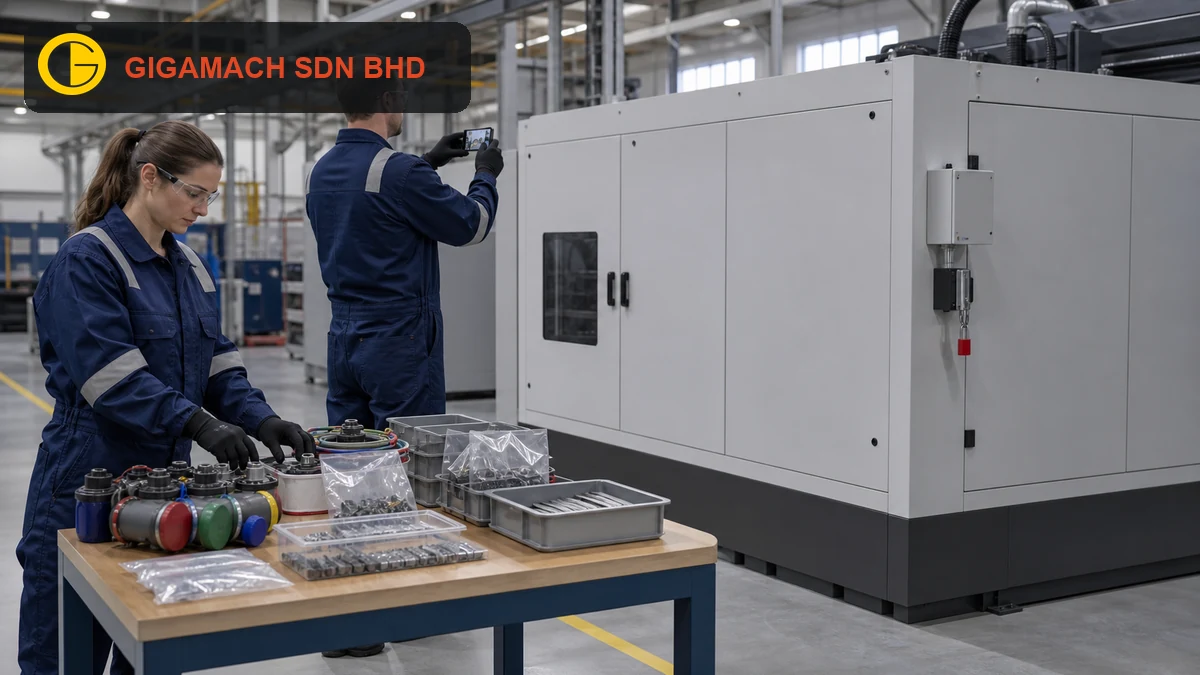
    MACHINE DISMANTLING: LABEL BEFORE YOU DISCONNECT

    Powered-down CNC machine with open service panels, capped hoses, protected components on a padded trolley, and PPE-equipped technicians documenting connections for safe dismantling and reassembly planning.
    AI-generated illustrative safety visual by GIGAMACH SDN BHD.

    Planning for machine relocation Malaysia requires more than the correct machine or lifting equipment. Machine dismantling is not simply installation in reverse. Cables, hoses, sensors, guards and alignment references must return to the correct positions without unsafe guesswork during reassembly.

    Why Machine dismantling: traceable disconnection and reassembly planning. planning matters

    A relocation succeeds only when the load, route, floor, handling equipment, people, and final position are treated as one coordinated plan. A safe lift at the starting point does not remove risks along the travel path or during final alignment.

    The work method should be based on verified site and load information. A checklist supports the planning discussion, but it does not replace a task-specific assessment by competent personnel.

    Practical pre-work checklist

    • Check 1: Isolate the equipment and verify stored energy according to the approved site procedure.
    • Check 2: Photograph each connection and reference point before removal.
    • Check 3: Use unique, durable tags that match the drawing, equipment list or packing record.
    • Check 4: Cap open lines and protect connectors, threads and precision surfaces.
    • Check 5: Bag fasteners and small parts by system instead of mixing them together.
    • Check 6: Record shim locations, orientation marks and alignment references before separation.

    Record the important findings during the site survey and brief the same controls to operators, riggers, signalmen, supervisors, and nearby work teams. Stop and reassess whenever the site condition or equipment configuration differs from the plan.

    Common mistakes to avoid

    • Planning the lifting point but not surveying the complete travel route.
    • Estimating machine weight or centre of gravity from appearance alone.
    • Allowing hands or feet into crush zones during final positioning.

    Related planning terms include industrial machinery installation, heavy machinery mover, equipment positioning. These should be used naturally to describe the actual work scope, not treated as interchangeable services.

    Final verification before work starts

    Before movement begins, walk the route with the operating team, confirm clearances and floor capacity, assign one signalman, and identify safe stopping and recovery positions.

    Label clearly. Protect every interface. Make reassembly traceable.

    Planning support for industrial work

    GIGAMACH SDN BHD provides machine relocation and equipment positioning with a practical safety-first approach. Plan the scope early so the equipment, access, lifting method, transport, and final positioning can be coordinated before work begins.
    Friday, August 21, 2026

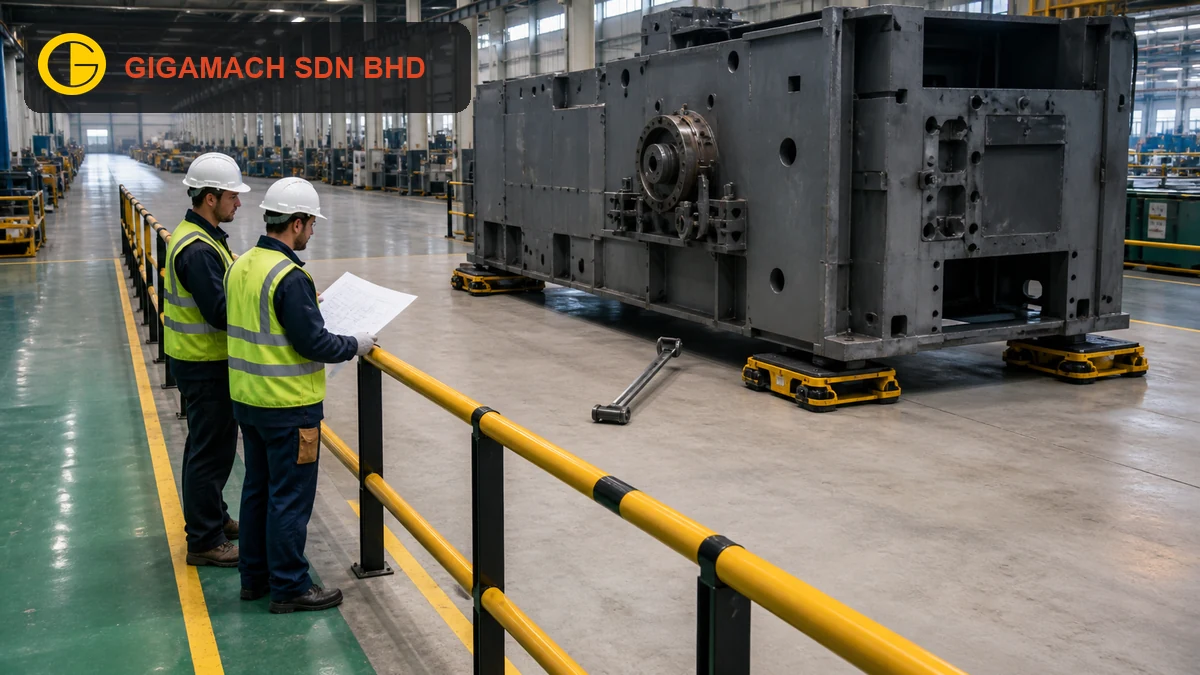
    MACHINERY SKATES: CONTROL DIRECTION BEFORE THE LOAD ROLLS

    Industrial machine relocation with rated handling equipment, PPE-equipped workers, controlled movement, and a clear exclusion zone for safety education.
    AI-generated illustrative safety visual by GIGAMACH SDN BHD.

    Planning for machine relocation Malaysia requires more than the correct machine or lifting equipment. Machinery skates can move a heavy machine through tight factory spaces, but low speed does not remove crush, stability or steering risks. A controlled machine relocation Malaysia plan should treat the load, floor and travel route as one system.

    Why Machinery skate movement: control direction before the load rolls. planning matters

    A relocation succeeds only when the load, route, floor, handling equipment, people, and final position are treated as one coordinated plan. A safe lift at the starting point does not remove risks along the travel path or during final alignment.

    The work method should be based on verified site and load information. A checklist supports the planning discussion, but it does not replace a task-specific assessment by competent personnel.

    Practical pre-work checklist

    • Check 1: Verify the machine weight, centre of gravity and engineered support points.
    • Check 2: Select compatible, rated skates and a planned load-transfer method.
    • Check 3: Survey floor capacity, joints, slopes, clearances and every planned turn.
    • Check 4: Assign one movement leader and one clear communication method.
    • Check 5: Keep hands and feet clear; use purpose-designed steering or pushing tools.
    • Check 6: Move in short increments, stop to verify skate seating and alignment, then block the load securely.

    Record the important findings during the site survey and brief the same controls to operators, riggers, signalmen, supervisors, and nearby work teams. Stop and reassess whenever the site condition or equipment configuration differs from the plan.

    Common mistakes to avoid

    • Planning the lifting point but not surveying the complete travel route.
    • Estimating machine weight or centre of gravity from appearance alone.
    • Allowing hands or feet into crush zones during final positioning.

    Related planning terms include industrial machinery installation, heavy machinery mover, equipment positioning. These should be used naturally to describe the actual work scope, not treated as interchangeable services.

    Final verification before work starts

    Before movement begins, walk the route with the operating team, confirm clearances and floor capacity, assign one signalman, and identify safe stopping and recovery positions.

    Planning support for industrial work

    GIGAMACH SDN BHD provides machine relocation and equipment positioning with a practical safety-first approach. Plan the scope early so the equipment, access, lifting method, transport, and final positioning can be coordinated before work begins.
    Thursday, August 20, 2026

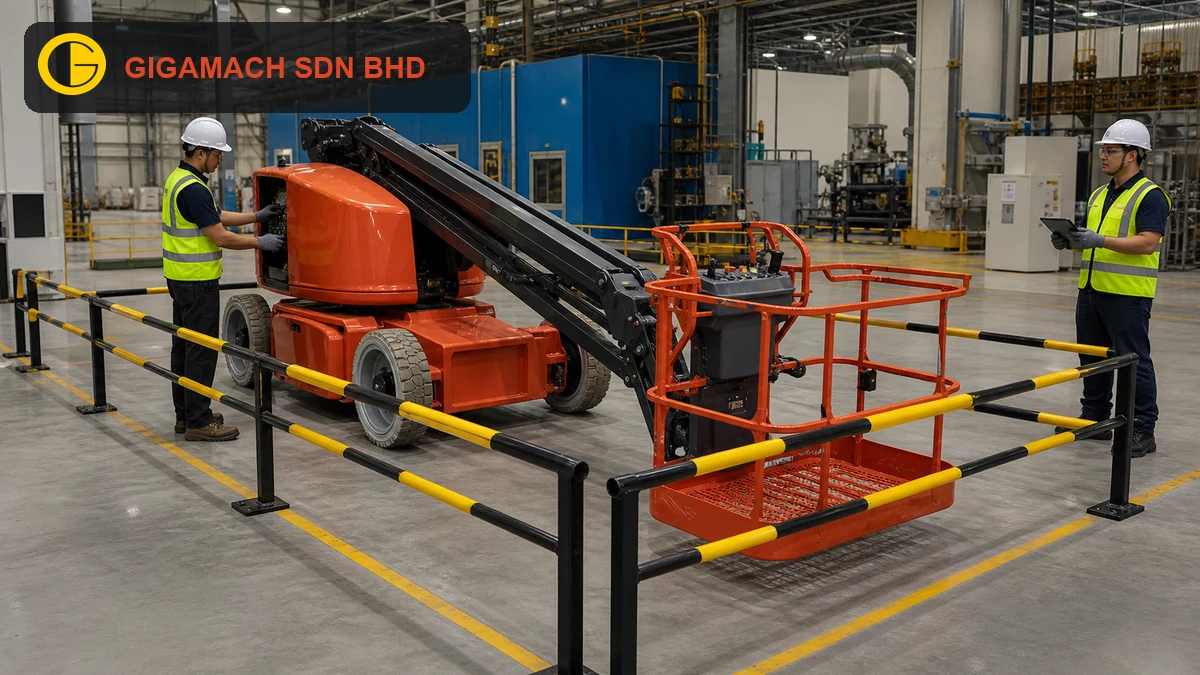
    BOOM LIFT EMERGENCY LOWERING: PLAN BEFORE ELEVATION

    Electric scissor lift fully lowered on a level factory floor, with two PPE-equipped technicians outside a marked exclusion zone checking ground and wheel conditions for scissor lift safety education.
    AI-generated illustrative safety visual by GIGAMACH SDN BHD.

    Planning for boom lift and scissor lift rental requires more than the correct machine or lifting equipment. Boom lift safety includes knowing how the platform can be brought down if normal controls fail or the operator cannot continue. An emergency plan should be understood before the platform leaves the ground—not improvised after a problem occurs.

    For industrial teams working in Shah Alam, Selangor, early planning helps identify access, load, ground, personnel, and coordination risks before equipment is mobilised.

    Why Boom lift emergency-lowering readiness and ground-support coordination planning matters

    Access equipment must match the required working height, outreach, platform load, ground condition, and surrounding hazards. Selecting a machine by height alone can leave the operator without suitable reach or a stable operating setup.

    The work method should be based on verified site and load information. A checklist supports the planning discussion, but it does not replace a task-specific assessment by competent personnel.

    Practical pre-work checklist

    • Check 1: Locate the ground controls and emergency-lowering system for the specific machine.
    • Check 2: Complete the required function checks according to the operator's manual and site procedure.
    • Check 3: Assign a ground person who understands the agreed communication and escalation method.
    • Check 4: Keep access to the base controls and emergency area clear throughout the task.
    • Check 5: Confirm what to do if communication is lost, power fails or the operator becomes unwell.
    • Check 6: Use emergency controls only as instructed and authorised for the situation.

    Record the important findings during the site survey and brief the same controls to operators, riggers, signalmen, supervisors, and nearby work teams. Stop and reassess whenever the site condition or equipment configuration differs from the plan.

    Common mistakes to avoid

    • Selecting equipment before checking ground condition and access width.
    • Ignoring platform capacity, overhead hazards, or nearby vehicle traffic.
    • Starting work without completing the pre-use and function checks.

    Related planning terms include aerial work platform selection, pre-use inspection, working at height. These should be used naturally to describe the actual work scope, not treated as interchangeable services.

    Final verification before work starts

    Before raising the platform, verify the work zone, emergency lowering arrangement, operator communication, weather limitations, and safe access to and from the platform.

    Planning support for industrial work

    GIGAMACH SDN BHD provides boom lift and scissor lift rental with a practical safety-first approach. Plan the scope early so the equipment, access, lifting method, transport, and final positioning can be coordinated before work begins.
    Wednesday, August 19, 2026

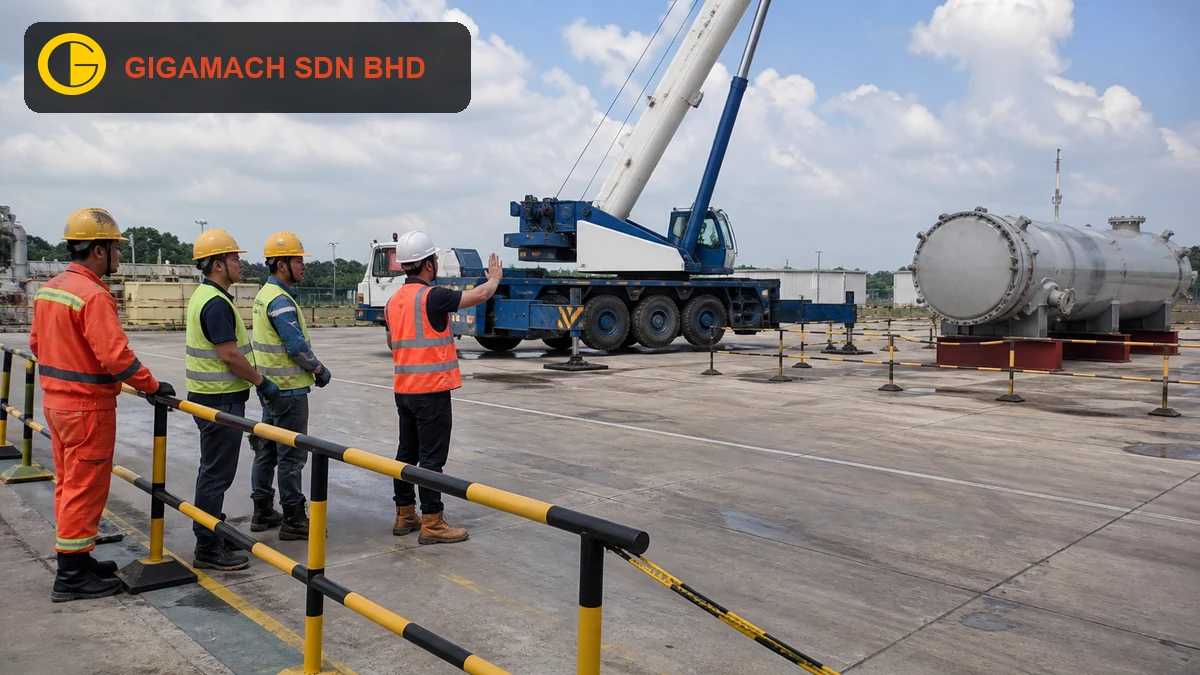
    LIFTING SUPERVISOR: WHEN CONDITIONS CHANGE, STOP AND REASSESS

    Lifting supervisor briefing a crane operator, rigger, and designated signalman behind a controlled barrier, with an idle crane and grounded load in the background for lifting-team safety education.
    AI-generated illustrative safety visual by GIGAMACH SDN BHD.

    Planning for lifting supervisor safety requires more than the correct machine or lifting equipment. A lifting plan describes an agreed method, but the worksite can change. Ground movement, deteriorating visibility, unexpected load behaviour, altered rigging or unauthorised entry can make the planned lift no longer valid.

    For industrial teams working in Malaysia, early planning helps identify access, load, ground, personnel, and coordination risks before equipment is mobilised.

    Why Lifting supervisor change control and stop-work coordination planning matters

    A lift remains controlled only while the actual crane setup, load, rigging, path, access, visibility, weather, and team communication continue to match the agreed method. Change control gives the lifting supervisor a structured way to pause, review, and coordinate the team.

    The work method should be based on verified site and load information. A checklist supports the planning discussion, but it does not replace a task-specific assessment by competent personnel.

    Practical pre-work checklist

    • Check 1: Hold the operation and make sure the load is placed in a safe, controlled condition.
    • Check 2: Compare the crane setup, ground, load, rigging and lifting path with the approved method.
    • Check 3: Confirm that the exclusion zone and agreed communication remain effective.
    • Check 4: Involve the relevant responsible personnel when a change requires review or authorisation.
    • Check 5: Rebrief the crane operator, rigger, designated signalman and surrounding work groups.
    • Check 6: Resume only when the revised conditions and controls are understood.

    Record the important findings during the site survey and brief the same controls to operators, riggers, signalmen, supervisors, and nearby work teams. Stop and reassess whenever the site condition or equipment configuration differs from the plan.

    Common mistakes to avoid

    • Treating a minor site change as acceptable without checking its effect on the lift plan.
    • Restarting before the crane operator, rigger, designated signalman, and nearby teams understand the revised controls.
    • Confusing coordination responsibility with the crane operator's control of the crane or the rigger's hands-on duties.

    Related planning terms include lift plan review, lifting team coordination, pre-lift briefing. These should be used naturally to describe the actual work scope, not treated as interchangeable services.

    Final verification before work starts

    Before resuming, confirm that the load is safe, the changed condition has received the required review, the exclusion zone and communication method remain effective, and every affected person has been rebriefed.

    Planning support for industrial work

    GIGAMACH SDN BHD provides lifting operations and lifting-team coordination with a practical safety-first approach. Plan the scope early so the equipment, access, lifting method, transport, and final positioning can be coordinated before work begins.
    Tuesday, August 18, 2026

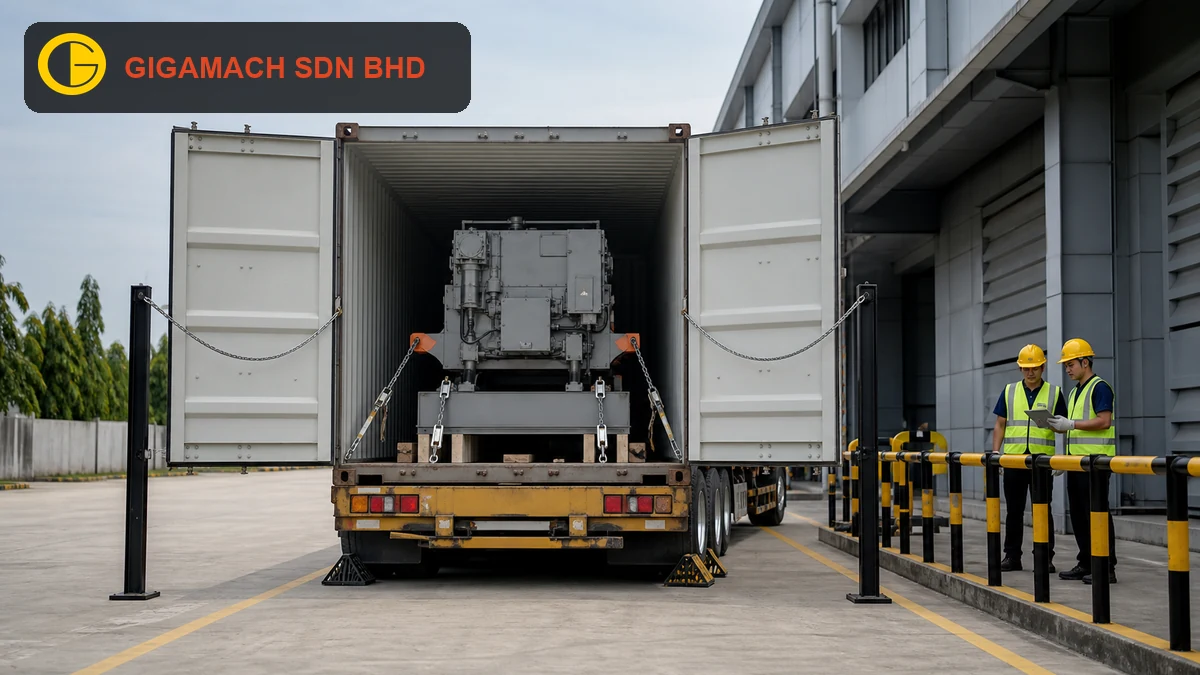
    CONTAINER STUFFING: CONTROL THE LOAD BEFORE THE DOORS CLOSE

    Heavy industrial machinery being safely prepared for transport with rated lifting equipment, secure packing, PPE, and controlled access.
    AI-generated illustrative safety visual by GIGAMACH SDN BHD.

    Planning for industrial machinery transportation requires more than the correct machine or lifting equipment. Container stuffing is not complete when machinery fits inside. Weight distribution, support, restraint and door clearance must remain controlled throughout transport and unloading.

    For industrial teams working in Peninsular Malaysia, early planning helps identify access, load, ground, personnel, and coordination risks before equipment is mobilised.

    Why Container stuffing planning and final restraint verification planning matters

    Industrial transport starts before the vehicle arrives. The load dimensions, weight distribution, restraint points, lifting method, route, unloading space, and final handover must be coordinated as one operation.

    The work method should be based on verified site and load information. A checklist supports the planning discussion, but it does not replace a task-specific assessment by competent personnel.

    Practical pre-work checklist

    • Check 1: Verify the machinery weight, dimensions, centre of gravity and handling points.
    • Check 2: Inspect the container floor, structure, payload limit and suitable restraint points.
    • Check 3: Plan a straight loading path with matched handling equipment and one agreed signal.
    • Check 4: Position the load to manage axle and floor loading without blocking safe restraint access.
    • Check 5: Use suitable blocking, bracing and restraint while protecting sensitive machine surfaces.
    • Check 6: Confirm stability, restraint tension, door clearance and documented condition from a safe position.

    Record the important findings during the site survey and brief the same controls to operators, riggers, signalmen, supervisors, and nearby work teams. Stop and reassess whenever the site condition or equipment configuration differs from the plan.

    Common mistakes to avoid

    • Choosing transport equipment before confirming dimensions and weight.
    • Using unsuitable restraint or packing around sensitive machine parts.
    • Reaching the destination without a verified unloading and access plan.

    Related planning terms include machinery loading and unloading, packing and crating services, container stuffing and unstuffing. These should be used naturally to describe the actual work scope, not treated as interchangeable services.

    Final verification before work starts

    Confirm the packing condition, lifting points, restraint plan, vehicle capacity, route constraints, unloading equipment, and receiving-area access before dispatch.

    Planning support for industrial work

    GIGAMACH SDN BHD provides industrial transportation, loading, and packing with a practical safety-first approach. Plan the scope early so the equipment, access, lifting method, transport, and final positioning can be coordinated before work begins.

    INDUSTRIAL DELIVERY: IS THE RECEIVING SITE READY?

    AI-generated illustrative safety visual by GIGAMACH SDN BHD. Planning for industrial machinery transportation requires more than the correc...