Showing posts with label MachineryMoving. Show all posts

Friday, August 21, 2026

MACHINERY SKATES: CONTROL DIRECTION BEFORE THE LOAD ROLLS

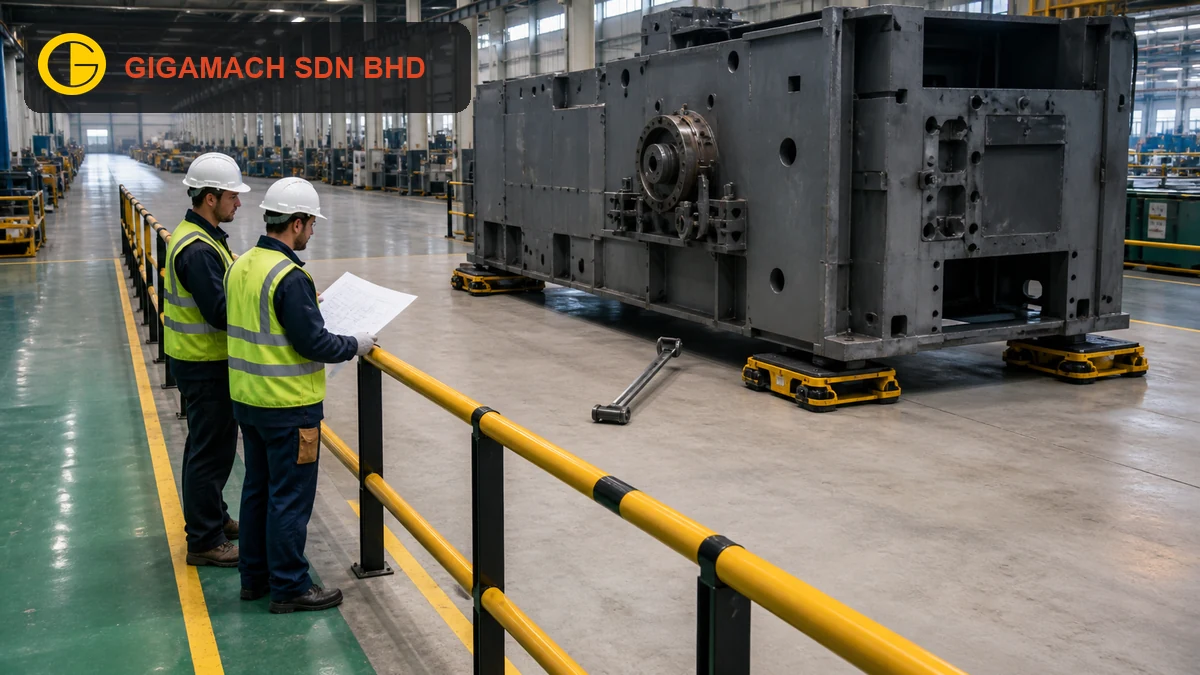
Industrial machine relocation with rated handling equipment, PPE-equipped workers, controlled movement, and a clear exclusion zone for safety education.
AI-generated illustrative safety visual by GIGAMACH SDN BHD.

Planning for machine relocation Malaysia requires more than the correct machine or lifting equipment. Machinery skates can move a heavy machine through tight factory spaces, but low speed does not remove crush, stability or steering risks. A controlled machine relocation Malaysia plan should treat the load, floor and travel route as one system.

Why Machinery skate movement: control direction before the load rolls. planning matters

A relocation succeeds only when the load, route, floor, handling equipment, people, and final position are treated as one coordinated plan. A safe lift at the starting point does not remove risks along the travel path or during final alignment.

The work method should be based on verified site and load information. A checklist supports the planning discussion, but it does not replace a task-specific assessment by competent personnel.

Practical pre-work checklist

  • Check 1: Verify the machine weight, centre of gravity and engineered support points.
  • Check 2: Select compatible, rated skates and a planned load-transfer method.
  • Check 3: Survey floor capacity, joints, slopes, clearances and every planned turn.
  • Check 4: Assign one movement leader and one clear communication method.
  • Check 5: Keep hands and feet clear; use purpose-designed steering or pushing tools.
  • Check 6: Move in short increments, stop to verify skate seating and alignment, then block the load securely.

Record the important findings during the site survey and brief the same controls to operators, riggers, signalmen, supervisors, and nearby work teams. Stop and reassess whenever the site condition or equipment configuration differs from the plan.

Common mistakes to avoid

  • Planning the lifting point but not surveying the complete travel route.
  • Estimating machine weight or centre of gravity from appearance alone.
  • Allowing hands or feet into crush zones during final positioning.

Related planning terms include industrial machinery installation, heavy machinery mover, equipment positioning. These should be used naturally to describe the actual work scope, not treated as interchangeable services.

Final verification before work starts

Before movement begins, walk the route with the operating team, confirm clearances and floor capacity, assign one signalman, and identify safe stopping and recovery positions.

Planning support for industrial work

GIGAMACH SDN BHD provides machine relocation and equipment positioning with a practical safety-first approach. Plan the scope early so the equipment, access, lifting method, transport, and final positioning can be coordinated before work begins.

Monday, August 10, 2026

Pinch Points: Pause Before the Load Moves

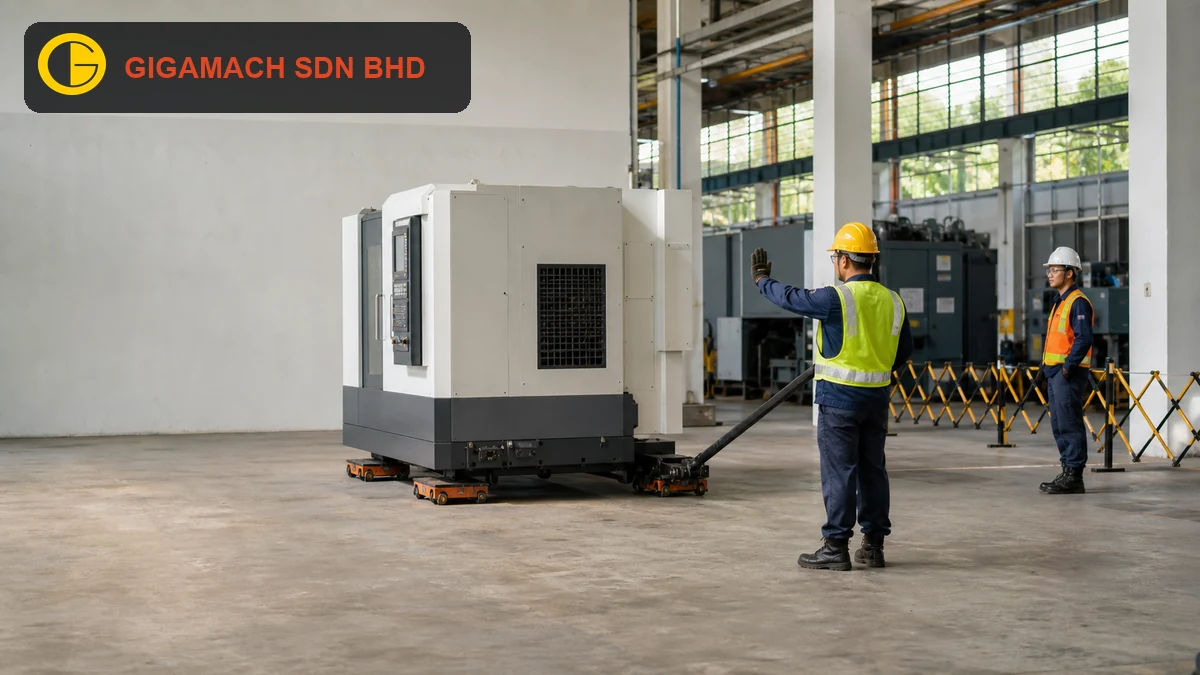
Industrial machine relocation with rated handling equipment, PPE-equipped workers, controlled movement, and a clear exclusion zone for safety education.
AI-generated illustrative safety visual by GIGAMACH SDN BHD.

Planning for machine relocation Malaysia requires more than the correct machine or lifting equipment. Pinch-point safety matters whenever heavy machinery starts, stops, turns or settles. A hand placed “just for a second” near a machine base, skate, roller or fixed structure can be trapped before anyone has time to react.

Why Pinch-point safety during controlled heavy machinery movement. The official Malaysian government calendar showed no public holiday or major Malaysian celebration on 9 August 2026, so the normal lighter Sunday educational format was used. planning matters

A relocation succeeds only when the load, route, floor, handling equipment, people, and final position are treated as one coordinated plan. A safe lift at the starting point does not remove risks along the travel path or during final alignment.

The work method should be based on verified site and load information. A checklist supports the planning discussion, but it does not replace a task-specific assessment by competent personnel.

Practical pre-work checklist

  • Check 1: Confirm hands and feet are clear of the load and travel path.
  • Check 2: Use purpose-designed tools instead of pushing directly on the machine.
  • Check 3: Keep workers out of narrow gaps and possible crush zones.
  • Check 4: Assign one clear signal for starting, stopping and changing direction.
  • Check 5: Stop immediately if a skate shifts, visibility is lost or a person changes position.

Record the important findings during the site survey and brief the same controls to operators, riggers, signalmen, supervisors, and nearby work teams. Stop and reassess whenever the site condition or equipment configuration differs from the plan.

Common mistakes to avoid

  • Planning the lifting point but not surveying the complete travel route.
  • Estimating machine weight or centre of gravity from appearance alone.
  • Allowing hands or feet into crush zones during final positioning.

Related planning terms include industrial machinery installation, heavy machinery mover, equipment positioning. These should be used naturally to describe the actual work scope, not treated as interchangeable services.

Final verification before work starts

Before movement begins, walk the route with the operating team, confirm clearances and floor capacity, assign one signalman, and identify safe stopping and recovery positions.

Take five seconds before movement begins: check the people, check the path and make sure everyone is clear.

Planning support for industrial work

GIGAMACH SDN BHD provides machine relocation and equipment positioning with a practical safety-first approach. Plan the scope early so the equipment, access, lifting method, transport, and final positioning can be coordinated before work begins.
Friday, July 31, 2026

Hydraulic Jacking: Control the Lift in Small Stages

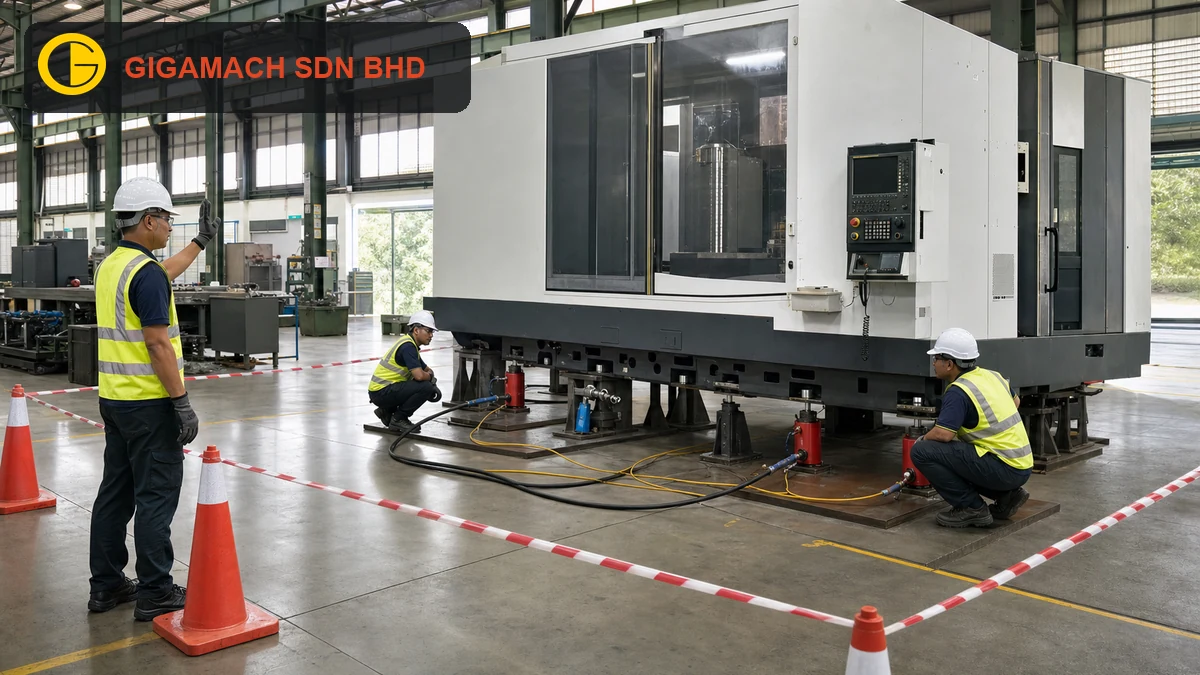
Large CNC machine raised a few centimetres on hydraulic jacks and steel support stands, with load-spreading plates, PPE-equipped workers, and a marked exclusion zone for hydraulic jacking safety education.
AI-generated illustrative safety visual by GIGAMACH SDN BHD.

heavy lifting services requires more than the correct machine or lifting equipment. Hydraulic jacking safety depends on controlling every small movement. Even a short lift can become unstable when the load, support points or sequence are misunderstood.

For industrial teams working in Peninsular Malaysia, early planning helps identify access, load, ground, personnel, and coordination risks before equipment is mobilised.

Why Hydraulic jacking safety planning matters

Heavy lifting depends on verified load information, suitable equipment, stable support, controlled access, and clear communication. Each part of the lifting system must be considered together before force is applied to the load.

The work method should be based on verified site and load information. A checklist supports the planning discussion, but it does not replace a task-specific assessment by competent personnel.

Practical pre-work checklist

  • Check 1: Confirm machine weight, centre of gravity and approved jacking points before setup.
  • Check 2: Use suitable jacks within rated capacity, supported by firm, level load-spreading plates.
  • Check 3: Keep each jack vertical and protect hoses from damage or trip hazards.
  • Check 4: Raise the load in small, even stages while monitoring level, support and unexpected movement.
  • Check 5: Insert rated blocking or stands before anyone works near the raised load; never rely on hydraulic pressure alone.
  • Check 6: Keep personnel outside pinch points and use one coordinator with one agreed signal.

Record the important findings during the site survey and brief the same controls to operators, riggers, signalmen, supervisors, and nearby work teams. Stop and reassess whenever the site condition or equipment configuration differs from the plan.

Common mistakes to avoid

  • Proceeding with incomplete load data or unverified lifting points.
  • Treating ground support, sling angles, or exclusion zones as secondary.
  • Continuing movement after communication or visibility has been lost.

Related planning terms include rigging services, gantry lifting, hydraulic jacking. These should be used naturally to describe the actual work scope, not treated as interchangeable services.

Final verification before work starts

Before the main operation, confirm the approved method, equipment capacity, ground support, rigging arrangement, exclusion zone, communications, and stop-work conditions with the full team.

If the load tilts, a jack shifts or support conditions change, stop and reassess. Staged lifting protects both people and machinery.

Planning support for industrial work

GIGAMACH SDN BHD provides heavy lifting, rigging, and industrial handling with a practical safety-first approach. Plan the scope early so the equipment, access, lifting method, transport, and final positioning can be coordinated before work begins.
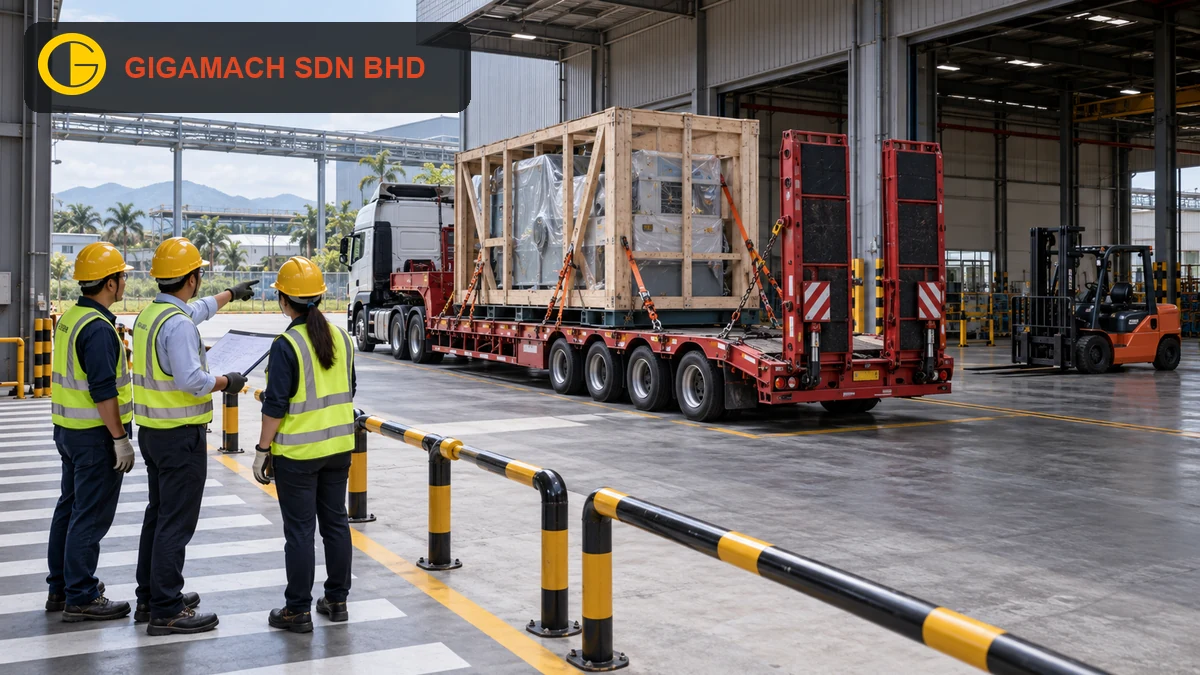
INDUSTRIAL DELIVERY: IS THE RECEIVING SITE READY?

AI-generated illustrative safety visual by GIGAMACH SDN BHD. Planning for industrial machinery transportation requires more than the correc...