Showing posts with label IndustrialTransportation. Show all posts

Sunday, September 20, 2026

INDUSTRIAL DELIVERY: IS THE RECEIVING SITE READY?

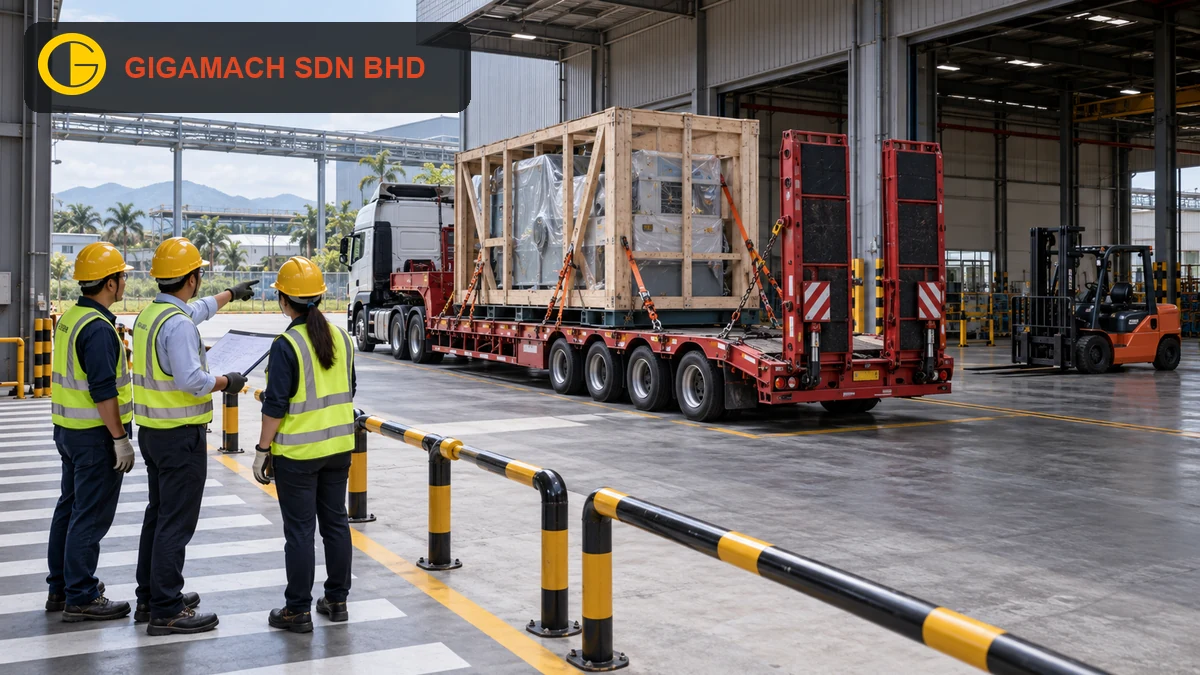
Crated industrial machine secured on a low-loader in a marked factory receiving area, with PPE-equipped personnel reviewing the access route from behind a pedestrian barrier for destination-planning education.
AI-generated illustrative safety visual by GIGAMACH SDN BHD.

Planning for industrial machinery transportation requires more than the correct machine or lifting equipment. Industrial machinery transportation does not end when the truck reaches the factory gate. A safe, efficient arrival depends on preparing the destination before the machine is delivered.

For industrial teams working in Peninsular Malaysia, early planning helps identify access, load, ground, personnel, and coordination risks before equipment is mobilised.

Why Destination readiness before industrial machinery delivery matters

Industrial transport starts before the vehicle arrives. The load dimensions, weight distribution, restraint points, lifting method, route, unloading space, and final handover must be coordinated as one operation.

The work method should be based on verified site and load information. A checklist supports the planning discussion, but it does not replace a task-specific assessment by competent personnel.

Practical pre-work checklist

  • Check 1: Clear the access route and check gates, corners, overhead clearance and floor conditions.
  • Check 2: Confirm a suitable staging and unloading area.
  • Check 3: Prepare the planned handling equipment and keep it ready for inspection.
  • Check 4: Separate pedestrians and unrelated traffic from the delivery path.
  • Check 5: Agree on the site contact, arrival time and stop point with the transport team.

Record the important findings during the site survey and brief the same controls to operators, riggers, signalmen, supervisors, and nearby work teams. Stop and reassess whenever the site condition or equipment configuration differs from the plan.

Common mistakes to avoid

  • Choosing transport equipment before confirming dimensions and weight.
  • Using unsuitable restraint or packing around sensitive machine parts.
  • Reaching the destination without a verified unloading and access plan.

Related planning terms include machinery loading and unloading, packing and crating services, container stuffing and unstuffing. These should be used naturally to describe the actual work scope, not treated as interchangeable services.

Final verification before work starts

Confirm the packing condition, lifting points, restraint plan, vehicle capacity, route constraints, unloading equipment, and receiving-area access before dispatch.

Prepare the destination. Control the arrival.

Planning support for industrial work

GIGAMACH SDN BHD provides industrial transportation, loading, and packing with a practical safety-first approach. Plan the scope early so the equipment, access, lifting method, transport, and final positioning can be coordinated before work begins.

Sunday, September 13, 2026

INDUSTRIAL TRANSPORT: CHECK THE ROUTE BEFORE DISPATCH

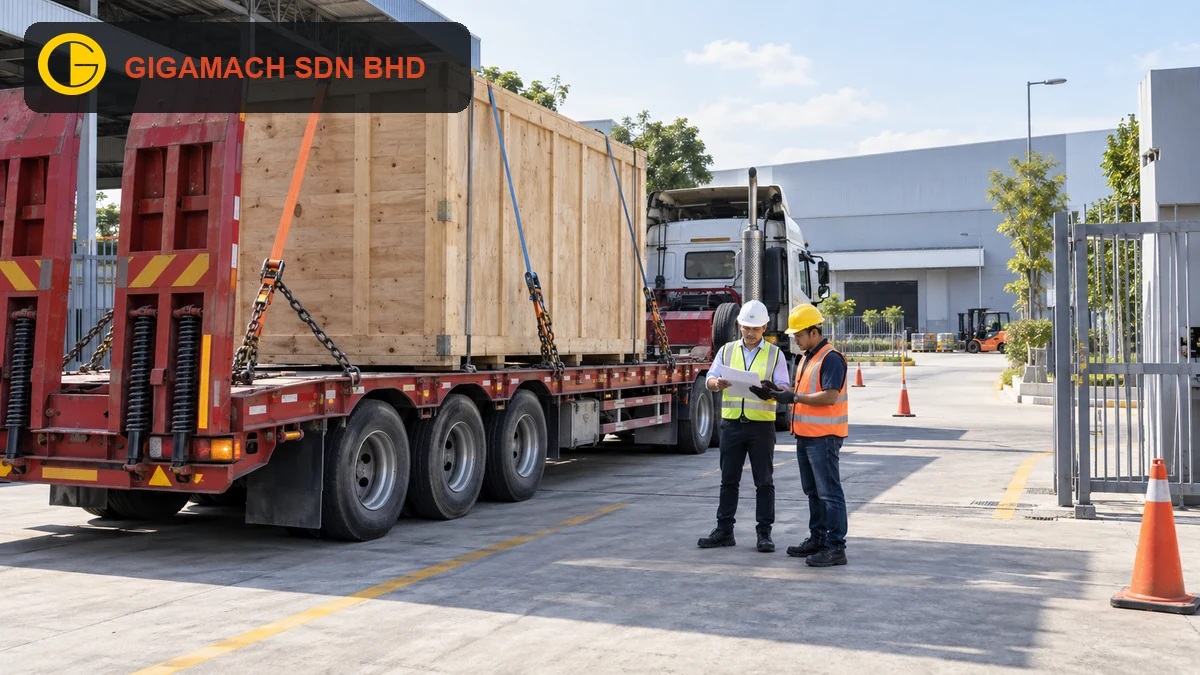
Heavy industrial machinery being safely prepared for transport with rated lifting equipment, secure packing, PPE, and controlled access.
AI-generated illustrative safety visual by GIGAMACH SDN BHD.

Planning for industrial machinery transportation requires more than the correct machine or lifting equipment. A machine can be secure on the trailer while the journey is still not ready. Before the wheels turn, confirm that the complete route and final approach suit the loaded vehicle—not only the destination address.

For industrial teams working in Peninsular Malaysia, early planning helps identify access, load, ground, personnel, and coordination risks before equipment is mobilised.

Why Industrial transportation route readiness before dispatching crated machinery matters

Industrial transport starts before the vehicle arrives. The load dimensions, weight distribution, restraint points, lifting method, route, unloading space, and final handover must be coordinated as one operation.

The work method should be based on verified site and load information. A checklist supports the planning discussion, but it does not replace a task-specific assessment by competent personnel.

Practical pre-work checklist

  • Check 1: Verify the loaded height, width, length and reliable weight information.
  • Check 2: Check route restrictions and required arrangements with the relevant authorised parties.
  • Check 3: Confirm turning space, gates, gradients and overhead clearances.
  • Check 4: Prepare a safe staging area and suitable unloading access at the destination.
  • Check 5: Agree on the arrival contact, timing and stop-and-reassess process.

Record the important findings during the site survey and brief the same controls to operators, riggers, signalmen, supervisors, and nearby work teams. Stop and reassess whenever the site condition or equipment configuration differs from the plan.

Common mistakes to avoid

  • Choosing transport equipment before confirming dimensions and weight.
  • Using unsuitable restraint or packing around sensitive machine parts.
  • Reaching the destination without a verified unloading and access plan.

Related planning terms include machinery loading and unloading, packing and crating services, container stuffing and unstuffing. These should be used naturally to describe the actual work scope, not treated as interchangeable services.

Final verification before work starts

Confirm the packing condition, lifting points, restraint plan, vehicle capacity, route constraints, unloading equipment, and receiving-area access before dispatch.

Know the load. Check the route. Arrive ready.

Planning support for industrial work

GIGAMACH SDN BHD provides industrial transportation, loading, and packing with a practical safety-first approach. Plan the scope early so the equipment, access, lifting method, transport, and final positioning can be coordinated before work begins.
Tuesday, August 18, 2026

CONTAINER STUFFING: CONTROL THE LOAD BEFORE THE DOORS CLOSE

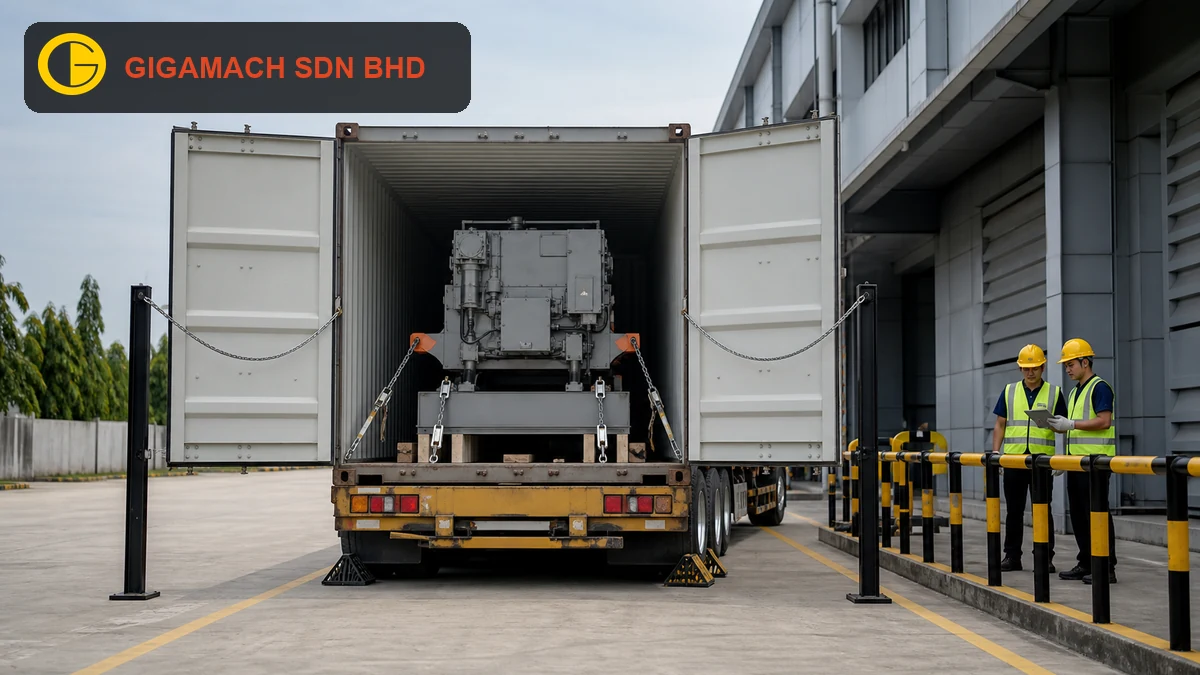
Heavy industrial machinery being safely prepared for transport with rated lifting equipment, secure packing, PPE, and controlled access.
AI-generated illustrative safety visual by GIGAMACH SDN BHD.

Planning for industrial machinery transportation requires more than the correct machine or lifting equipment. Container stuffing is not complete when machinery fits inside. Weight distribution, support, restraint and door clearance must remain controlled throughout transport and unloading.

For industrial teams working in Peninsular Malaysia, early planning helps identify access, load, ground, personnel, and coordination risks before equipment is mobilised.

Why Container stuffing planning and final restraint verification planning matters

Industrial transport starts before the vehicle arrives. The load dimensions, weight distribution, restraint points, lifting method, route, unloading space, and final handover must be coordinated as one operation.

The work method should be based on verified site and load information. A checklist supports the planning discussion, but it does not replace a task-specific assessment by competent personnel.

Practical pre-work checklist

  • Check 1: Verify the machinery weight, dimensions, centre of gravity and handling points.
  • Check 2: Inspect the container floor, structure, payload limit and suitable restraint points.
  • Check 3: Plan a straight loading path with matched handling equipment and one agreed signal.
  • Check 4: Position the load to manage axle and floor loading without blocking safe restraint access.
  • Check 5: Use suitable blocking, bracing and restraint while protecting sensitive machine surfaces.
  • Check 6: Confirm stability, restraint tension, door clearance and documented condition from a safe position.

Record the important findings during the site survey and brief the same controls to operators, riggers, signalmen, supervisors, and nearby work teams. Stop and reassess whenever the site condition or equipment configuration differs from the plan.

Common mistakes to avoid

  • Choosing transport equipment before confirming dimensions and weight.
  • Using unsuitable restraint or packing around sensitive machine parts.
  • Reaching the destination without a verified unloading and access plan.

Related planning terms include machinery loading and unloading, packing and crating services, container stuffing and unstuffing. These should be used naturally to describe the actual work scope, not treated as interchangeable services.

Final verification before work starts

Confirm the packing condition, lifting points, restraint plan, vehicle capacity, route constraints, unloading equipment, and receiving-area access before dispatch.

Planning support for industrial work

GIGAMACH SDN BHD provides industrial transportation, loading, and packing with a practical safety-first approach. Plan the scope early so the equipment, access, lifting method, transport, and final positioning can be coordinated before work begins.
Saturday, August 15, 2026

MACHINERY PACKING: PLAN FOR MOISTURE BEFORE TRANSIT

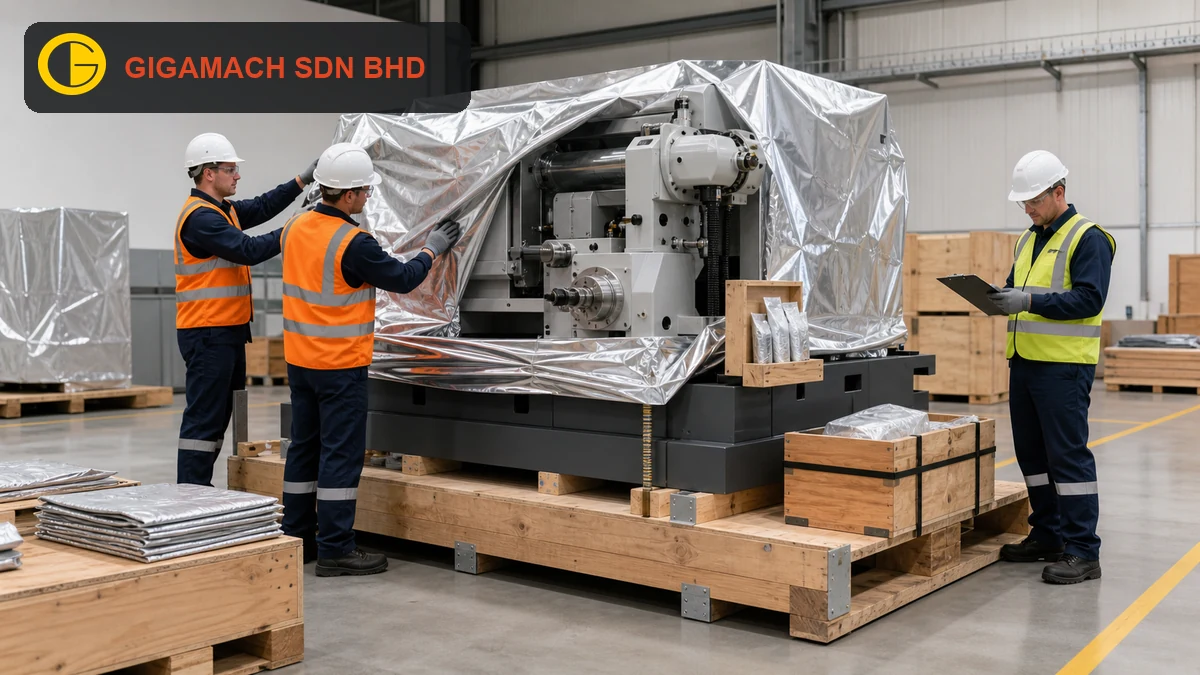
Industrial machine fully grounded on an engineered crate base, with PPE-equipped technicians applying moisture-protection materials and checking safe packing arrangements for transport education.
AI-generated illustrative safety visual by GIGAMACH SDN BHD.

Planning for packing and crating services requires more than the correct machine or lifting equipment. Industrial machinery packing must protect more than the outer surface. Changes in temperature and humidity can create condensation inside a sealed package, affecting exposed metal, electrical panels, precision surfaces, and stored accessories.

For industrial teams working in Selangor, early planning helps identify access, load, ground, personnel, and coordination risks before equipment is mobilised.

Why Industrial machinery packing: moisture, corrosion, and condensation-control planning. planning matters

Industrial machinery packing must protect sensitive surfaces, electrical components, accessories, and interfaces while keeping the package safe to support, lift, restrain, inspect, and unpack. Moisture exposure and temperature changes therefore need to be considered together with the journey and storage conditions.

The work method should be based on verified site and load information. A checklist supports the planning discussion, but it does not replace a task-specific assessment by competent personnel.

Practical pre-work checklist

  • Check 1: Record the machine condition and identify corrosion-sensitive components.
  • Check 2: Clean and dry approved surfaces before applying suitable protective materials.
  • Check 3: Select barrier film, desiccant, vapour protection, or ventilation according to the equipment, journey, storage period, and packing specification.
  • Check 4: Keep moisture-control materials from damaging sensitive parts or blocking required openings.
  • Check 5: Secure loose accessories and protect precision interfaces from impact and contamination.
  • Check 6: Confirm lifting points, support locations, inspection access, markings, and restraint provisions before dispatch.

Record the important findings during the site survey and brief the same controls to operators, riggers, signalmen, supervisors, and nearby work teams. Stop and reassess whenever the site condition or equipment configuration differs from the plan.

Common mistakes to avoid

  • Sealing equipment before confirming that prepared surfaces are clean and dry.
  • Using moisture-control materials without considering the equipment, journey, storage period, and packing specification.
  • Protecting external panels while leaving accessories, precision interfaces, or inspection access uncontrolled.

Related planning terms include industrial machinery packing, moisture protection for machinery, corrosion prevention during transport. These should be used naturally to describe the actual work scope, not treated as interchangeable services.

Final verification before work starts

Before closing the package, confirm machine condition, surface preparation, protective materials, accessory restraint, support points, lifting access, inspection provisions, and the final transport restraint plan.

Planning support for industrial work

GIGAMACH SDN BHD provides industrial machinery packing and crating with a practical safety-first approach. Plan the scope early so the equipment, access, lifting method, transport, and final positioning can be coordinated before work begins.
Thursday, August 6, 2026

Industrial Transportation: Check the Route Before the Load Rolls

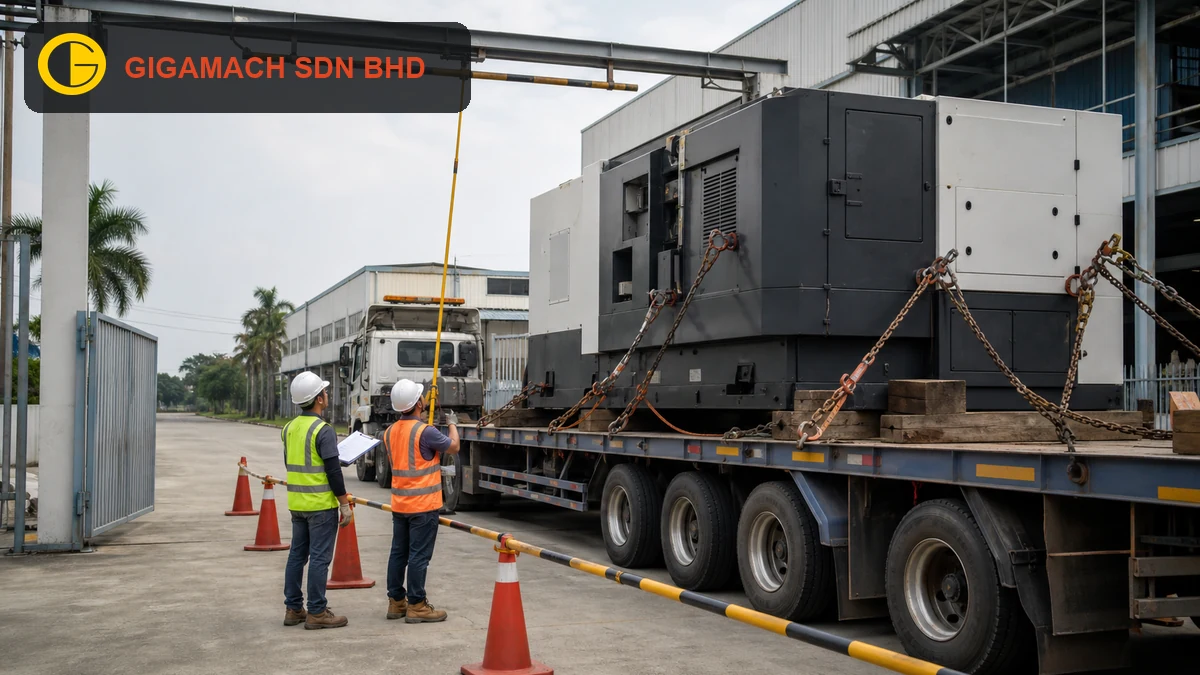
CNC-type industrial machine secured on a stationary low-bed trailer at a factory entrance, with PPE-equipped workers checking overhead clearance from behind a rigid exclusion barrier for transport route planning education.
AI-generated illustrative safety visual by GIGAMACH SDN BHD.

Planning for industrial machinery transportation requires more than the correct machine or lifting equipment. Heavy machinery transport begins long before the vehicle moves. A route that appears clear on paper can still contain tight turns, weak surfaces, overhead hazards or access restrictions.

For industrial teams working in Peninsular Malaysia, early planning helps identify access, load, ground, personnel, and coordination risks before equipment is mobilised.

Why Industrial transportation route coordination — verify the full route before heavy machinery moves. planning matters

Industrial transport starts before the vehicle arrives. The load dimensions, weight distribution, restraint points, lifting method, route, unloading space, and final handover must be coordinated as one operation.

The work method should be based on verified site and load information. A checklist supports the planning discussion, but it does not replace a task-specific assessment by competent personnel.

Practical pre-work checklist

  • Check 1: Confirm the total transported weight, height and width, including the trailer and restraints.
  • Check 2: Survey turning radii, gate openings, gradients and overhead clearances.
  • Check 3: Verify ground conditions, route limits and suitable staging areas.
  • Check 4: Plan traffic control, site access and required coordination before arrival.
  • Check 5: Brief the driver, escort team and spotter on one communication method.
  • Check 6: Stop and reassess if the route, weather, load security or site conditions change.

Record the important findings during the site survey and brief the same controls to operators, riggers, signalmen, supervisors, and nearby work teams. Stop and reassess whenever the site condition or equipment configuration differs from the plan.

Common mistakes to avoid

  • Choosing transport equipment before confirming dimensions and weight.
  • Using unsuitable restraint or packing around sensitive machine parts.
  • Reaching the destination without a verified unloading and access plan.

Related planning terms include machinery loading and unloading, packing and crating services, container stuffing and unstuffing. These should be used naturally to describe the actual work scope, not treated as interchangeable services.

Final verification before work starts

Confirm the packing condition, lifting points, restraint plan, vehicle capacity, route constraints, unloading equipment, and receiving-area access before dispatch.

Planning support for industrial work

GIGAMACH SDN BHD provides industrial transportation, loading, and packing with a practical safety-first approach. Plan the scope early so the equipment, access, lifting method, transport, and final positioning can be coordinated before work begins.

INDUSTRIAL DELIVERY: IS THE RECEIVING SITE READY?

AI-generated illustrative safety visual by GIGAMACH SDN BHD. Planning for industrial machinery transportation requires more than the correc...