Showing posts with label FactoryEngineering. Show all posts

Saturday, August 29, 2026

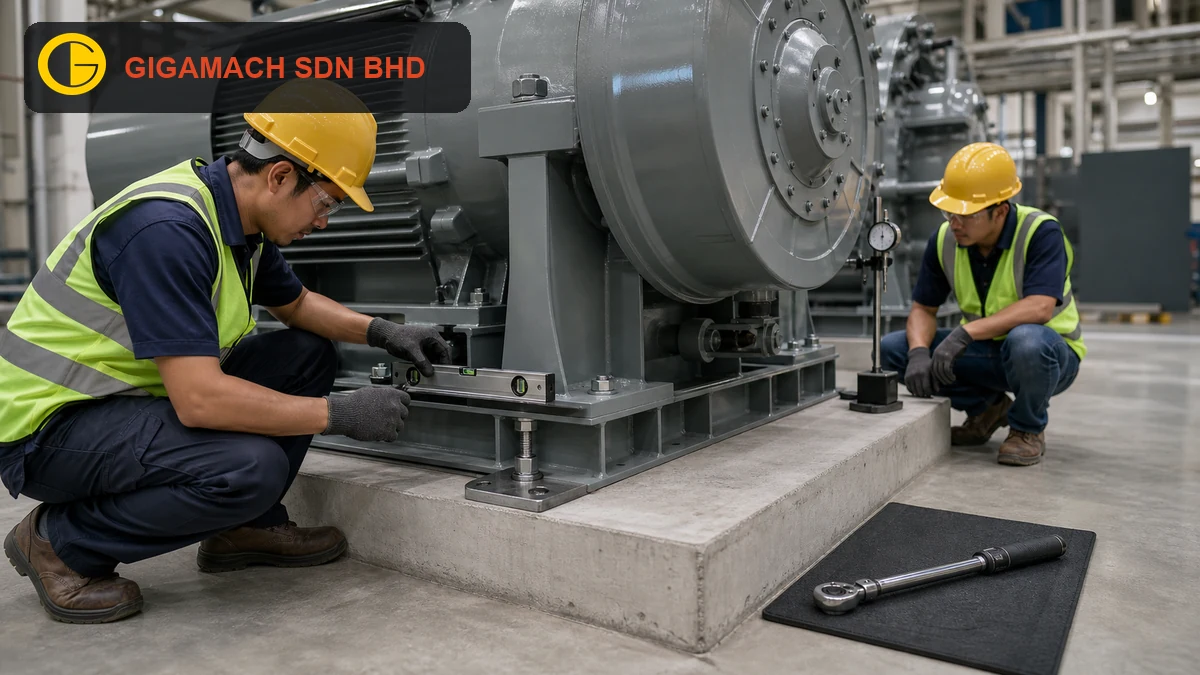
MACHINE INSTALLATION: ALIGN BEFORE FINAL FIXING

Industrial machine relocation with rated handling equipment, PPE-equipped workers, controlled movement, and a clear exclusion zone for safety education.
AI-generated illustrative safety visual by GIGAMACH SDN BHD.

Planning for machine relocation Malaysia requires more than the correct machine or lifting equipment. Final fixing should preserve the correct machine position—not pull an uneven base into place. During industrial machine installation, anchors, baseplates and supports should be checked before final tightening so alignment is not lost.

Why Machine installation final fixing — preserving alignment while anchors and fasteners are secured. planning matters

A relocation succeeds only when the load, route, floor, handling equipment, people, and final position are treated as one coordinated plan. A safe lift at the starting point does not remove risks along the travel path or during final alignment.

The work method should be based on verified site and load information. A checklist supports the planning discussion, but it does not replace a task-specific assessment by competent personnel.

Practical pre-work checklist

    Record the important findings during the site survey and brief the same controls to operators, riggers, signalmen, supervisors, and nearby work teams. Stop and reassess whenever the site condition or equipment configuration differs from the plan.

    Common mistakes to avoid

    • Planning the lifting point but not surveying the complete travel route.
    • Estimating machine weight or centre of gravity from appearance alone.
    • Allowing hands or feet into crush zones during final positioning.

    Related planning terms include industrial machinery installation, heavy machinery mover, equipment positioning. These should be used naturally to describe the actual work scope, not treated as interchangeable services.

    Final verification before work starts

    Before movement begins, walk the route with the operating team, confirm clearances and floor capacity, assign one signalman, and identify safe stopping and recovery positions.

    Align it, support it, fix it—then verify it.

    Planning support for industrial work

    GIGAMACH SDN BHD provides machine relocation and equipment positioning with a practical safety-first approach. Plan the scope early so the equipment, access, lifting method, transport, and final positioning can be coordinated before work begins.

    Saturday, August 22, 2026

    MACHINE DISMANTLING: LABEL BEFORE YOU DISCONNECT

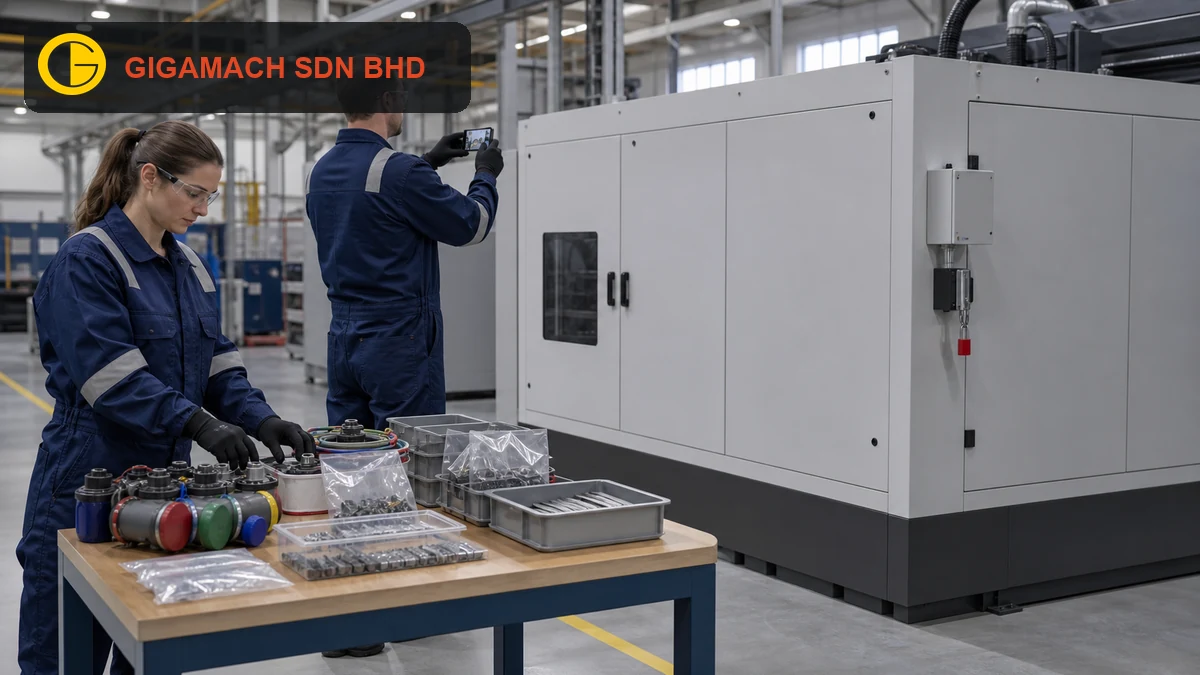
    Powered-down CNC machine with open service panels, capped hoses, protected components on a padded trolley, and PPE-equipped technicians documenting connections for safe dismantling and reassembly planning.
    AI-generated illustrative safety visual by GIGAMACH SDN BHD.

    Planning for machine relocation Malaysia requires more than the correct machine or lifting equipment. Machine dismantling is not simply installation in reverse. Cables, hoses, sensors, guards and alignment references must return to the correct positions without unsafe guesswork during reassembly.

    Why Machine dismantling: traceable disconnection and reassembly planning. planning matters

    A relocation succeeds only when the load, route, floor, handling equipment, people, and final position are treated as one coordinated plan. A safe lift at the starting point does not remove risks along the travel path or during final alignment.

    The work method should be based on verified site and load information. A checklist supports the planning discussion, but it does not replace a task-specific assessment by competent personnel.

    Practical pre-work checklist

    • Check 1: Isolate the equipment and verify stored energy according to the approved site procedure.
    • Check 2: Photograph each connection and reference point before removal.
    • Check 3: Use unique, durable tags that match the drawing, equipment list or packing record.
    • Check 4: Cap open lines and protect connectors, threads and precision surfaces.
    • Check 5: Bag fasteners and small parts by system instead of mixing them together.
    • Check 6: Record shim locations, orientation marks and alignment references before separation.

    Record the important findings during the site survey and brief the same controls to operators, riggers, signalmen, supervisors, and nearby work teams. Stop and reassess whenever the site condition or equipment configuration differs from the plan.

    Common mistakes to avoid

    • Planning the lifting point but not surveying the complete travel route.
    • Estimating machine weight or centre of gravity from appearance alone.
    • Allowing hands or feet into crush zones during final positioning.

    Related planning terms include industrial machinery installation, heavy machinery mover, equipment positioning. These should be used naturally to describe the actual work scope, not treated as interchangeable services.

    Final verification before work starts

    Before movement begins, walk the route with the operating team, confirm clearances and floor capacity, assign one signalman, and identify safe stopping and recovery positions.

    Label clearly. Protect every interface. Make reassembly traceable.

    Planning support for industrial work

    GIGAMACH SDN BHD provides machine relocation and equipment positioning with a practical safety-first approach. Plan the scope early so the equipment, access, lifting method, transport, and final positioning can be coordinated before work begins.
    Saturday, August 1, 2026

    Machine Dismantling: Plan the Reassembly First

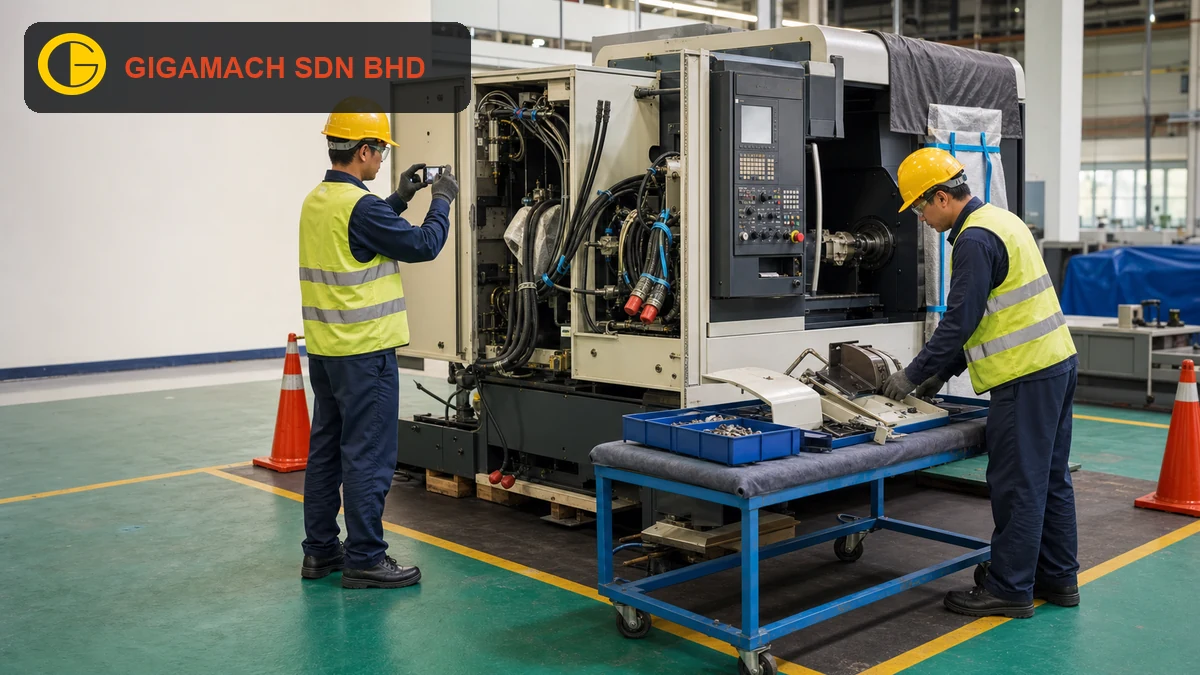
    Powered-down CNC machine with open service panels, capped hoses, protected components on a padded trolley, and PPE-equipped technicians documenting connections for safe dismantling and reassembly planning.
    AI-generated illustrative safety visual by GIGAMACH SDN BHD.

    heavy lifting services requires more than the correct machine or lifting equipment. In industrial machine dismantling, the safest removal sequence is also the clearest path to correct reassembly. When parts, services, and reference points are disconnected without records, teams can face avoidable delays, damaged interfaces, or alignment problems.

    For industrial teams working in Peninsular Malaysia, early planning helps identify access, load, ground, personnel, and coordination risks before equipment is mobilised.

    Why Machine dismantling and reassembly planning planning matters

    Heavy lifting depends on verified load information, suitable equipment, stable support, controlled access, and clear communication. Each part of the lifting system must be considered together before force is applied to the load.

    The work method should be based on verified site and load information. A checklist supports the planning discussion, but it does not replace a task-specific assessment by competent personnel.

    Practical pre-work checklist

    • Check 1: Isolate electrical, pneumatic, hydraulic, and stored energy according to the site procedure.
    • Check 2: Photograph original routing, settings, and connection positions.
    • Check 3: Match-mark mating parts, cables, hoses, guards, and reference points.
    • Check 4: Cap and protect exposed ports and precision surfaces.
    • Check 5: Store fasteners and small components by machine section.
    • Check 6: Confirm approved support points and the planned removal sequence.

    Record the important findings during the site survey and brief the same controls to operators, riggers, signalmen, supervisors, and nearby work teams. Stop and reassess whenever the site condition or equipment configuration differs from the plan.

    Common mistakes to avoid

    • Proceeding with incomplete load data or unverified lifting points.
    • Treating ground support, sling angles, or exclusion zones as secondary.
    • Continuing movement after communication or visibility has been lost.

    Related planning terms include rigging services, gantry lifting, hydraulic jacking. These should be used naturally to describe the actual work scope, not treated as interchangeable services.

    Final verification before work starts

    Before the main operation, confirm the approved method, equipment capacity, ground support, rigging arrangement, exclusion zone, communications, and stop-work conditions with the full team.

    Document first, disconnect with control, and make every reassembly step easier to verify.

    Planning support for industrial work

    GIGAMACH SDN BHD provides heavy lifting, rigging, and industrial handling with a practical safety-first approach. Plan the scope early so the equipment, access, lifting method, transport, and final positioning can be coordinated before work begins.
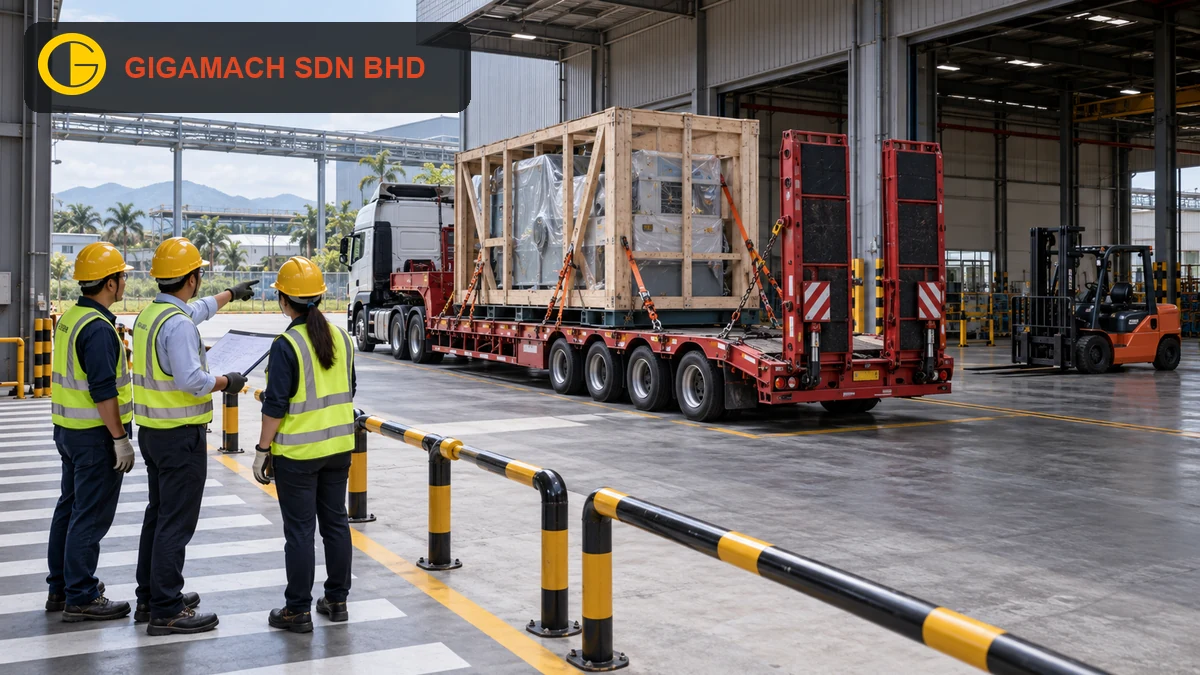
    INDUSTRIAL DELIVERY: IS THE RECEIVING SITE READY?

    AI-generated illustrative safety visual by GIGAMACH SDN BHD. Planning for industrial machinery transportation requires more than the correc...