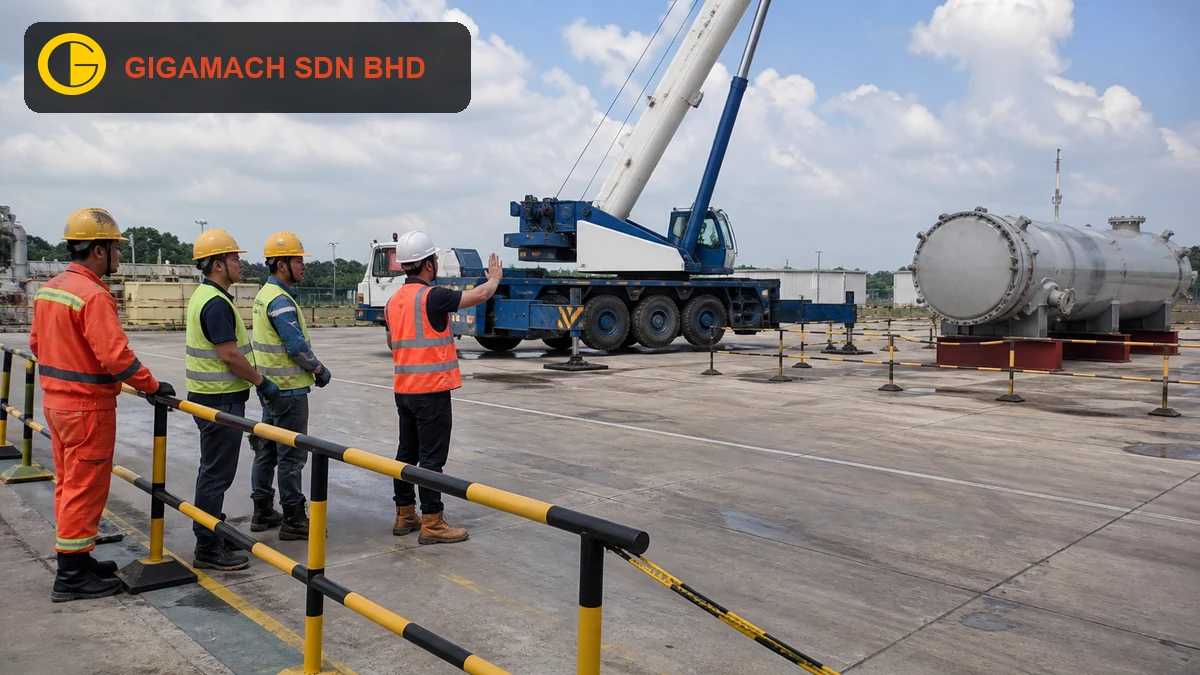
Planning for lifting supervisor safety requires more than the correct machine or lifting equipment. A lifting plan describes an agreed method, but the worksite can change. Ground movement, deteriorating visibility, unexpected load behaviour, altered rigging or unauthorised entry can make the planned lift no longer valid.
For industrial teams working in Malaysia, early planning helps identify access, load, ground, personnel, and coordination risks before equipment is mobilised.
Why Lifting supervisor change control and stop-work coordination planning matters
A lift remains controlled only while the actual crane setup, load, rigging, path, access, visibility, weather, and team communication continue to match the agreed method. Change control gives the lifting supervisor a structured way to pause, review, and coordinate the team.
The work method should be based on verified site and load information. A checklist supports the planning discussion, but it does not replace a task-specific assessment by competent personnel.
Practical pre-work checklist
- Check 1: Hold the operation and make sure the load is placed in a safe, controlled condition.
- Check 2: Compare the crane setup, ground, load, rigging and lifting path with the approved method.
- Check 3: Confirm that the exclusion zone and agreed communication remain effective.
- Check 4: Involve the relevant responsible personnel when a change requires review or authorisation.
- Check 5: Rebrief the crane operator, rigger, designated signalman and surrounding work groups.
- Check 6: Resume only when the revised conditions and controls are understood.
Record the important findings during the site survey and brief the same controls to operators, riggers, signalmen, supervisors, and nearby work teams. Stop and reassess whenever the site condition or equipment configuration differs from the plan.
Common mistakes to avoid
- Treating a minor site change as acceptable without checking its effect on the lift plan.
- Restarting before the crane operator, rigger, designated signalman, and nearby teams understand the revised controls.
- Confusing coordination responsibility with the crane operator's control of the crane or the rigger's hands-on duties.
Related planning terms include lift plan review, lifting team coordination, pre-lift briefing. These should be used naturally to describe the actual work scope, not treated as interchangeable services.
Final verification before work starts
Before resuming, confirm that the load is safe, the changed condition has received the required review, the exclusion zone and communication method remain effective, and every affected person has been rebriefed.
Planning support for industrial work
GIGAMACH SDN BHD provides lifting operations and lifting-team coordination with a practical safety-first approach. Plan the scope early so the equipment, access, lifting method, transport, and final positioning can be coordinated before work begins.



No comments:
Post a Comment